 By st20113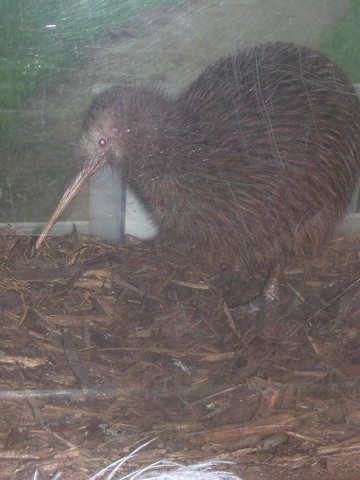
Introduction
The kiwi is a small, flightless bird found only in New Zealand, where it is celebrated as a national symbol and a living link to the country’s ancient natural history. Unlike most birds, the kiwi has loose, hair-like feathers, a long slender bill, and strong legs that make it more like a mammal in its habits than a typical winged bird. It is nocturnal, shy, and spends the daylight hours hidden in burrows or dense undergrowth. The kiwi belongs to a group of flightless birds called ratites, which also includes the penguin, though the kiwi is far smaller and more secretive than its relatives.
Taxonomy
Kiwis are classified in the genus Apteryx, a name meaning “without wing,” within the family Apterygidae. The southern brown kiwi, Apteryx australis, is one of five recognised kiwi species. Genetic studies suggest that kiwis are closely related to the extinct elephant birds of Madagascar and share a common ratite ancestor with ostriches, emus, and rheas. Despite their small size, kiwis are among the oldest distinct bird lineages in the world, having evolved in isolation on the New Zealand archipelago for tens of millions of years.
Physical Characteristics
Adult kiwis stand about 35 to 45 centimetres tall and weigh between 1.3 and 4 kilograms, with females noticeably larger than males. Their plumage is shaggy and brown, resembling fur more than feathers, which helps them blend into leaf litter. The most distinctive feature is the long, flexible bill tipped with nostrils—unique among birds—that allows the kiwi to smell prey underground. Their wings are tiny, hidden beneath feathers, and useless for flight. Powerful legs and sharp claws make them excellent diggers and runners. Like the nocturnal owl, the kiwi relies on senses other than sight to navigate the dark.
Habitat
Kiwis occupy a range of forested habitats across New Zealand, from subtropical lowland forests to alpine grasslands and even farmland with sufficient cover. They prefer areas with soft, moist soil rich in invertebrates. Dense native bush provides shelter and nesting material, while nearby streams and rotting logs supply food. The southern brown kiwi is found in the wet forests of the South Island’s West Coast and Fiordland. Habitat loss and the introduction of mammalian predators have greatly reduced suitable living space for these birds.
Diet
Kiwis are omnivorous foragers that probe the soil with their sensitive bills to locate earthworms, insects, larvae, snails, and fallen fruit. They may also eat small crustaceans, frogs, and seeds. Using their keen sense of smell, they can detect prey several centimetres beneath the surface and extract it with a rapid jab of the bill. A single kiwi can consume thousands of invertebrates in a night, playing an important role in soil aeration and pest control within its forest ecosystem.
Reproduction
Kiwis are unusual among birds for their enormous eggs, which can weigh up to a quarter of the female’s body mass. Pairs are generally monogamous and mate for life, defending a territory together. The female lays one or two eggs in a burrow or hollow, and the male—unusually among birds—takes on most of the incubation duty, sitting on the eggs for around 75 to 85 days. Chicks hatch fully feathered and independent, though they remain in the nest for a few days before venturing out to forage on their own.
Conservation
All kiwi species are threatened, with some classified as vulnerable or endangered. The main threats are predation by introduced mammals such as stoats, dogs, cats, and rats, as well as habitat fragmentation. Intensive conservation programmes, including predator-proof sanctuaries, captive breeding, and the “Operation Nest Egg” initiative, have helped some populations recover. The eagle and other raptors face their own pressures, but the kiwi remains the focus of New Zealand’s most ambitious protection efforts. Community groups and Maori iwi play a central role in guarding these birds.
Fun Facts
Kiwis have an extraordinarily keen sense of smell, the only bird with nostrils at the tip of its bill. They are the national bird of New Zealand, and New Zealanders are affectionately nicknamed “Kiwis.” A kiwi egg is so large relative to the mother that it would be like a human giving birth to a six-year-old child. Despite being birds, kiwis have cat-like whiskers and a lowered body temperature more typical of mammals. The male’s devoted incubation makes the kiwi one of the few birds where the father is the primary nest-tender.