 By Iris
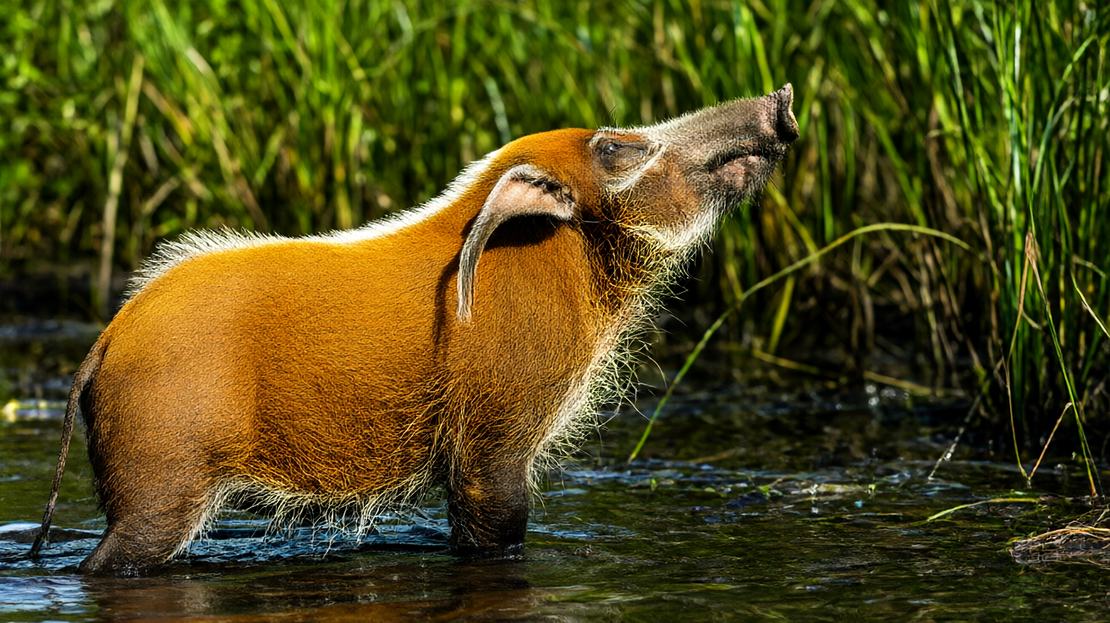
Potamochoerus porcus | Red River Hog
Species Profile · Suidae
Red River Hog
A red pig with white ear tufts and a mane down its spine.
Least Concern
Length
Weight
Shoulder
Group
Piglets
Rating
A hundred kilos of forest pig
Red hair and white ears
A red-haired pig steps into a forest pool and lifts its long snout. White tufts hang from its ears, and a white mane runs down its spine. That mane rises when the animal runs. Adults weigh 45 to 120 kg and stand about 70 cm at the shoulder. Rainforest across west and central Africa holds the species.
Sounders of 4 to 20 animals move together through the undergrowth. Each group holds several females, their young and one adult male. Pigs root through the litter for tubers, and they leave torn ground behind them. Long snouts plough the soil, so a group can wreck a patch of forest floor in a night. Farmers know the damage well.
Maize and cassava fields draw the animals after dark. Guards and dogs keep watch, although the pigs learn fast. Nothing about this animal suggests a warthog, yet the two are close kin.
Family tree
Suidae, the pigs
Suidae holds the pigs, and this species shares its genus with the bushpig. Older guides treated the two as one species, and the split came much later. Rainforest suits this animal, while the bushpig uses drier ground and open country. Both carry long ear tufts, and both root for a living.
Unlike the Common Warthog, which grazes in the open, this pig stays inside cover through the day. Warthogs graze on short grass, and they carry no ear tufts at all. Open ground leaves young pigs exposed, so the forest group never strays far from cover. Pigs form an old line, and their family split from other even-toed animals early.
Fossils place pig-like animals in Africa and Asia long before the ice ages. Domestic pigs came from the Wild Boar, so this animal is not an ancestor of any farm breed. The genus holds just two species today, and both live in Africa.
Two pigs in one genus
How to tell one
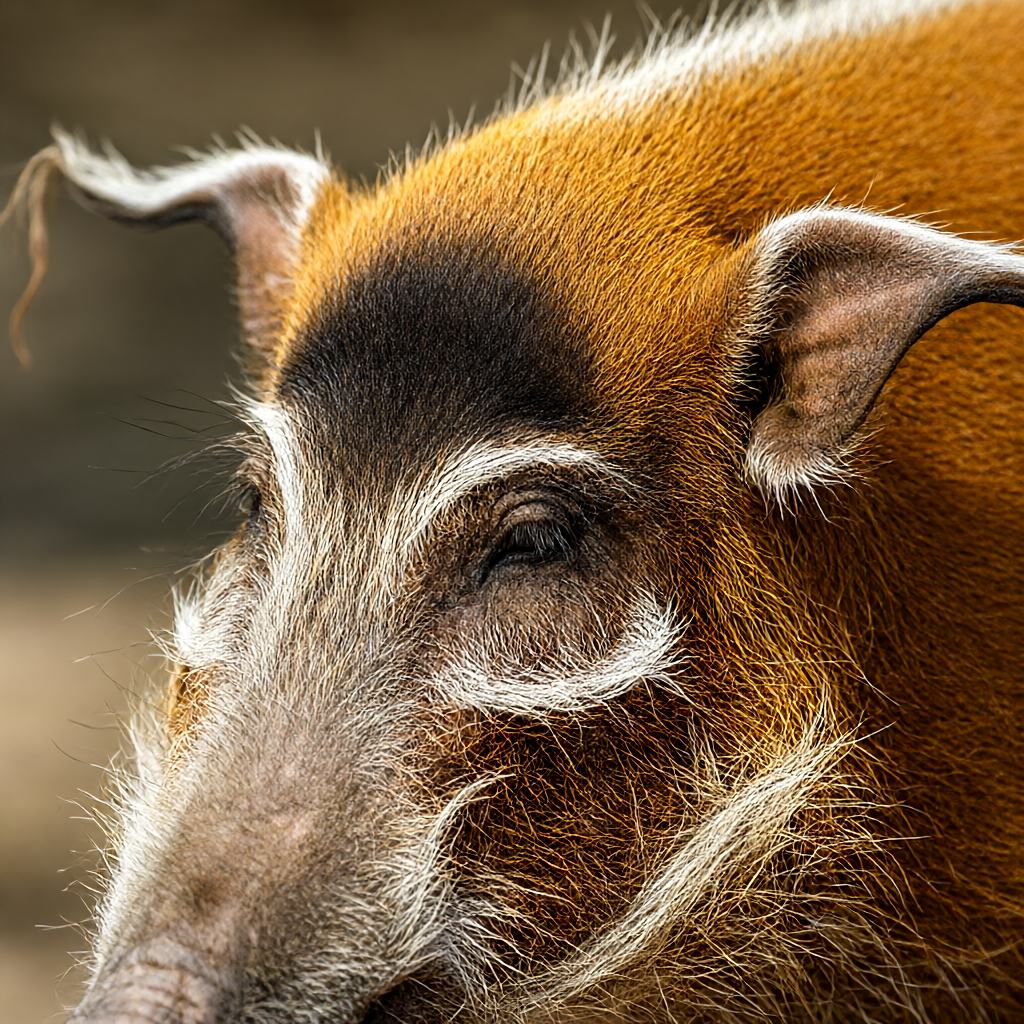
Coat colour runs from bright red brown to deep chestnut. A white mane stands along the spine, and the hair rises when the animal runs. Ear tufts grow long and white, and they reach past the jaw. A black mask covers the face, with white rings around the eyes.
The snout is long and mobile, and a disc of cartilage sits at the tip. Tusks stay small, and they point sideways rather than upward. Males grow larger than females and carry a heavier mane, although both sexes keep the white ear tufts. Body length runs 1 to 1.5 m, and weight runs 45 to 120 kg.
Legs look short for a body of that weight. Ears are pointed and broad, although the tufts hide the shape. Skin carries a thin coat, and the animal sweats little. The tail hangs straight, and it carries no tuft, unlike the tail of a warthog.
1
2
3
Red coat, small tusks
Where it lives
Rainforest holds most of the range, from Senegal across to the Congo basin. Swamp forest suits the animal best, since mud and water stay close through the year. Reed beds along rivers give cover, and groups use them as highways between feeding grounds and wallows deep in the swamp. Forest clearings matter, because fresh growth follows light, although the animals cross them only at night. Groups travel along well used paths.
Those paths stay open for years. Mud wallows keep the skin cool. Every group keeps a few beside its own paths. Rain falls through most of the year here, so water is never far away. Dry forest holds fewer animals.
Altitude limits the range, and mountains hold none at all. Forest loss cuts the range into pieces, and each piece loses variety. Wet ground with thick cover makes the difference between good habitat and poor habitat.
Swamp forest and reed beds
What it eats
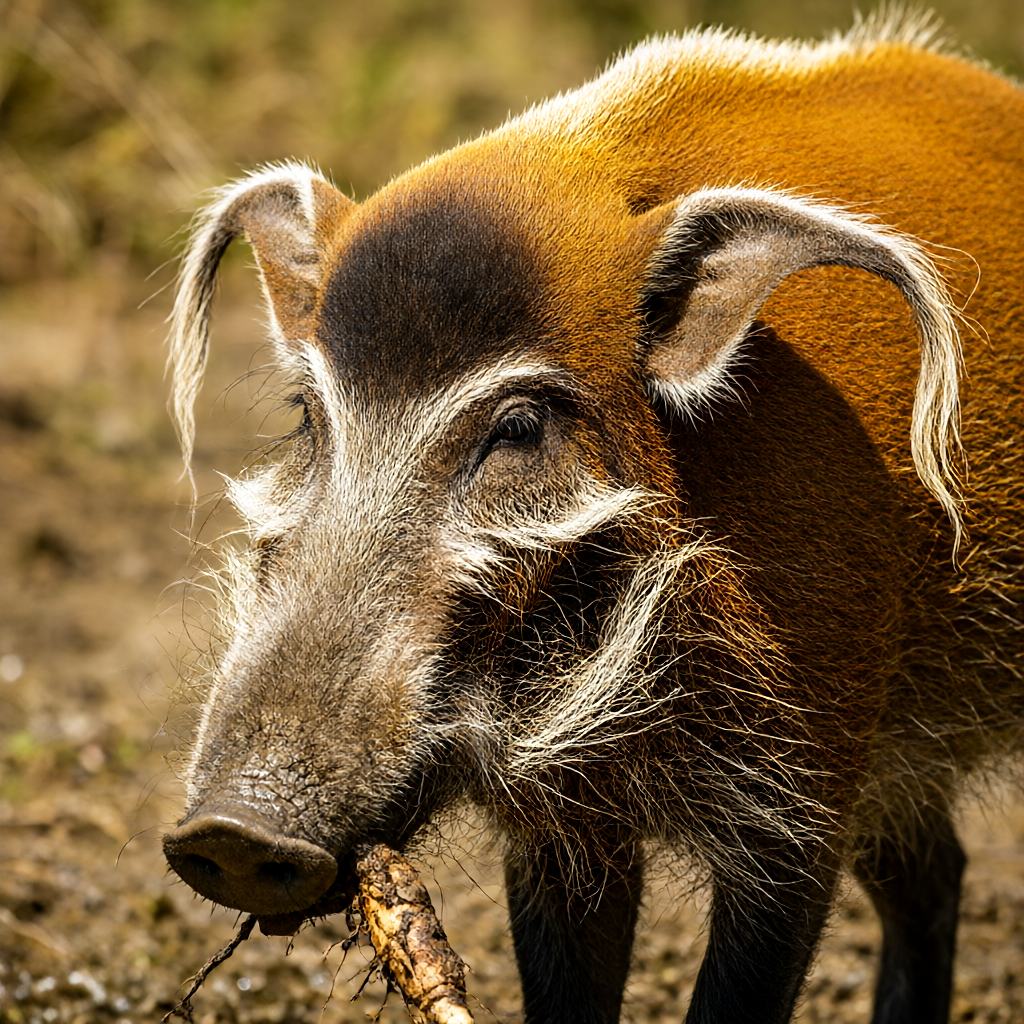
Roots and tubers form most of the diet. Fruit comes second, and figs rank high on the list. Grasses, herbs and insects also get eaten, especially in the wet season when new shoots push up through the mud. The animal ploughs soil with its snout, and it turns over large patches in a single night.
Carrion appears in the diet now and then, although the animal prefers roots and fruit. Crop raiding brings maize, cassava and yams to the fields, and it earns the whole species a bad name among farmers. Feeding happens in short stops through the night. A group may travel several kilometres between meals, since tubers are spread thin across the forest floor.
A snout finds tubers by smell, and it works even in wet soil. Stones and soil pass through the gut. There they help grind tough roots. Water comes from wallows and streams.
Roots, tubers and fruit
The breeding cycle
Activity peaks at dusk and again before dawn. Groups rest together in thick cover through the day. The adult male stays near the group, and he drives other males away. Fights involve the snout and the tusks, although deep cuts do happen.
Males mark trees with scent from a gland near the eye. Females build a nest of grass before giving birth. Pregnancy runs about 120 days. One to four piglets are born, and they hide in the nest for the first weeks.
Mother and young rejoin the group once the piglets can run. Weaning takes several months, and the young then follow the group on every trip. Young males leave at about a year, while females stay with the group and raise their own litters there. Captive animals have lived past 15 years, though wild ones probably live less.
Least Concern, and snared
Conservation
The IUCN lists this species as Least Concern. Range is large, and the animal adapts to regrowth, so the species holds on in logged forest. Hunting poses the main threat, since the meat is popular and the animal grows big. Wire snares take heavy numbers in some forests, and the loss falls hardest on adult females.
Crop raiding brings retaliation, and farmers kill animals at night. Loss of swamp forest removes the best habitat. Parks cover part of the range, although patrols are thin. The species breeds fast, which offsets heavy losses, although snaring can still empty a stretch of forest.
No full count exists, so the trend rests on local surveys. Protection here means managing hunting rather than rescuing a rare animal. That job falls to forest guards, and it works best when farmers and hunters join in.
Side by side
How It Compares
| Trait | Red River Hog | Common Warthog |
|---|---|---|
| Length | 1 to 1.5 m | 1.1 to 1.5 m |
| Weight | 45 to 120 kg | 50 to 150 kg |
| Coat | red brown, with a white mane | grey and bare, with a thin mane |
| Ear tufts | long and white | none |
| Home | rainforest and swamp forest | open savanna and grassland |
| Rating | Least Concern | Least Concern |
Common misreadings
What People Get Wrong
- Many people take the two pigs for one species, yet the split came much later.
- A common claim says the animal has long tusks, although its own stay short.
- Some guides put it in dry savanna, yet it stays inside cover all day.
Going further
Sources and Further Reading
Quick hits
Five things to remember
- A white mane runs down the spine.
- Long white tufts hang from the ears.
- Sounders can hold 20 animals.
- Tusks stay small.
- The bushpig is its closest relative.