 By Iris
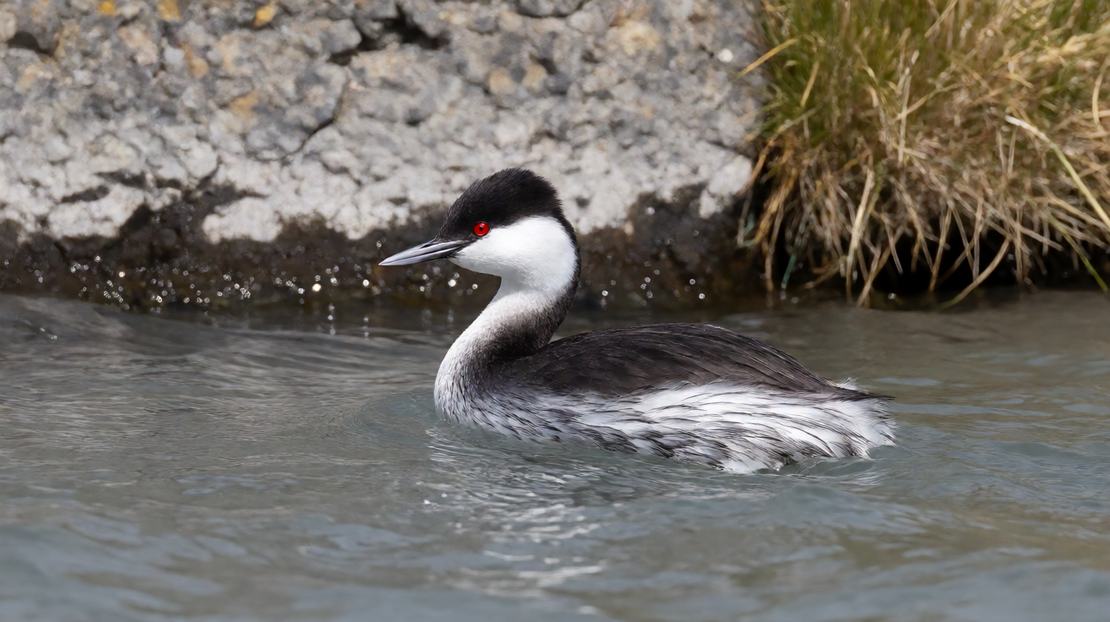
Podiceps gallardoi | Hooded Grebe
Species Profile · Podicipedidae
Hooded Grebe
A grebe found only in 1974, and already close to the edge.
Critically Endangered
Length
Weight
Nest
Range
Numbers
Rating
Under a thousand adults
A red crest on a cold lake
Red crest and a black hood mark this diving bird. Length reaches 34 cm, and weight runs near 500 g. Scientists found the species only in 1974. Cold windy plateaus in Patagonia hold every breeding pair, since the bird needs shallow water and open wind.
Shallow lakes with floating plants suit the bird. Each winter the bird moves to Atlantic estuaries. Diving brings up water insects and small fish. Nests float on mats of vegetation, and they rise and fall with the water, although a fast rise can swamp them.
Fewer than a thousand adults remain, and the count keeps falling. Mink, gulls and a changing climate press on a bird with a very small range, yet people now guard the lakes.
Family tree
Podicipedidae, the grebes
Podiceps gallardoi sits in Podicipedidae, the grebe family. Rumboll named the species in 1974. The Great Crested Grebe lives across Europe and Asia, while this bird stays in Patagonia. Both dive for food, and both carry young on the back.
Their ranges never meet, since one winters on mild coasts and the other on cold lakes. Hood and crest give the bird its common name, although only the crest shows in a display. Genetic work puts it close to the silvery grebe, although the two never share a lake. No subspecies is named today.
Small numbers and a short history make the bird easy to count. Nobody described the bird before the 1970s. Searchers then spent years crossing the plateaus before a nest turned up.
Found only in 1974
How to tell one
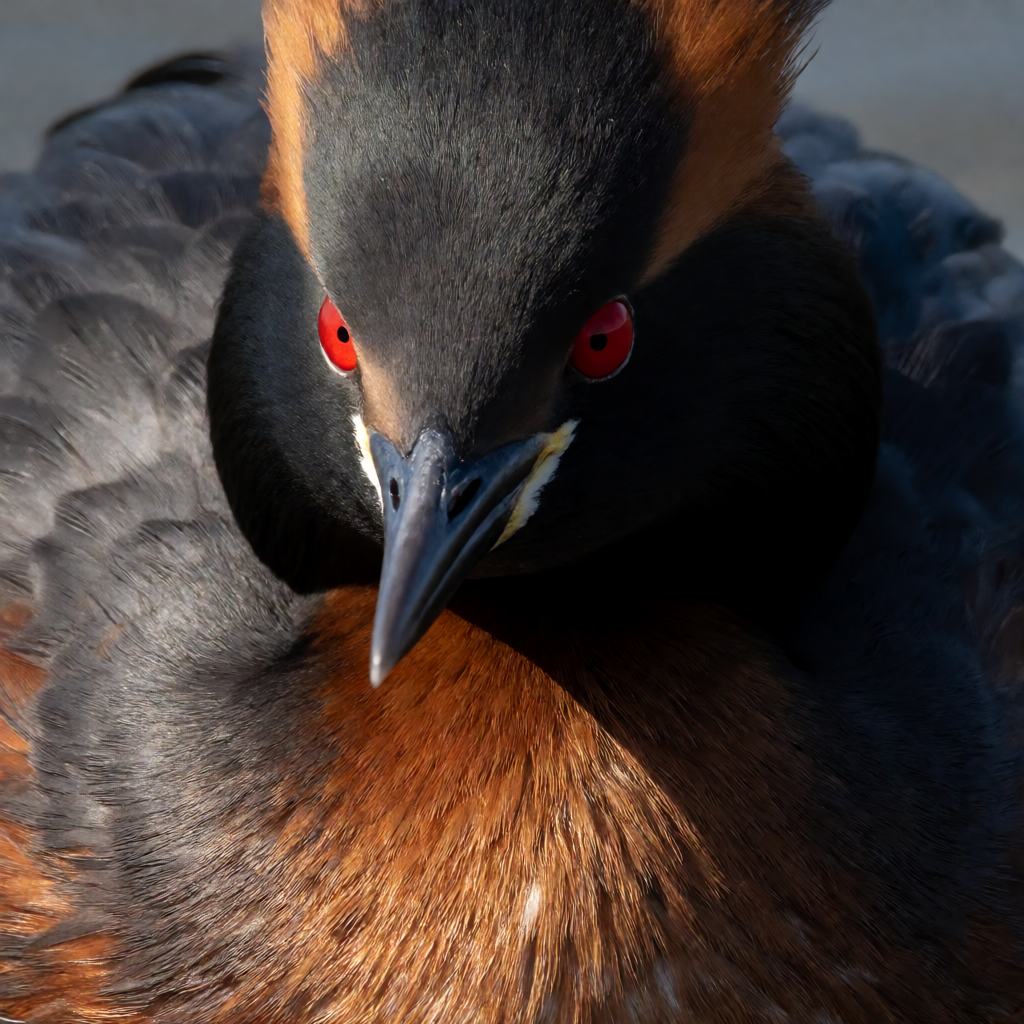
Length reaches 34 cm. Weight sits near 500 g. Black hood covers the head, and a red crest rises behind each eye. The crest puffs up during a display.
Eyes look red, and the bill is short and dark, although the colour fades after death. Back feathers are dark grey, and the belly shows white, so the bird shows two tones in flight. Legs sit far back on the body, which suits a diver. Walking looks clumsy, since the bird pushes along on its belly.
Chicks carry stripes of black and white, and the pattern hides them among the floating plants of the nest. Strong legs drive a dive that may last half a minute. A single push from those legs covers 30 metres under water.
1
2
3
A crest and a dive
Where it lives
Breeding lakes sit on basalt plateaus in Santa Cruz. Wind sweeps the plateaus, and few plants grow tall, since nothing shelters them. Water stays clear and cold, because the wind keeps the lake stirred. Floating mats of watercress give the bird a base for a nest.
Depth must stay shallow, since the bird needs plants rooted below. Winter sends the grebes to estuaries on the Atlantic coast. Those estuaries lie 1,000 km from the breeding lakes, yet the bird flies the route each autumn. One dry year empties a shallow lake, and the colony then fails.
Volcanoes sit close, and ash can fall on the water. Ash smothers the plants that anchor a nest, so a single eruption can ruin a season across several lakes.
Cold windy plateaus
What it eats
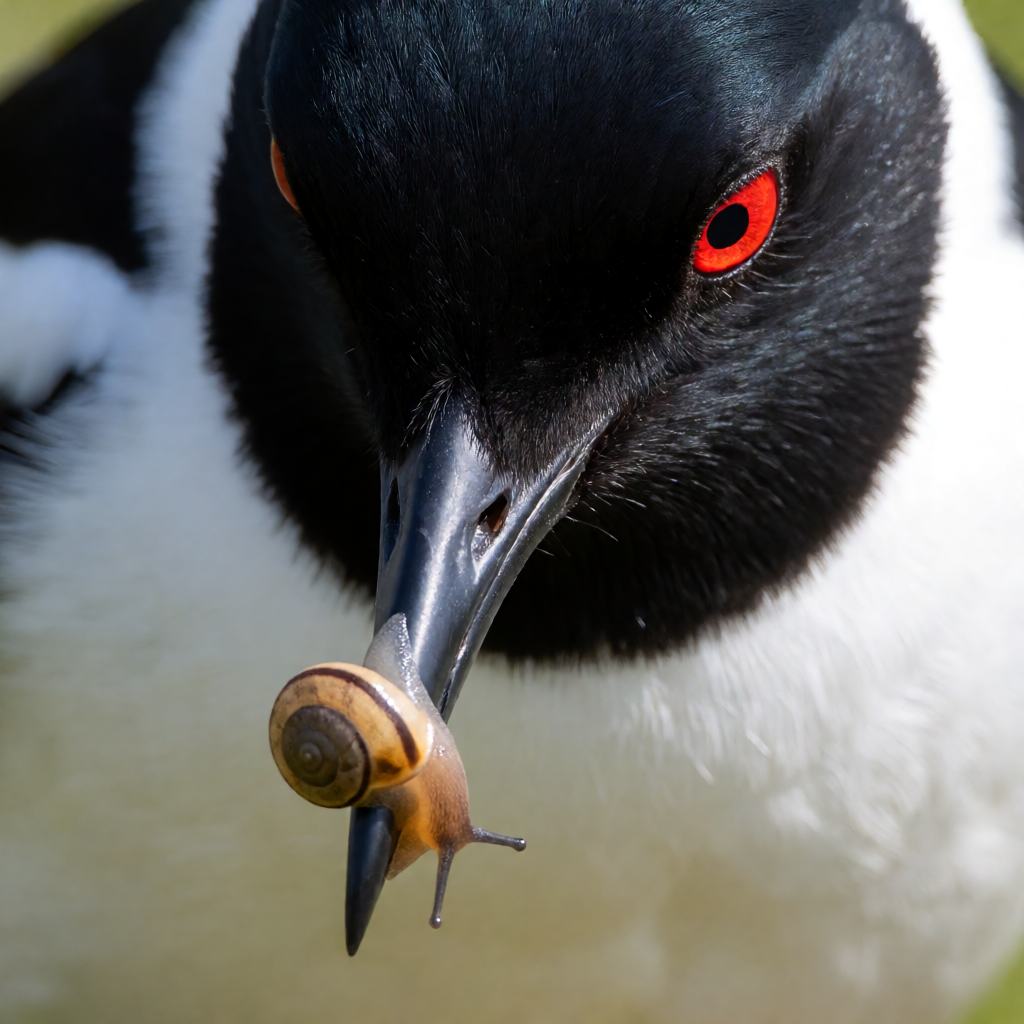
Water insects form the base of the diet. Diving brings up larvae, snails and small fish. Prey is taken below the surface, not from the air. Each dive lasts 20 to 30 seconds.
Feathers are pressed tight before a dive, since trapped air slows the bird down. Food is scarce on a cold plateau. The bird then feeds through much of the day and rests only at night. Chicks take insects from a parent’s bill, while the other adult guards the nest.
Adults may feed a chick for two months. Few lakes hold enough prey for a large colony, and that shortage limits where the birds can nest at all.
Insects from the water
The breeding cycle
Pairs form on the breeding lake in spring, although the bond lasts only a season. Floating nests are built from watercress and held by shallow roots. Two eggs are usual, and both parents incubate, since a single bird cannot cover the clutch alone. Incubation lasts about three weeks.
Chicks leave the nest within a day, and they ride on a parent’s back. Parents dive with a chick aboard, and the young bird must hold tight to the back feathers. Gulls take chicks from the water, so a colony loses many young. Mink swim to the nests at night.
One animal can clear a whole colony in a few nights. Such a slow rate leaves the species unable to replace losses, and every single adult now matters to the national count.
Critically Endangered, and guarded
Conservation
IUCN lists the species as Critically Endangered. Fewer than 1,000 adults remain, and the trend points down. Introduced mink reached the plateau lakes in the 1990s, and the animal found nests with no defence at all. Rainbow trout eat the insects that the grebes need.
Kelp gulls nest on the lakes and take eggs and chicks. Strong wind can blow floating nests onto a shore, so a colony may lose a whole clutch in an hour. Warmer seasons bring less rain and more dry years. Guards now trap mink, and volunteers count nests each season, yet the count keeps sliding.
One refuge covers several lakes, although the birds move between them. Trapping and nest guards slowed the fall, yet the population stays small and a single bad season still matters.
Side by side
How It Compares
| Trait | Hooded Grebe | Great Crested Grebe |
|---|---|---|
| Length | 34 cm, and it weighs about 500 grams | 46 to 51 cm, and it weighs up to 1.1 kg |
| Crest | a red crest behind each eye, on a black hood | a black tipped crest, on a white face |
| Home | basalt plateaus in Santa Cruz, Argentina | lakes and marshes across Europe and Asia |
| Nest | a floating mat of watercress | a floating heap of weed at the reed edge |
| Food | water insects, snails and small fish | fish, taken in long dives |
| Young | two eggs, and the chicks ride on the back | three to four eggs, and the chicks ride too |
Common misreadings
What People Get Wrong
- Many people believe the bird feeds on fish only, yet insects form most of its diet.
- Some guides say the species nests on the shore, although the nest floats on weed.
- A common claim says the bird was known for centuries, yet science found it in 1974.
Going further
Sources and Further Reading
Quick hits
Five things to remember
- Scientists found the bird only in 1974.
- The crest puffs up during a display.
- Chicks ride on a parent’s back.
- Fewer than 1,000 adults remain.
- Nests float and rise with the water.