 By Iris
Hyaena brunnea | Brown Hyena
Species Profile · Hyaenidae
Brown Hyena
A shaggy hyena that walks the dry south alone.
Near Threatened
Shoulder height
Weight
Night walk
Cubs
Range
Rating
Forty kilos on forty kilometres
A pale mantle in dry bush
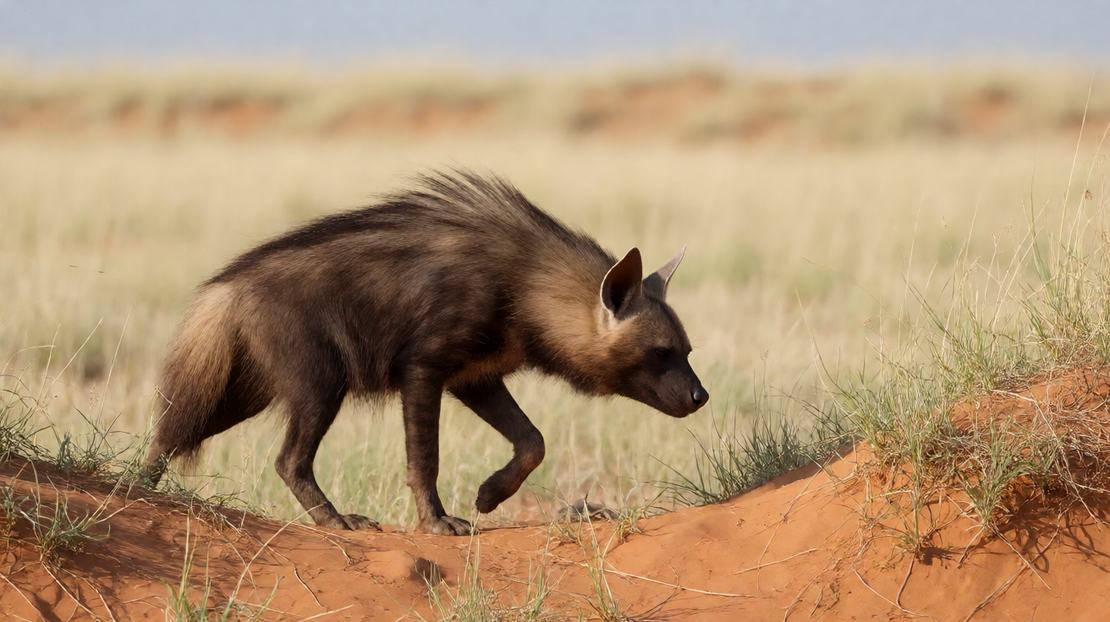
A shaggy dark coat and a pale mantle over the shoulders mark this hyena. Shoulder height runs 70 to 80 cm. Weight sits near 40 kg. Southern Africa holds the species, from Namibia to Mozambique.
Dry savanna and desert edge suit the animal, since it can travel far in a night for a meal. Carrion forms most of the diet, although the animal also takes fruit and insects. One hyena may walk 30 km in a night. Clans share a den, and the cubs gather there.
Few large hunters live on such poor ground. Numbers sit near 10,000 adults, yet the trend keeps falling.
Family tree
Hyaenidae, the hyenas
Hyaena brunnea sits in Hyaenidae, the family of hyenas. Thunberg named the species in 1820. Four hyenas are recognised today, and only one hunts in packs. The Spotted Hyena lives in the same bush, while this animal keeps to drier ground and to the coast.
Both carry a heavy skull, and both crush bone. Their coats differ, though, because one is spotted and the other shaggy brown. Genetic work puts the brown hyena in a genus of its own. No subspecies is named today.
Older books called it the strandwolf, and the name survives in Afrikaans. One species now spans the dry south, although the clans stay far apart.
One hyena that hunts alone
How to tell one
Shoulder height reaches 80 cm in a large male. Weight runs 35 to 45 kg. Long hair covers the body, and a pale mantle runs from the neck to the shoulders and down the back. Legs carry dark stripes, and the front pair looks longer than the rear.
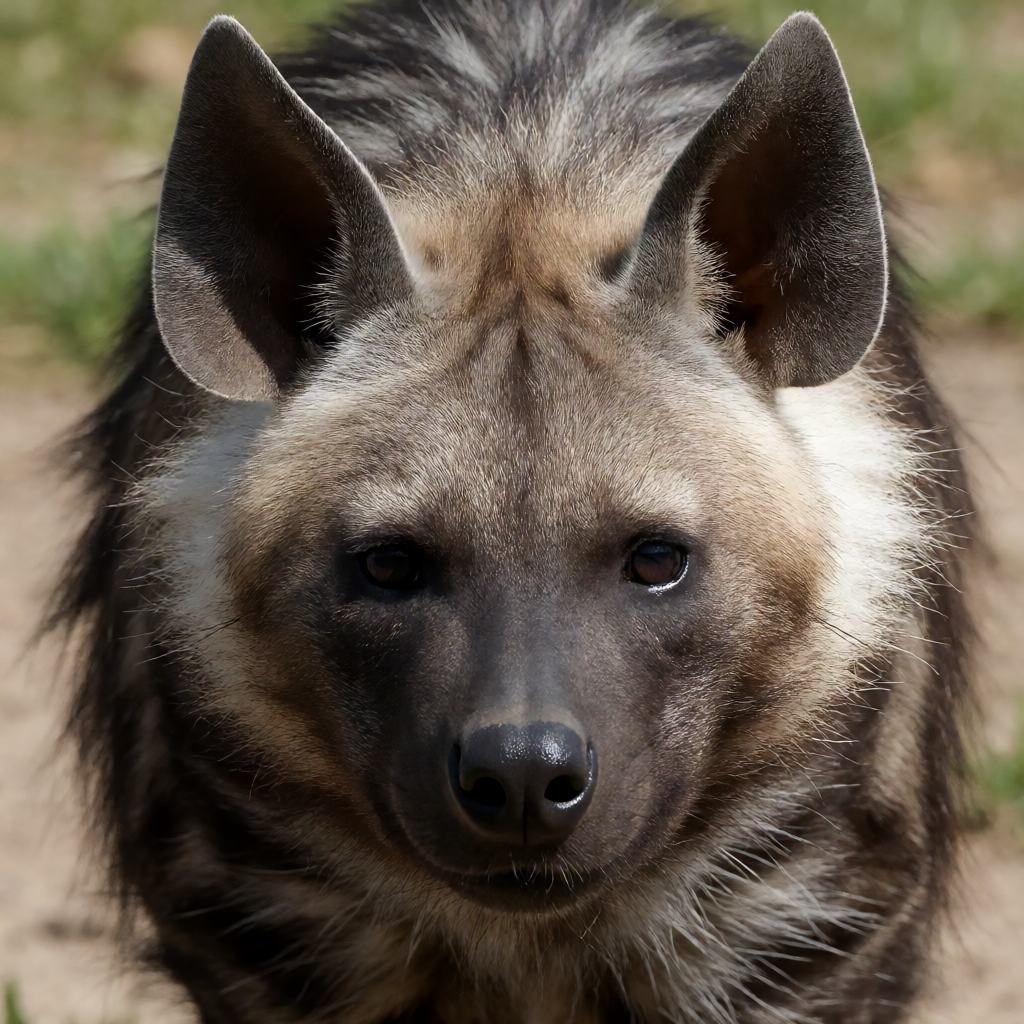
Ears stand tall and pointed, unlike the rounded ears of the spotted hyena. The skull carries heavy jaw muscles, and the teeth crush bone. Females and males look much alike, so a distant animal is hard to sex. Shaggy tail hangs low, and the animal trots with the head down.
Wide paws spread the weight on soft sand. Thick hair sheds heat slowly, so the animal rests in shade through the day.
1
2
3
Heavy jaw, shaggy coat
Where it lives
Dry savanna and semi desert hold the range. Rain falls in a short season, and the grass then grows fast. Range covers Namibia, Botswana, South Africa and Zimbabwe. The species avoids thick bush, since it needs open ground to watch for lions.
Coastal desert holds animals that feed on seal carcasses. Farmland offers carrion, although poison baits kill scavengers. Clans may hold ten animals, and each one forages alone. Home ranges overlap, and the animals meet at kills.
Dens sit in dunes or in rocky ground. Drought kills prey, and the hyenas then do well for a season.
Dry bush and desert edge
What it eats
Carrion forms the base of the diet. Bones, hide and horns make up much of what the animal finds. Tsama melons supply water in the dry months, since the desert holds few springs. Insects, birds eggs and small mammals fill the gaps.
A hyena may follow a lion kill for days, waiting for the pride to leave the carcass alone at last. Smell guides the search, and the animal can scent a carcass kilometres away. Feeding happens alone, although several may gather at a large carcass. The jaw crushes bone.
Little goes to waste. Cubs take meat brought back to the den. Winter brings seabirds and seals to the coast, and the diet then shifts.
Carrion, melons and insects
The breeding cycle
Mating happens in the cool months. A clan shares one den. Several females breed there. Two to four cubs are born after three months.
Cubs stay underground for the first weeks. Males bring food to the den, although they take no part in nursing. Other clan members also carry meat home, which is unusual among hunters. Cubs emerge at about three months, and they then follow adults.
Weaning comes near 14 months. Young females stay in the clan, while young males leave. A female breeds every other year at best, so a clan grows slowly.
Near Threatened, and blamed
Conservation
IUCN lists the species as Near Threatened. Adults number about 10,000, and the figure keeps sliding. Farmers shoot hyenas, since the animal is blamed for stock losses. Poison baits set for jackals kill hyenas too.
Fencing blocks the long movements that the species needs. Roads kill animals that cross at night. Guarded areas cover much of the range, although the animals wander outside. Namibia runs a programme that pays farmers for livestock losses.
Research uses camera traps. The animal stays shy. Keeping open ground between reserves matters more than guarding one park, because a clan needs room to roam.
Side by side
How It Compares
| Trait | Brown Hyena | Spotted Hyena |
|---|---|---|
| Shoulder | 70 to 80 cm, with a pale mantle | 70 to 90 cm, with a spotted coat |
| Weight | 35 to 45 kg | 40 to 80 kg, and females heavier |
| Home | dry savanna and desert edge in southern Africa | savanna and bush across sub Saharan Africa |
| Group | clans of about ten, and each forages alone | clans of up to 80, hunting in packs |
| Food | carrion, melons and insects | live prey, plus carrion |
| Cubs | two to four, raised in a shared den | two, raised in a communal den |
Common misreadings
What People Get Wrong
- Many people take the hyena for a hunter, yet it lives mostly on carcasses.
- Some guides say the animal lives in a pack, although each adult forages alone.
- A common claim calls the species common, yet fewer than 10,000 adults remain.
Going further
Sources and Further Reading
Quick hits
Five things to remember
- The mantle looks pale against brown.
- A hyena may walk 30 km in a night.
- Cubs stay underground for weeks.
- Melons supply water in the dry season.
- The old name was strandwolf.