 By st20113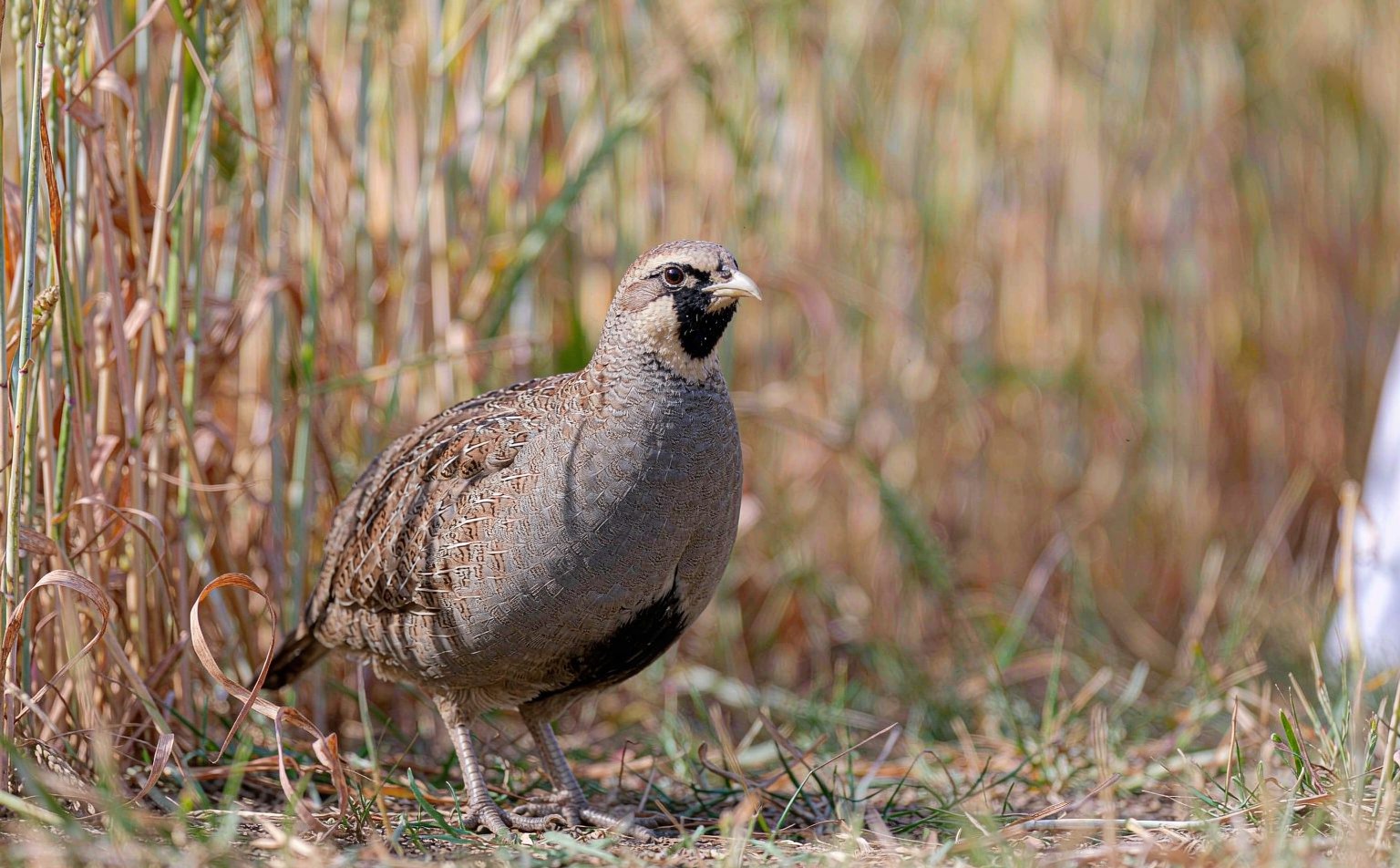
Perdix perdix | Grey Partridge
Introduction
The Grey Partridge (Perdix perdix) is a plump, round-bodied gamebird of farmland and open countryside across temperate Europe and western Asia, a bird whose rattling call and whirring flight have long been woven into the rural landscape. Unlike the related pheasants, the partridge is a bird of the ground, nesting among crops and grass and relying on cryptic plumage and a crouched stillness to avoid detection. It is one of the classic birds of the agricultural plain, and its fortunes are closely tied to the way the land is farmed.
Once abundant and a familiar feature of hedgerows and stubble, the Grey Partridge has declined sharply across much of its range since the mid-twentieth century, making it a flagship for the broader crisis facing farmland wildlife. Its story is in many ways the story of the modern countryside, where intensification has eroded the food and cover on which the species depends.
The partridge is a gregarious bird for much of the year, forming small coveys through the winter, and it shares open habitats with other seed-eating birds such as the common chaffinch and the European goldfinch, though these occupy rather different niches within the farmed mosaic.
Taxonomy
The Grey Partridge was first described by Carl Linnaeus in 1758 and is the type species of the genus Perdix, a small group of partridges of open country in Eurasia. Its scientific name is simply the Latin word for the partridge, a name of ancient pedigree that has been applied to the bird since classical times.
The genus Perdix belongs to the family Phasianidae, the pheasants and partridges, and sits apart from the true partridges of the genus Alectoris such as the red-legged partridge. Only a handful of Perdix species exist, distributed across Eurasia, with the Grey Partridge among the most widespread and familiar.
Molecular studies place the gamebirds within a broader clade of landfowl, and confirm the close relationship between the grey and the related hill and snow partridges of Asia. The Grey Partridge’s lineage reflects a long history as a bird of open, grassy ground, a niche it shares with few other members of its family in the European lowlands.
Physical Characteristics
The Grey Partridge is a compact, pot-bellied bird about 28 to 32 centimeters long, with a short rounded bill, a small head, and a short tail that is often held low. Adults are chiefly grey-brown above and pale grey below, finely barred and streaked, with a conspicuous horseshoe-shaped dark mark on the belly of the male, a useful identification feature. The legs are a dull yellow-grey, suited to a life spent entirely on the ground.
The face is plain and the eye dark, and the overall coloration provides excellent camouflage among dry grass and stubble, where the bird can vanish simply by freezing in place. In flight the partridge shows a broad, rounded wing and a burst of whirring, rapid wingbeats with no glide, a characteristic escape flight that carries it low and fast across the field.
Females are similar to males but usually lack or show only a faint version of the belly horseshoe, and juveniles are smaller and more streaked, with a softer, buffier tone. The bird’s stocky build and short legs give it a distinctive, almost round silhouette whether standing in a furrow or bursting from underfoot, and its subdued patterning is the key to its survival in open country.
Habitat
Grey Partridges favor lowland farmland, grassland, and open scrub, wherever a mixture of crops, fallow, and weedy margins provides both food and nesting cover. They are birds of the agricultural plain and lightly wooded steppe, avoiding dense forest and heavily built-up land, and they thrive best in landscapes that retain some structural diversity rather than uniform, intensively managed monoculture.
The nest is a simple scrape on the ground, lined with a little grass, hidden among tall crops, grass, or hedgerow vegetation, and the birds rely on the cover of the growing season to conceal their eggs and chicks. As the year turns, coveys range more widely, using stubble, root crops, and field margins where spilled grain and seeds are available.
The essential requirements are insect-rich habitat in summer, for the chicks, and seed-rich habitat in autumn and winter, for the adults, together with enough tall cover to shelter the nest. The loss of these resources through early mowing, pesticide use, and the removal of margins has been the principal driver of the species’ decline across its range.
Diet
The Grey Partridge is fundamentally a seed-eater, consuming the seeds of grasses, cereals, and many broad-leaved weeds, which it gathers from the ground and husks with its strong bill. In autumn and winter seeds dominate the diet entirely, and the bird plays a useful role in the farmland ecosystem by consuming the seeds of numerous weed species.
During the breeding season, however, the diet shifts sharply toward animal food, because the fast-growing chicks cannot digest seeds and depend on protein-rich insects. The adults feed their young chiefly on aphids, beetles, caterpillars, and other invertebrates gathered from low vegetation, and the abundance of these insects in unsprayed margins strongly influences how many chicks survive.
This seasonal switch means the species needs two different resources close together: insect-rich nesting cover in summer and seed-rich foraging in autumn and winter. Farming systems that provide both, through wildbird seed mixes, retained stubble, and sympathetic hedge management, support far healthier populations than those that strip the land of weeds and insects.
Reproduction
Grey Partridges are notably productive, with the female laying a large clutch of ten to twenty eggs, occasionally more, in the ground scrape. Such big clutches are an adaptation to high losses from predation and farming operations, and they allow the population to recover quickly when conditions are good.
Incubation lasts about 23 to 25 days and is performed by the female, while the male stands guard nearby. The chicks hatch precocial and leave the nest within hours, able to feed themselves, though both parents shepherd and warm them, a level of biparental care that improves chick survival in cool, insect-rich weather.
The young fledge at roughly two to three weeks but remain with the adults, and by autumn family groups merge into the larger coveys that characterize the winter. Because the bird nests on the ground and rears its young among crops, it is highly vulnerable to early hay cuts and to the loss of insect-rich margins, which is why delayed mowing and seasonally sensitive farming are central to its conservation.
Conservation
The Grey Partridge has declined dramatically across much of Europe since the 1950s and is considered a species of serious conservation concern in many countries, though its global range remains large. The primary cause is agricultural intensification: the loss of weedy stubble and field margins, earlier and more frequent cutting of silage, increased pesticide use that removes insects, and the reduction of hedgerows and fallow.
These changes hit the partridge twice over, removing the winter seed supply and the summer insects needed to rear chicks, and they have been compounded in some regions by heavy predation pressure on nests and chicks. In contrast, landscapes with diverse cropping and generous margins continue to hold strong populations, showing the decline is reversible.
Conservation measures center on agri-environment schemes that fund wildbird seed mixes, winter stubble, and insect-rich margins, alongside predator management and the timing of operations to avoid the breeding season. Because the Grey Partridge responds relatively quickly to habitat improvement, it is widely used as a measurable indicator of the success of farmland biodiversity programs across Europe.
Fun Facts
- A single Grey Partridge clutch can exceed fifteen eggs, among the largest of any European land bird, an adaptation to heavy losses in the open nest.
- In winter the birds gather in coveys, family groups that roost and forage together for warmth and safety.
- The male’s call is a dry, mechanical rattle, often rendered as a fast “kerr-ick,” that carries across the stubble fields.
- Chicks feed almost entirely on insects for their first weeks, making abundant aphids and beetles the key to a successful brood.
- The species has been a quarry of lowland shooting for centuries, and its decline has prompted some of the earliest organized farmland conservation efforts in Europe.