 By st20113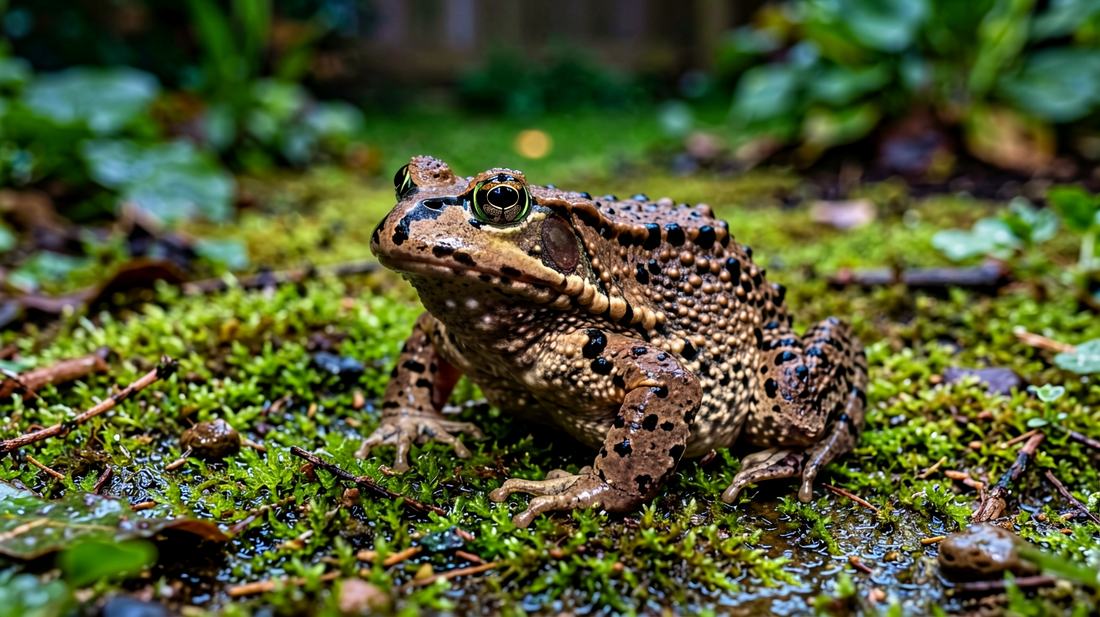
Anaxyrus americanus | American Toad
Species Profile · Bufonidae
American Toad
A stout, warty toad with poison glands behind the eyes, and a patient hunter of slugs and beetles in gardens after dark.
IUCN: Least Concern
Range
Size
Maturity
Life
Status
The gardener’s neighbour
The American toad
The American toad is a stout, warty, brown animal. It turns up under garden stones. It hops across lawns on summer evenings. It is not a fast mover. It cannot climb. It relies on patience, camouflage and chemistry.
Two large glands sit behind its eyes. They produce a milky, foul-tasting poison. This persuades most predators to look elsewhere. In spring, males gather at ponds. They call with a long musical trill. The trill can last half a minute.
By midsummer the shallows are full of black tadpoles. By autumn hundreds of tiny toadlets leave the water. The toad is common and harmless to people. It is one of the most useful animals a gardener can have. It eats slugs, beetles and other pests every night.
Family tree
One of the true toads
The American toad belongs to the family Bufonidae. Bufonidae is the scientific name for the true toads. Its order is Anura, the frogs and toads. Its closest familiar relative here is the Common Toad of Europe. That toad shares the same dry, warty skin. It shares the same parotoid glands.
It shares the habit of walking rather than leaping. For most of the last century the American toad was placed in Bufo. Many older books still use that name. Modern genetic work moved North American toads into Anaxyrus. Three types are usually recognised. They are the eastern American toad.
They are the dwarf American toad of the south-east coastal plain. They are the Hudson Bay toad of the far north. Dwarf and eastern forms can be very hard to separate. This is where their ranges overlap. The three interbreed freely.
Warts, spots and poison
How to identify a toad
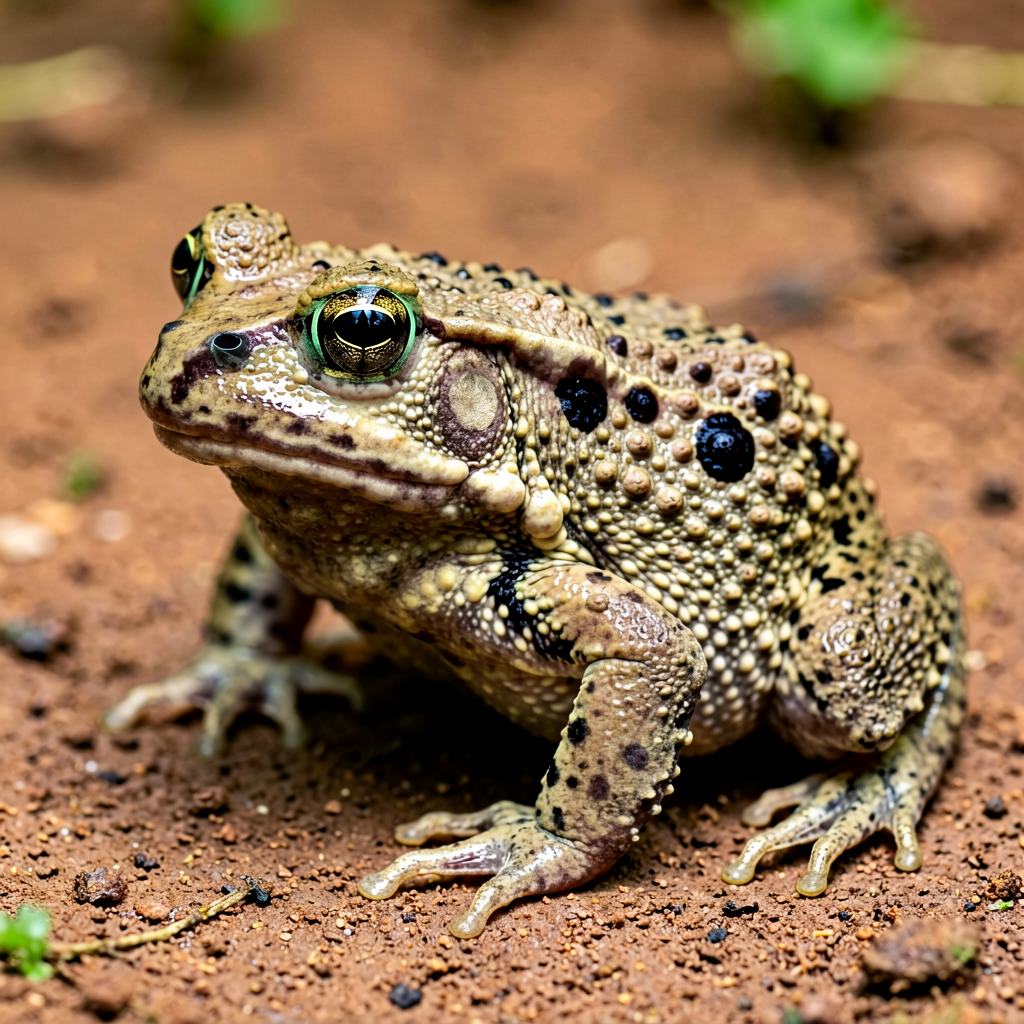
Adults measure 5 to 9 centimetres from snout to vent. Males are usually smaller than females. The largest females reach about 11 centimetres. The body is thick-set with short legs. The skin is dry and covered in warts. One or two warts sit inside each dark spot on the back. This is the standard way to tell it from Fowler’s toad.
Fowler’s toad spots usually contain a single wart. Colour varies greatly. It may be brown, olive, reddish, grey or nearly white. It often has a light stripe down the middle of the back. The belly is pale with dark speckles. Two kidney-shaped parotoid glands sit behind the eyes. Two bony ridges, called cranial crests, meet behind the eyes.
Males develop a dark throat in the breeding season. They grow a special pad on the first finger to grip females. Unlike frogs, toads have no webbing on the hind feet. They walk or take short hops rather than jumping far. Like other amphibians they shed the outer skin in one piece. They then eat it. This hides the evidence and recycles the nutrients.
1
2
3
Gardens and woodland
Where toads live
The American toad is native to eastern North America. Its range runs from the Maritimes and southern Canada west to Manitoba. It goes south through the eastern United States to Georgia and Texas. It lives in woods, meadows, pastures, bogs and gardens. It tolerates people well. It turns up in back yards, under porches and in flower-pot stacks. It needs damp cover and a nearby pond for breeding.
Adults live on land. They dig backwards into soil to hide. They use their hind legs as shovels. They are nocturnal, or active at dawn and dusk. By day they shelter under stones, logs, leaf litter or boards. In the far north they sleep through winter from September or October. They wake in April or May.
They bury below the frost line or under thick leaves. In the south the winter rest is much shorter. Toads tolerate dry conditions far better than frogs. They can lose a large part of their body water without harm. This lets them spend most of the year away from any pond. Home ranges are small. Many toads return to the same pond each spring.
What it eats
Waiting for prey to move
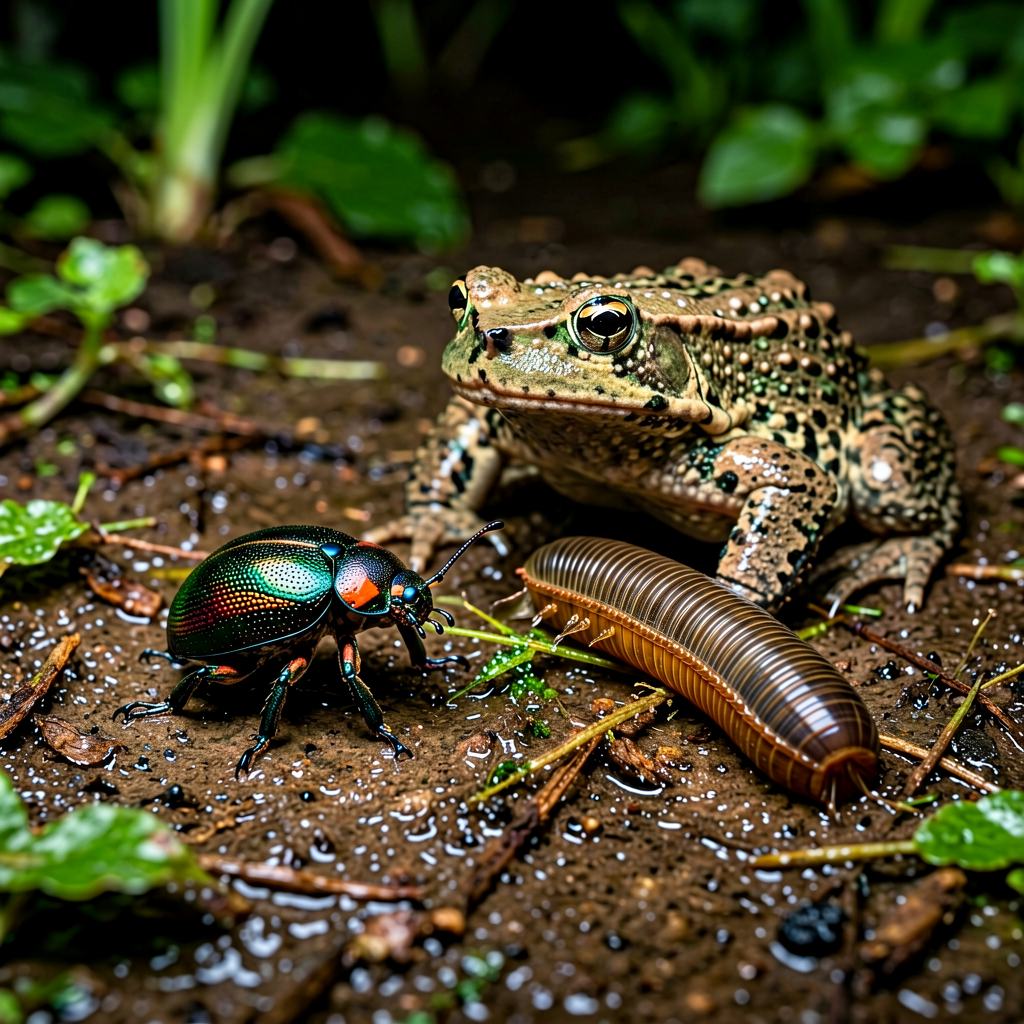
American toads eat almost any small animal that moves and fits in the mouth. Their diet is dominated by insects and other invertebrates. These include beetles, ants, crickets, grasshoppers, true bugs and moths. Also spiders, millipedes, earthworms, slugs and snails. The slime of slugs would put off most predators. Because they eat slugs and beetles they are welcomed in gardens. They are drawn to compost heaps and mulched beds.
Toads hunt by sitting still. They wait for prey to pass within reach. Then they flick out a sticky tongue and draw the prey in. They cannot see anything that does not move. They use their eyes to swallow. They press the eyes down into the roof of the mouth. This pushes food into the throat.
Tadpoles eat algae, plant tissue and bits in the water. Young toadlets take very small prey. These include springtails and tiny flies. Beetles and ants are often a large part of the adult diet. So are spiders, harvestmen and the odd small centipede.
Thousands of eggs
A spring migration
American toads are explosive breeders. In spring, often on the first warm rainy night, hundreds migrate. They go to shallow ponds, ditches and flooded fields. Males arrive first. They call with a long trill that lasts up to 30 seconds. The trill comes from an inflating throat sac. Females choose a calling male. The pair stays in amplexus, the male gripping the female’s back.
This can last for hours. The female lays thousands of eggs. She usually lays 4,000 to 8,000 and sometimes more. The eggs are in long double strings of jelly. They are wound around underwater plants. The eggs hatch in three to twelve days. The time depends on temperature. The tadpoles gather in warm shallows.
They change form in about 40 to 70 days. The smallest toadlets emerge in midsummer. Later broods continue into August. American toads reach sexual maturity at two or three years old. They can live for ten years or more in the wild. During the breeding migration, roads and traffic kill the most adults.
Help in the garden
Small changes that help
The American toad is assessed as Least Concern. It remains common across most of its large range. Yet many people see fewer toads than a generation ago. The pressures are familiar for amphibians. Breeding wetlands are lost. There is drainage and development.
Road traffic harms them during spring migrations. Pesticides remove the insects they eat or poison them directly. Amphibian diseases such as ranavirus have caused die-offs. The chytrid fungus has devastated frogs worldwide. It can also infect toads. The species tolerates gardens, so small changes help.
A pond in the garden corner assists. So do leaf piles and untreated wood. Avoid slug pellets. Where cover is scarce, communities build toad houses and tunnels. These let the animals cross roads safely to breed.
Quick hits
Five things to remember
- The milky poison from the two glands behind the eyes makes toads taste foul to most predators.
- American toads cannot see prey that is not moving, and use their eyes to help push food down.
- A female can lay more than 8,000 eggs, in long double strings of jelly around pond plants.
- They walk or hop rather than leaping far, because their hind feet have no webbing.
- Toads eat slugs, beetles and other pests, which makes them valuable garden neighbours.