 By st20113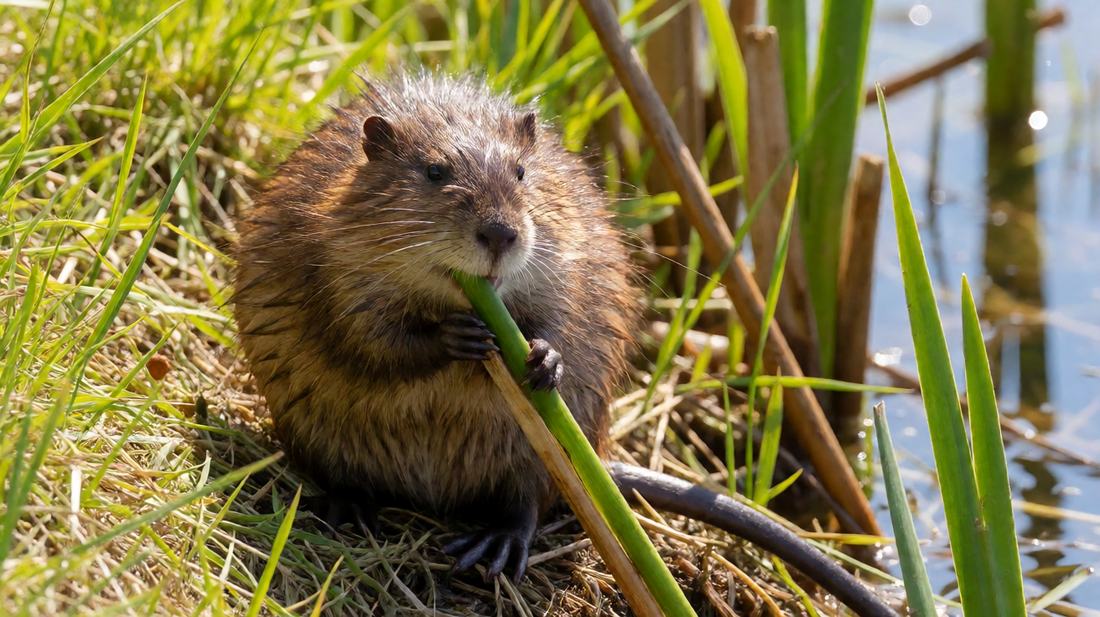
Ondatra zibethicus | Muskrat
Species Profile · Cricetidae
Muskrat
A stout brown marsh rodent that is not a rat at all, but a giant vole with webbed feet and a rudder for a tail.
A big vole that lives in the water
Body
Weight
Feet
Litters
Dive
The muskrat
A big vole, not a rat
The Muskrat is a stout dark brown rodent of marshes and slow rivers. It is one of the most successful water mammals in the world. It looks a little like a small beaver without the flat tail. It is not a beaver, and it is not a rat. It is a large vole, and its nearest relatives are the voles and the lemmings.
The head and body together measure 25 to 40 cm. The tail adds another 19 to 28 cm, so a full grown animal is about the length of a cat. It weighs 1 to 2 kg. The fur is dense, glossy and oily, and it keeps the animal warm in cold water. The hind feet are partly webbed and carry stiff hairs.
The tail is flattened from side to side and almost bare, and it is used as a rudder. The name comes from 2 musk glands at the base of the tail. They give off a strong smell in the breeding season. Muskrats build domed lodges of mud and plants at the water’s edge. They can stay under water for about 15 minutes.
Family tree
Rodentia, Cricetidae
This animal belongs to the order Rodentia, the rodents. It sits in the family Cricetidae. That family holds the voles, the lemmings, the hamsters and the New World mice. It is one of the largest families of mammals. Within the family our animal sits in the subfamily Arvicolinae, whose members are the voles and the lemmings. It is the only living species in its own genus, Ondatra.
Linnaeus named it in 1766 as Castor zibethicus. The name Castor shows that he thought it was a kind of beaver. The mistake was corrected later. The genus name Ondatra comes from a word in the Huron language of North America. The species name refers to the musky smell of the animal. This animal is much larger than the other members of its subfamily.
It is also the only one that has taken to life in the water. It shares its family with the Bank Vole, a small brown rodent of European hedgerows. That animal has a short hairy tail and never enters the water. Yet the 2 of them sit in the same branch of the family tree.
Webbed feet and a rudder
How to tell one
This animal has a heavy barrel shaped body 25 to 40 cm long. Its tail measures 19 to 28 cm, and the whole animal weighs 1 to 2 kg. The fur is dense and glossy. A thick layer of soft underfur lies below the longer guard hairs. That layer traps air and keeps the skin dry in the coldest water.
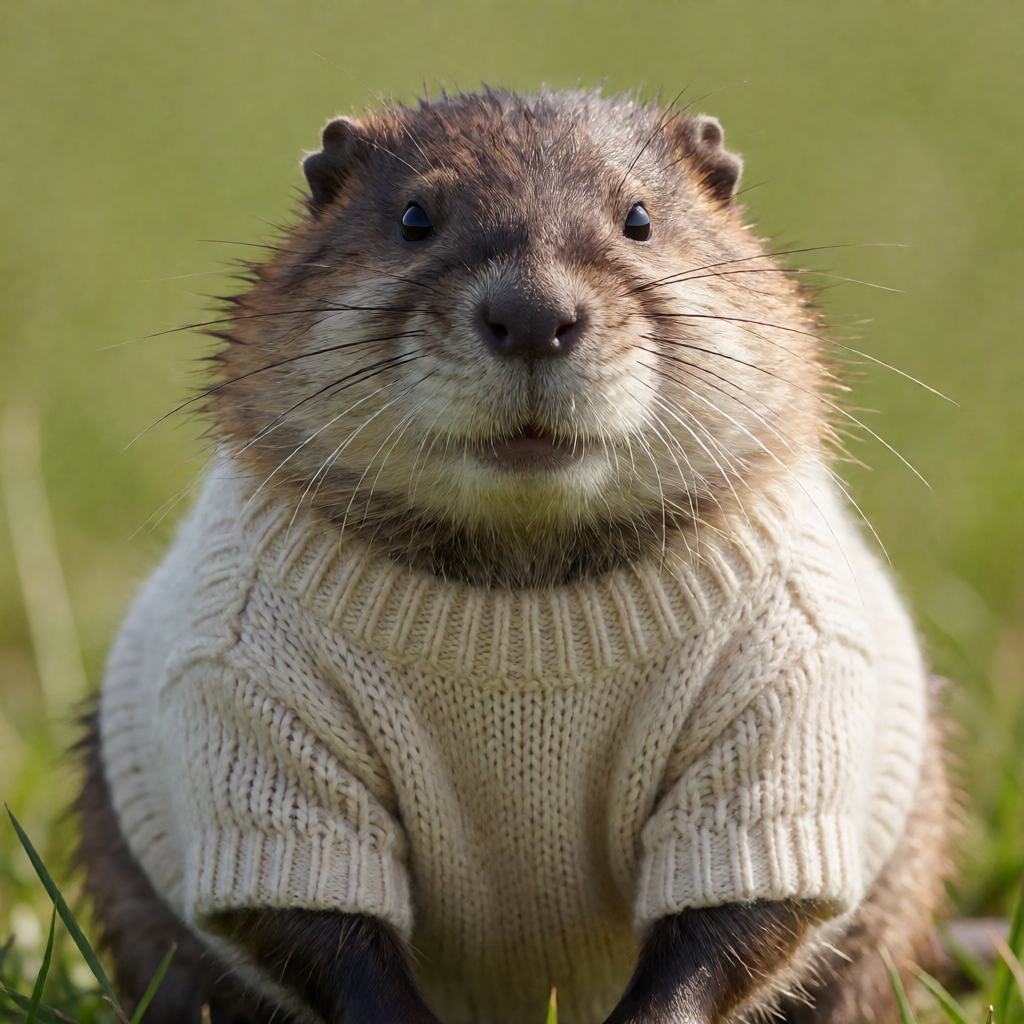
The colour is dark brown on the back and lighter on the sides. The belly is grey or white, and the tail is almost black. The head is broad and blunt. The eyes are small and set high on the skull, and the ears barely rise above the fur. The mouth has flaps of skin behind the front teeth.
So the animal can gnaw on a plant under water without water entering its throat. The front teeth are large and orange, and they grow throughout life. The front feet are small and are used for digging. The hind feet are much larger, with webs between the toes. The tail is flattened from side to side and is covered with small scales.
1
2
3
Marsh, dyke and slow river
Where it lives
This animal lives in fresh water and in the wet places beside it. It uses marshes, ponds, lakes, slow rivers, canals and drainage dykes. It needs still or slow water with plenty of plants and a soft bank for digging. In the shallow parts of a marsh it builds a lodge. That is a dome of mud, roots and cut stems.
These lodges may stand about 1 m above the water. In rivers and canals, where the banks are firm, it digs a burrow instead. The entrance is always below the surface. The animal does not build dams and does not fell trees. It is a creature of the water’s edge and rarely travels far over land.
It will cross a short stretch of dry ground to reach a new pool. In Europe it has spread along the rivers and canals that people have built. It is now common in the lowlands of France, Belgium, Germany and beyond. In Britain a group was set up in 1905, and it was gone by 1939.
Plants, with a taste for mussels
What it eats
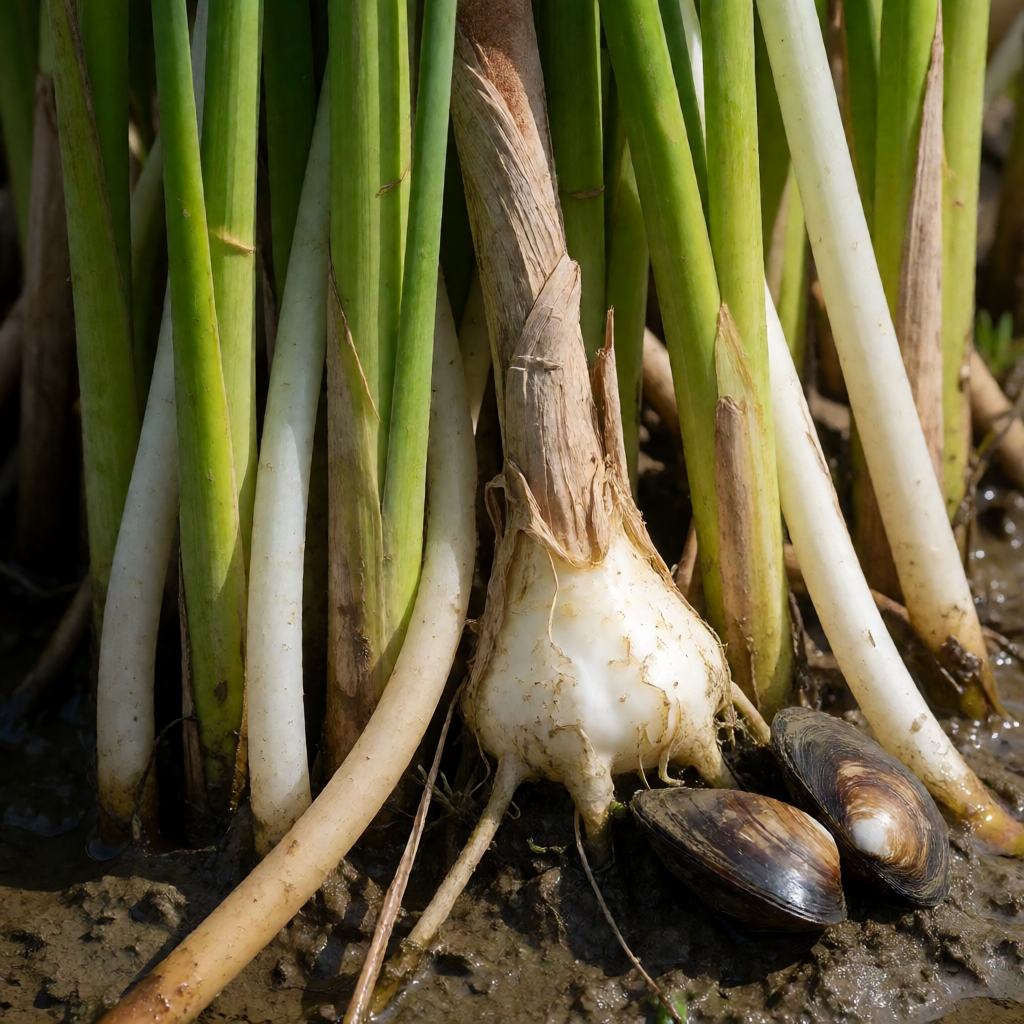
This animal is mainly a plant eater, and it feeds on the plants of the marsh. Reed shoots, cattail roots and water lily stems make up most of its food. It also eats the leaves and stems of many other water plants. It takes the plants both above and below the water. In winter the green shoots are gone, so it lives on roots.
It may also eat the bark of willows and other waterside trees. It is not a strict plant eater, however. Mussels, crayfish, frogs, small fish and the eggs of water birds are all part of its diet. It will feed on dead animals when it finds them. The animal carries food to a favourite place on the bank or on a log.
These feeding stations are marked by a litter of cut stems. It climbs well and can reach plants growing well above the surface. It can also stay under water for about 15 minutes.
Up to 5 litters a year
The breeding cycle
This animal breeds quickly and often, and its numbers can rise very fast. The breeding season begins in the spring and lasts until the autumn. A female produces 2 or 3 litters in a year in the north of the range. She may produce up to 5 in the warm south. Each litter holds 4 to 8 young. The young are born blind and almost hairless in a nest lined with soft plants.
The nest sits inside a lodge or a burrow. The pregnancy lasts about 25 to 30 days. The young grow quickly. They can swim when they are 1 week old, and they are weaned at about 3 weeks. They leave the family at about 1 month. Females born in the early spring may breed in the same year.
That is 1 reason the species can build up a dense group in a single season. The male helps to guard the home range, but he does not raise the young. In the wild most animals live for about 3 years. A single pair can produce a very large number of descendants in a few years.
Native in America, alien in Europe
Conservation
This animal is common and widespread, and it is not at risk in its native North America. There it is also trapped in large numbers for its fur. In Europe the story is different. The animal was brought to the continent for fur farming at the start of the 20th century. The first wild group was set up in 1905 near Prague in Bohemia. Those animals had escaped from a farm.
From that small group it spread along the rivers and canals of central Europe. It reached France, the Netherlands, Belgium and beyond. In Britain a group was released in 1905 in Shropshire. It survived for more than 30 years before it was removed. Trapping began in 1932, and the last British animals were taken by 1939. Elsewhere in Europe the species is still classed as an alien, and it is trapped for 2 reasons.
The first is the damage it does. Its burrows weaken the banks of rivers, canals and dykes. The second is its fur, which is still sold. In its native range, by contrast, the muskrat feeds foxes, owls, hawks and large fish.
Quick hits
Five things to remember
- The animal is not a rat. It is a large vole, and its closest European relative is the bank vole.
- It was first described as a kind of beaver, and Linnaeus named it Castor zibethicus in 1766.
- Its hind feet are webbed and edged with stiff hairs, and it can stay under water for about 15 minutes.
- A female can raise up to 5 litters in a year in the warm south, each with 4 to 8 young.
- The species was brought to Europe in 1905, and the British group had been removed by 1939.