 By st20113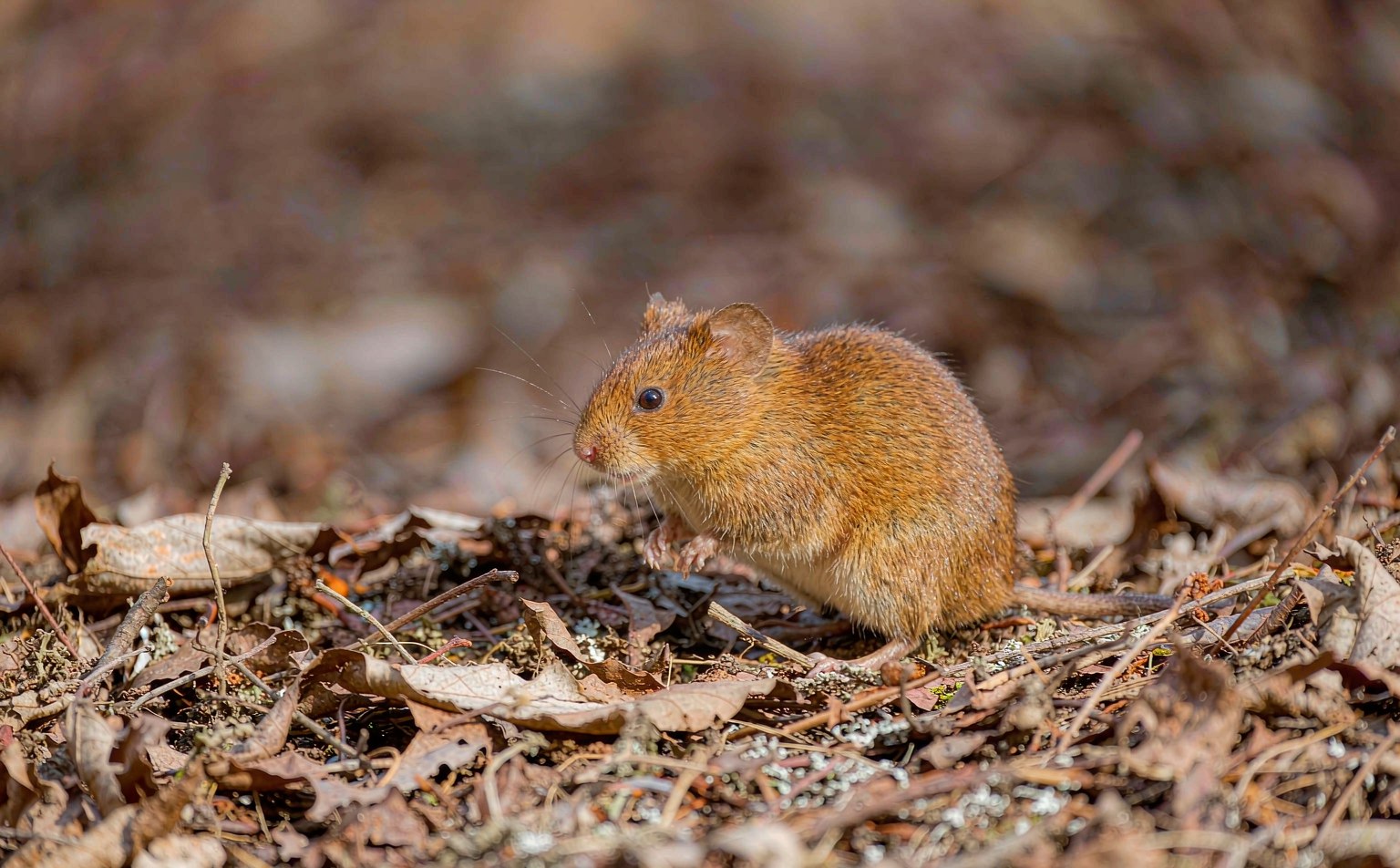
Myodes glareolus | Bank Vole
Introduction
The Bank Vole (Myodes glareolus) is one of the commonest small mammals of European woodlands, hedgerows and gardens, a chunky little vole with a shorter tail than most of its relatives. Active by day and night, it is a key link in the food web, turning seeds, fruits and insects into food for owls, foxes and weasels. Its readiness to nest in nest boxes makes it one of the easiest wild mammals to observe at close range.
Taxonomy
The Bank Vole is a rodent in the family Cricetidae, placed in the genus Myodes, and is widespread across Europe and into western Siberia. It is a close relative of the [Wood Mouse](https://www.gloencyc.com/apodemus-sylvaticus-wood-mouse/) and, like the [European Water Vole](https://www.gloencyc.com/european-water-vole-arvicola-terrestris/), belongs among the small burrowing herbivores that structure ground-layer ecology. Several subspecies are recognised across its range.
Physical Characteristics
An adult Bank Vole measures 90 to 120 millimetres in head and body, with a tail of only 35 to 60 millimetres, noticeably shorter than the body. The fur is rich chestnut-brown above and greyish below, the eyes large and black, the ears rounded and partly hidden in the fur. The feet are broad and the claws short, suited to digging and climbing low stems.
The skull is robust with strong orange-yellow incisors, and the molars have a pattern of alternating triangles used to identify the species in surveys. Females are slightly smaller than males. Fresh pelage is sleek in summer and denser in winter, but the species does not change colour with the season.
Habitat
The Bank Vole favours deciduous and mixed woodland, coppice, hedgerows, scrub, parks and mature gardens, anywhere with a leafy ground layer and plenty of cover. It is less tied to water than the water vole and more of a climber, often foraging up brambles and low branches. It thrives where dead wood, logs and leaf litter provide nesting and refuge, and it declines in intensively grazed or treeless land.
Diet
Bank Voles are mainly herbivorous but strongly omnivorous, eating seeds, nuts, berries, buds, fungi, roots and bark, and readily taking insects, snails and carrion when available. They are important consumers of tree seeds such as oak, beech and hazel, and they cache food in burrows for lean periods. In spring they may strip the bark of young trees, occasionally causing minor damage in plantations.
Reproduction
Breeding runs from March to October, with females producing several litters of three to seven blind, hairless young after a gestation of about eighteen to twenty days. The young grow quickly, opening their eyes at around nine days and becoming independent within three weeks. In mild years some breeding continues through winter, and the species can reach high numbers before predation or food shortage checks it.
Conservation
The Bank Vole is abundant and of no conservation concern across most of its range, and it is a central prey species for many protected predators. Locally it can be affected by the loss of hedgerow and woodland cover and by the removal of dead wood, so leaving scrub and rotting logs helps maintain populations. Because it carries ticks and can harbour rodent-borne parasites, it is monitored in studies of woodland health but poses no threat to people under normal contact.
Fun Facts
- Its tail is unusually short for a vole, about half the length of its body.
- It readily nests in nest boxes put up for birds, letting you watch it through the entrance hole.
- Bank voles are partly arboreal and will climb brambles to reach blackberries.
- A single female may raise five or more litters in one long breeding season.
- They are a favourite prey of tawny owls, which cast up their remains in easily read pellets.