 By st20113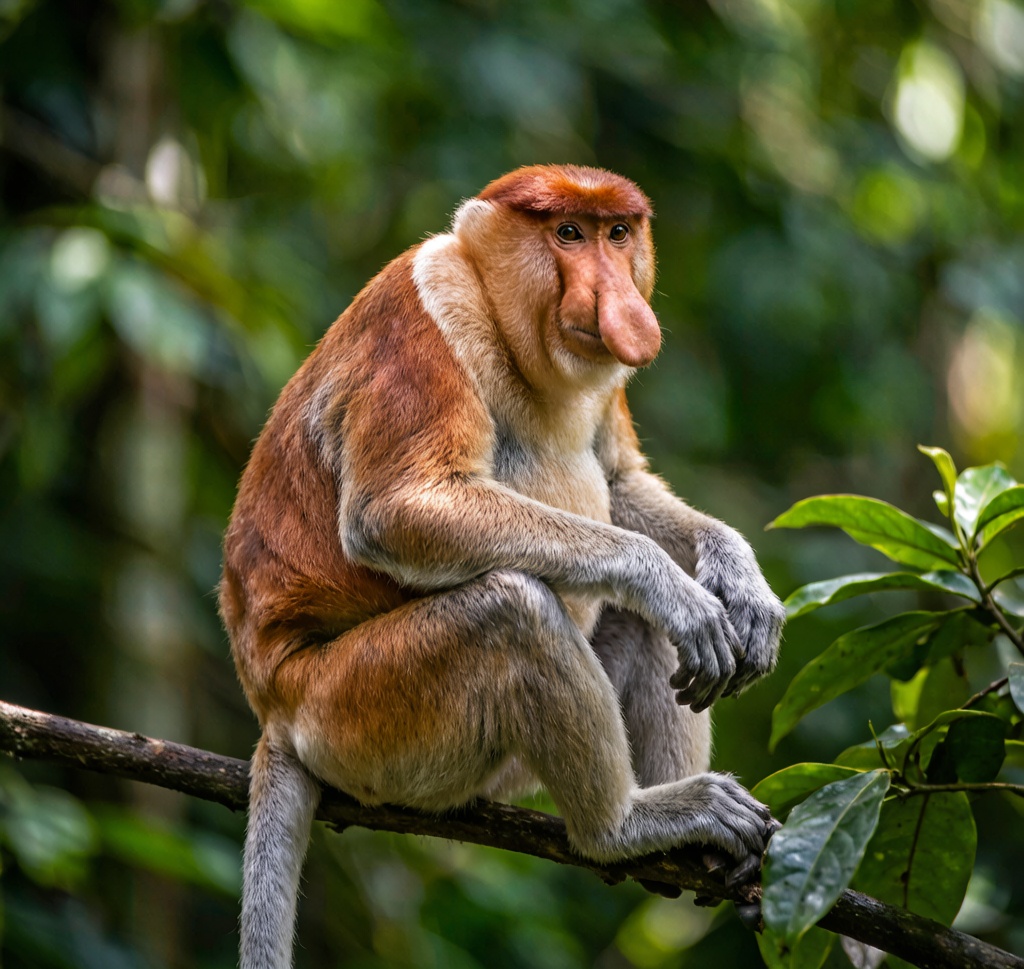
Introduction
The Proboscis Monkey (Nasalis larvatus) is an endemic primate of Borneo, universally recognized by the males’ extraordinarily large, fleshy nose, which can grow to lengths of 10 centimeters and dangle below the mouth. One of the most visually distinctive primates on Earth, the proboscis monkey inhabits mangrove swamps, riverbank forests, and coastal palm swamps, where it has evolved remarkable adaptations to a semi-aquatic lifestyle. The Orangutan shares Borneo as another endemic primate, while the proboscis monkey has carved out a unique ecological niche along the island’s coastal waterways.
Taxonomy
The proboscis monkey is the sole living member of the genus Nasalis and belongs to the family Cercopithecidae, the Old World monkeys. Within the colobine subfamily (Colobinae), the proboscis monkey occupies a distinct evolutionary branch, reflecting its long isolation on the island of Borneo. Its closest living relatives among the primates are the leaf-eating monkeys of the colobine group, including the langurs and colobus monkeys, with whom it shares a specialized digestive system adapted for processing large quantities of fibrous leaves. The Green Sea Turtle shares the proboscis monkey’s coastal marine environment, illustrating how distantly related species can evolve similar amphibious habits in overlapping coastal habitats.
Physical Characteristics
The proboscis monkey is a relatively large primate, with adult males weighing up to 24 kilograms and measuring up to 76 centimeters in body length, plus a tail extending an additional 60 to 75 centimeters. The males’ striking elongated nose is believed to function as a sexual signal preferred by females and may also serve as a resonating chamber that amplifies vocalizations across the dense mangrove forest. Both sexes have a characteristically rounded pot belly, reflecting a complex, multi-chambered stomach housing symbiotic bacteria that break down the cellulose in leaves. The coat is reddish-brown on the back, pale on the underside, and the hands and feet are partially webbed – an important adaptation for swimming and crossing the water channels that dominate its coastal habitat.
Habitat
Proboscis monkeys are the most amphibious of all primates and are strongly associated with wet, coastal habitats. They inhabit mangrove swamps, peat swamp forests, riverbank forests, and coastal palm swamps throughout the lowland coastal regions of Borneo. The mangrove forest is their stronghold, providing abundant food from leaves and fruiting trees and offering protection from terrestrial predators such as pythons. These coastal ecosystems are among the most biodiverse environments on Earth, but they are also among the most threatened, facing rapid destruction from palm oil expansion, shrimp aquaculture, and coastal development that have eliminated vast areas of proboscis monkey habitat in recent decades.
Diet
The diet of the proboscis monkey is composed primarily of leaves, which account for roughly 50 percent of its total food intake, supplemented by fruits, seeds, flowers, and occasionally insects. Like other colobine monkeys, the proboscis monkey possesses a complex, multi-chambered stomach with symbiotic bacteria that break down cellulose, allowing it to extract nutrition from vegetation that would be indigestible to most other primates. Young leaves are actively preferred over mature foliage due to their higher protein content. During the fruiting season, proboscis monkeys travel considerable distances to reach fruit-rich trees along the riverbanks.
Reproduction
Proboscis monkeys live in social groups typically composed of one dominant male, several females, and their offspring, while all-male bachelor groups are a common feature of their social structure. Females reach sexual maturity at approximately 4 to 5 years of age, while males typically leave their natal group before joining bachelor groups and eventually establishing their own family unit. After a gestation period of approximately 166 days, females give birth to a single infant, which is born with a dark face and a blue facial mask that lightens as the animal matures. The slow life history of the proboscis monkey, with single-infant births and extended dependency, makes population recovery from habitat loss particularly slow.
Conservation
The proboscis monkey is classified as Endangered on the IUCN Red List, with fewer than 7,000 individuals estimated to remain in the wild, representing a decline of more than 50 percent over the past four decades. The primary driver of this decline is the wholesale destruction of Borneo’s coastal mangrove forests for palm oil plantations, shrimp farms, and coastal development. Illegal hunting also occurs in some areas, with proboscis monkeys killed for meat or taken for the illegal pet trade. Conservation efforts focus on protecting remaining mangrove reserves, restoring degraded coastal habitats, and developing community-based livelihoods that provide economic alternatives to habitat destruction. The Ocean Sunfish shares the proboscis monkey coastal habitat and highlights the rich marine biodiversity dependent on the same coastal ecosystems.
Fun Facts
The proboscis monkey is a surprisingly accomplished swimmer, using a distinctive up-and-down dog-paddle motion and even diving below the surface when crossing rivers or escaping predators such as the Nile Crocodile and pythons – a semi-aquatic ability rare among primates and likely evolved as a direct response to threats in their water-dominated habitat. The species has partially webbed hands and feet, physical adaptations that facilitate movement across slippery mud and through shallow water channels. Males’ large noses amplify their loud honking vocalizations, which carry across the mangrove forest, and serve as a visual dominance signal within the social group. When group members cross water together, they often do so in coordinated groups of up to 20 or more, creating a remarkable synchronized swimming display unique among the primates of Southeast Asia.