 By st20113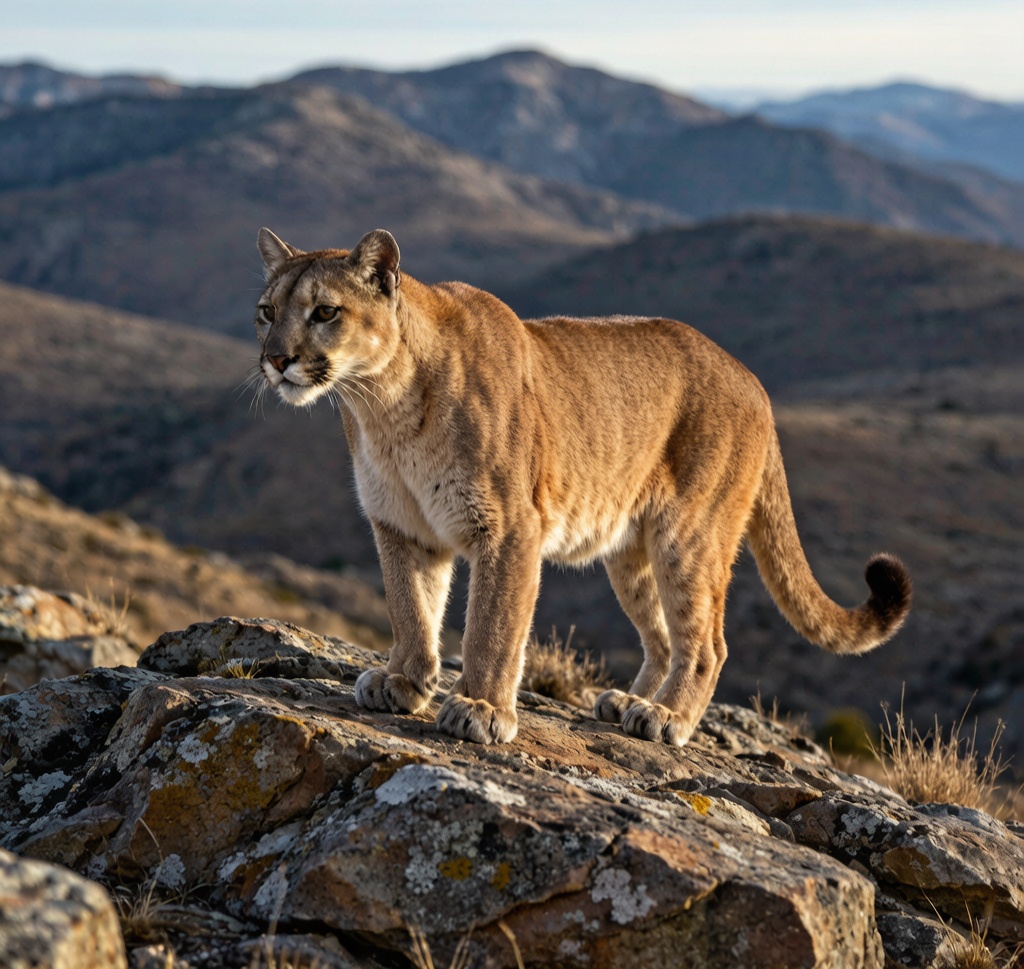
Introduction
The cougar (Puma concolor)—also known as the mountain lion, puma, panther, or catamount—is one of the most remarkable predators in the Western Hemisphere. North America’s largest wild cat, adult males can exceed 100 kilograms. Despite its size and power, the cougar is a creature of deep forests, rugged mountains, and remote canyons that goes largely unseen. The cougar holds the distinction of being the most widely distributed native terrestrial mammal in the Western Hemisphere, with a historical range from the Yukon to the tip of South America. The Florida panther, a subspecies, persists in southern Florida with fewer than 200 individuals—one of the most endangered large carnivore populations in the United States. The cougar is a solitary, ambush predator that stalks prey with extraordinary patience before delivering a suffocating bite to the neck.
Taxonomy
The cougar was first formally described by Carl Linnaeus in 1771 under the name Felis concolor (“cat of one color”), reflecting its uniform tawny coat. It was later reclassified into the genus Puma, the sole extant member of that genus. Its closest living relatives are the jaguarundi of Central and South America and the Cheetah of Africa and Iran. Despite its large size, the cougar purrs like a domestic cat and cannot roar—a characteristic shared only with the jaguarundi among the world’s large cats. Six subspecies are currently recognized, differing primarily in size and geographic range.
Physical Characteristics
The cougar’s body is built for power and stealth. Males typically weigh 53 to 100 kilograms, with females smaller. The coat is uniformly tawny or cinnamon across the back, with lighter cream-colored undersides. A distinctive feature is its long, thick tail, which accounts for roughly one-third of the animal’s total length and is used for balance during climbs and rapid direction changes. Unlike the Jaguar that overlaps its range in Central and South America, the cougar has a uniformly colored coat without spots or rosettes. The cougar’s skull is broad and vaulted, with powerful jaw muscles capable of delivering a killing bite to prey as large as elk and moose.
Habitat
The cougar occupies the widest range of any wild terrestrial mammal in the Western Hemisphere, though that range has been significantly reduced from its historical extent. The species is found from the Canadian Yukon and western United States through Mexico and across most of South America, with highest densities in mountainous, forested regions with abundant prey. Cougars are habitat generalists and can survive in coniferous forests, tropical rainforests, swamps, grasslands, and arid deserts, provided adequate prey and cover are available. The species was once found throughout eastern North America, hunted to near-extinction by the early 20th century with the exception of the small, genetically isolated Florida panther population.
Diet
The cougar is an obligate carnivore and highly efficient ambush predator, capable of taking prey from small rodents to large ungulates exceeding 500 kilograms. Deer are the primary prey across most of North America, with a single cougar killing approximately one deer per week on average. In the northern parts of its range, elk and moose are important prey, while in Central and South America, it hunts peccaries and capybaras. After making a kill, the cougar typically covers uneaten portions with debris and returns to feed over several days. This caching behavior prevents Brown Bears and other large scavengers from stealing the kill.
Reproduction
Cougars have no fixed breeding season. After approximately 90 to 96 days’ gestation, a litter of 1 to 6 kittens is born in a sheltered den—typically a cave, rock crevice, or dense vegetation. Newborn kittens are spotted at birth, losing their spots as they mature into the adult’s uniform coat. Kittens are entirely dependent on their mother for the first several months, nursing for approximately two months before weaning. The mother teaches hunting skills by bringing live prey for practice, a process continuing for 15 to 26 months before young cougars disperse to find their own territories. Female cougars typically give birth every other year, and subadult offspring sometimes assist in raising subsequent litters.
Conservation
The cougar has recovered substantially in western North America following decades of protection and regulated harvest management, with populations now in the tens of thousands. However, the Florida panther remains Critically Endangered with approximately 230 individuals persisting in the Big Cypress and Everglades regions. The primary threats are habitat loss and fragmentation, vehicle collisions, and human persecution where cougars conflict with livestock interests. Cougars are fully protected throughout much of their range, though limited hunting is permitted in some western US states under carefully regulated seasons. Ensuring genetic connectivity between isolated populations is a critical conservation priority.
Fun Facts
The cougar’s scientific name Puma concolor translates as “puma of one color,” a nod to its distinctive uniform coat. The cougar holds the record for the longest jump of any large cat, capable of leaping more than 18 meters horizontally from a standing position and ascending 5 meters in a single bound. The cougar is the only large wild cat that can purr, a sound made possible by its throat structure resembling that of domestic cats more than the roaring big cats. It is the only wild cat in North America whose tail has a uniformly dark tip, distinguishing it from the bobcat and other predators that share parts of its range.
at dawn or dusk. Excellent climbers and swimmers, they stalk a wide variety of prey. The larger cougar shares much of its range but occupies a different ecological