 By st20113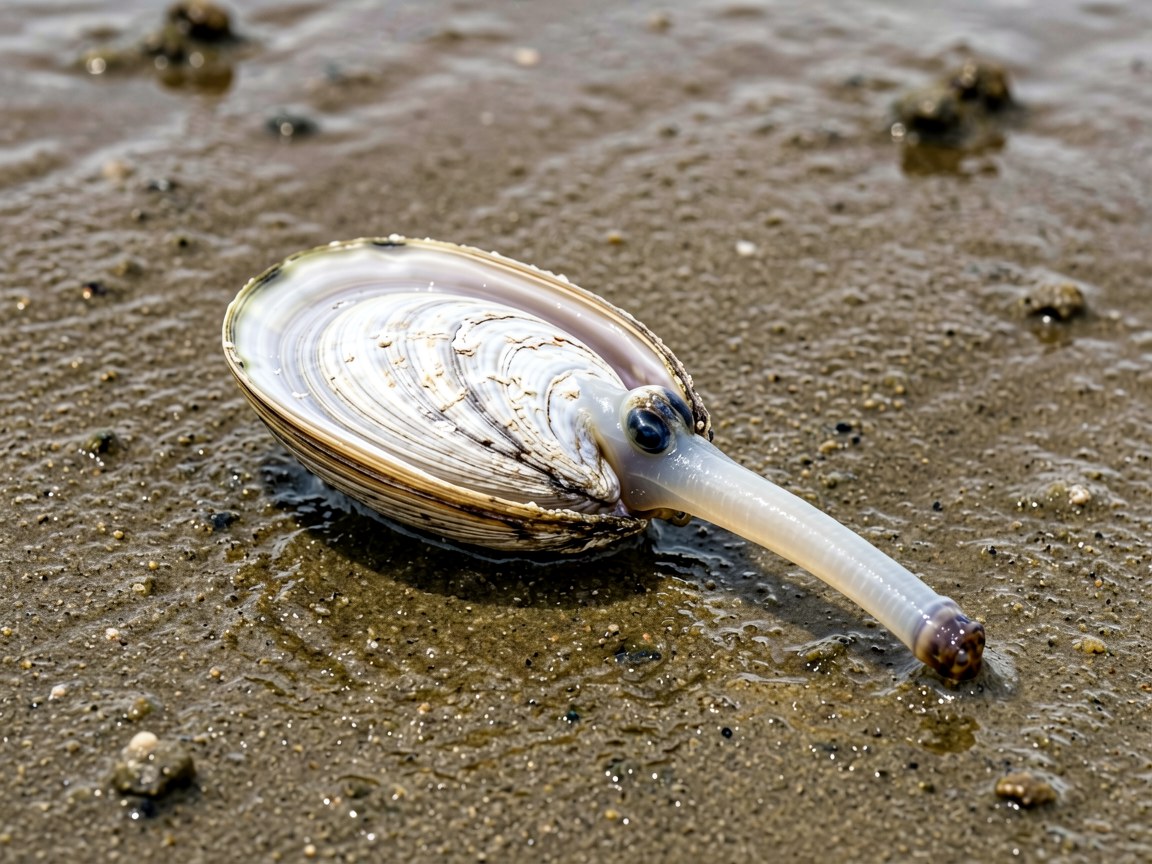
Mya arenaria | Soft-shell Clam
Introduction
The soft-shell clam (Mya arenaria), known in North America as the steamer or long-neck clam, is a large burrowing bivalve of sheltered sandy and muddy shores on both sides of the North Atlantic. It lives deeply buried, reaching the surface only through a long, fused siphon that draws in water for feeding and breathing. A popular seafood species and a patient filterer of coastal waters, it is also one of the longest-lived clams in temperate seas.
Taxonomy
Mya arenaria belongs to the family Myidae within the class Bivalvia and the phylum Mollusca, the same great group of shellfish that includes Mytilus edulis (Common Mussel). Like all bivalves, it has a body enclosed between two hinged shells and lacks a distinct head. The genus name Mya derives from the Greek for a sea mussel, and the species name arenaria means “of the sand,” referring to the sediments it burrows into.
Physical Characteristics
The shell is oval-oblong, thin, brittle, and gaping at both ends, typically 5–10 cm long and sometimes reaching 15 cm. It is chalky white to greyish, often with a thin, flaky brownish outer layer. Because the shell cannot close completely, the clam relies on depth for protection. The most striking feature is its long, muscular siphon—two tubes fused into one—which can extend to several times the shell length and cannot be fully withdrawn, which is why the animal is called “soft-shelled.” Growth rings on the shell record the years.
Habitat
This species burrows in sand, muddy sand, and mud from the middle shore down to depths of about 20 meters, favoring sheltered bays, estuaries, and tidal flats. It digs with a muscular foot and can descend 30–50 cm, deeper as it ages, with only the siphon tip reaching the surface. It tolerates a wide range of salinities and temperatures, which has helped it establish itself far beyond its native range.
Diet
The soft-shell clam is a filter feeder. It draws water in through one opening of its siphon, passes it over its gills, and traps suspended plankton, bacteria, and organic particles in mucus before carrying them to the mouth. Cleaned water is expelled through the second opening. A large clam can filter several liters of water an hour, making dense beds significant in clarifying coastal water and cycling nutrients between the seabed and the water column.
Reproduction
The sexes are usually separate, though some individuals change sex during life. Spawning occurs in summer, when rising water temperature triggers the release of eggs and sperm into the open water. Fertilization is external, and the resulting larvae drift as plankton for one to three weeks before settling onto suitable sediment and burrowing. Because larvae depend on currents, recruitment varies greatly from year to year, and populations can be dominated by a single successful year class.
Conservation
The soft-shell clam is not threatened overall and supports important commercial and recreational shellfisheries. Local pressures include overharvesting, habitat damage from dredging and bait digging, pollution, and the effects of coastal development on the sheltered flats it needs. Elsewhere it has become an introduced species: carried to the Pacific coast of North America, it has altered soft-sediment communities. Management typically relies on size limits, seasonal closures, and water-quality protection.
Fun Facts
- Its siphon cannot be pulled fully back into the shell, which is why the clam is called “soft-shelled.”
- Disturbed clams squirt a jet of water from the siphon—a familiar sight on tidal flats at low tide.
- It can burrow 30–50 cm deep, and digs deeper as it grows older.
- Some individuals live for more than 25 years, and their shells carry clear annual growth rings.
- In New England it is the classic “steamer,” steamed whole and served with broth and butter.
[…] close relative is Soft-shell Clam. Both animals bury themselves and feed through a siphon. The odd name comes from a native word of […]