 By Iris
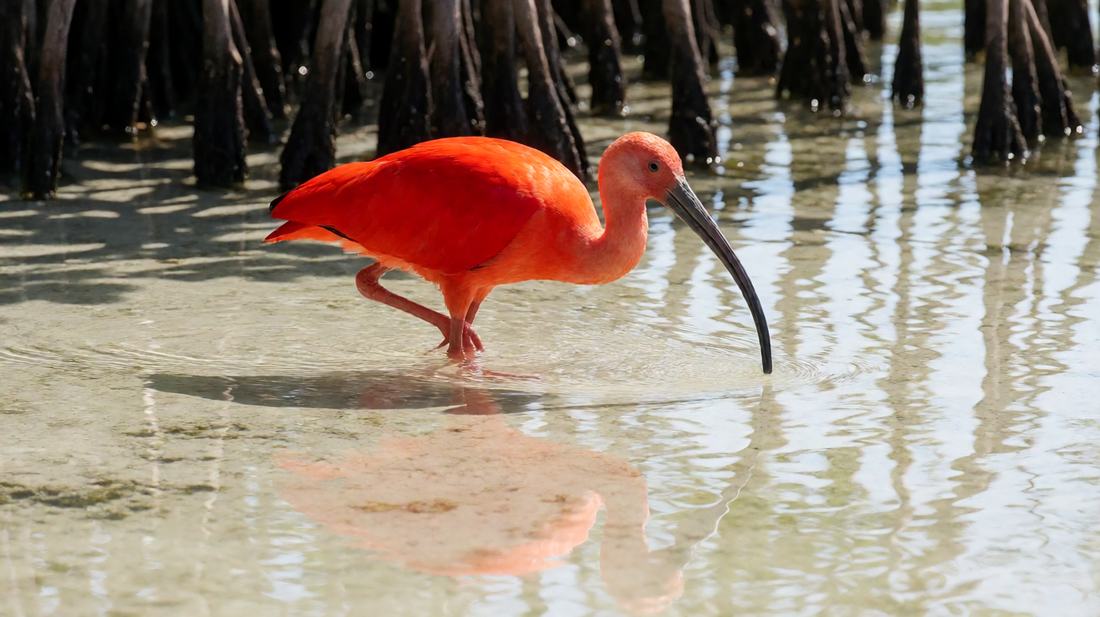
Eudocimus ruber | Scarlet Ibis
Species Profile · Threskiornithidae
Scarlet Ibis
A wading bird whose deep red plumage comes straight from the crabs and shrimps it eats in South American wetlands.
Least Concern (2025) 2025 assessment
Length
Weight
Eggs
Hatch
Fledge
Mature birds
The Scarlet Ibis
Red from the inside out
This wading bird lives on the coasts of South America. Its plumage is a deep, glowing red. Only the wing tips are black.
It is the national bird of Trinidad and Tobago. It feeds in shallow water and soft mud. Its colour comes from the food it eats.
These birds gather in large, noisy flocks. A flock in flight forms a neat V shape.
Family tree
Threskiornithidae, 28 ibis species
Eudocimus ruber is its Latin name. It sits in the family Threskiornithidae. That group holds the ibises and spoonbills. Carl Linnaeus named the bird in 1758.
Its nearest kin is the white ibis of the north. The 2 birds interbreed where their ranges meet. Their young show a pinkish mix of colour. Work on DNA still treats them as 2 species.
A White Stork shares the same long-legged hunting style. Both birds stalk prey through open wet ground.
55 cm of glowing red
How to tell one
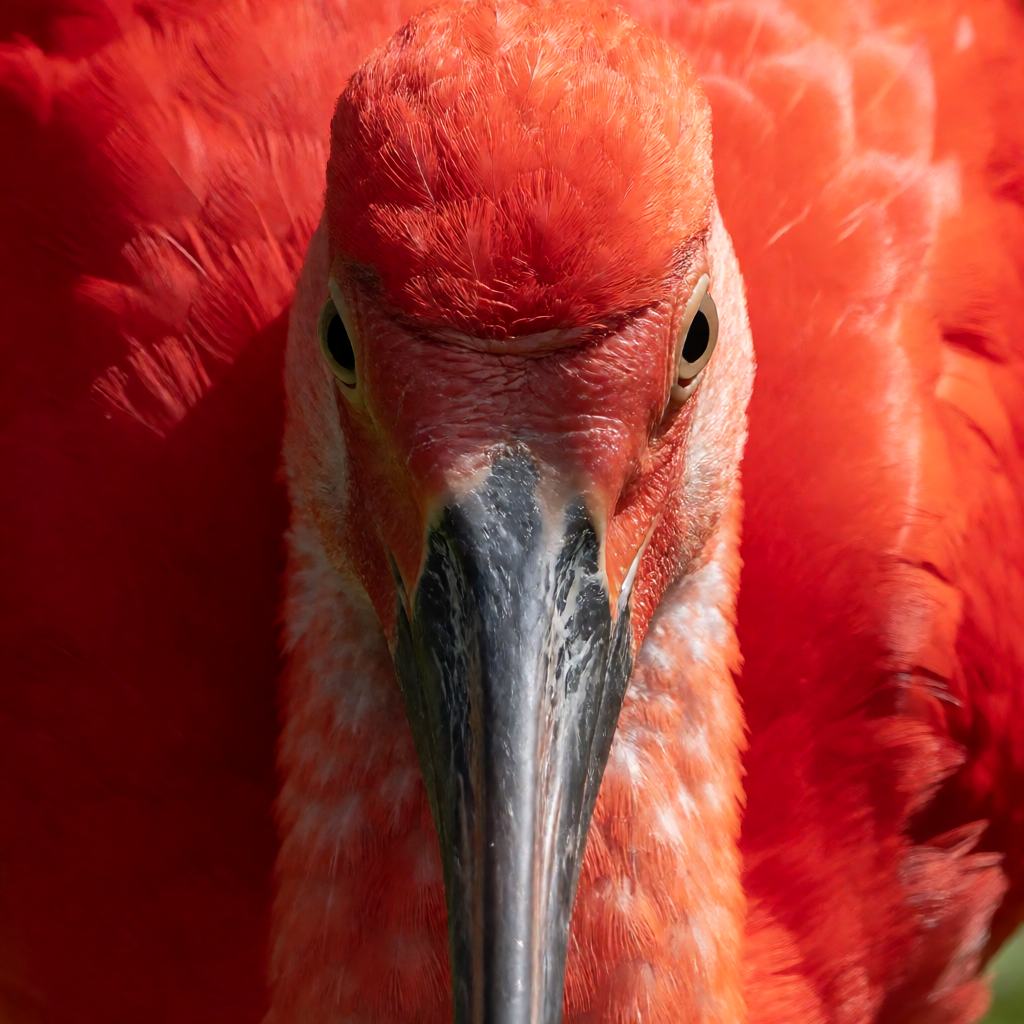
An adult is 55 to 76 cm long from bill to tail. The long bill curves gently downwards. Body weight falls between 0.6 and 0.9 kg. The wings span 52 to 56 cm.
Its neck is long and slender. The legs are long and partly webbed. Young birds are dull grey-brown, not red. They gain the red tone over about 2 years.
The bill tip holds many tiny sense pits. Those pits help the bird feel prey in mud.
1
2
3
Mangroves and tidal mudflats
Where it lives
This bird lives along the north coast of South America. Its range runs from Colombia east to Brazil. Inland it also uses the flooded plains of Venezuela.
It favours mangrove swamps and muddy river mouths. Tidal flats and shallow lagoons suit it well. Rice fields and fish ponds are used too.
These birds move between the coast and inland pools. They travel in search of the best feeding grounds.
Crabs, shrimps and snails
What it eats
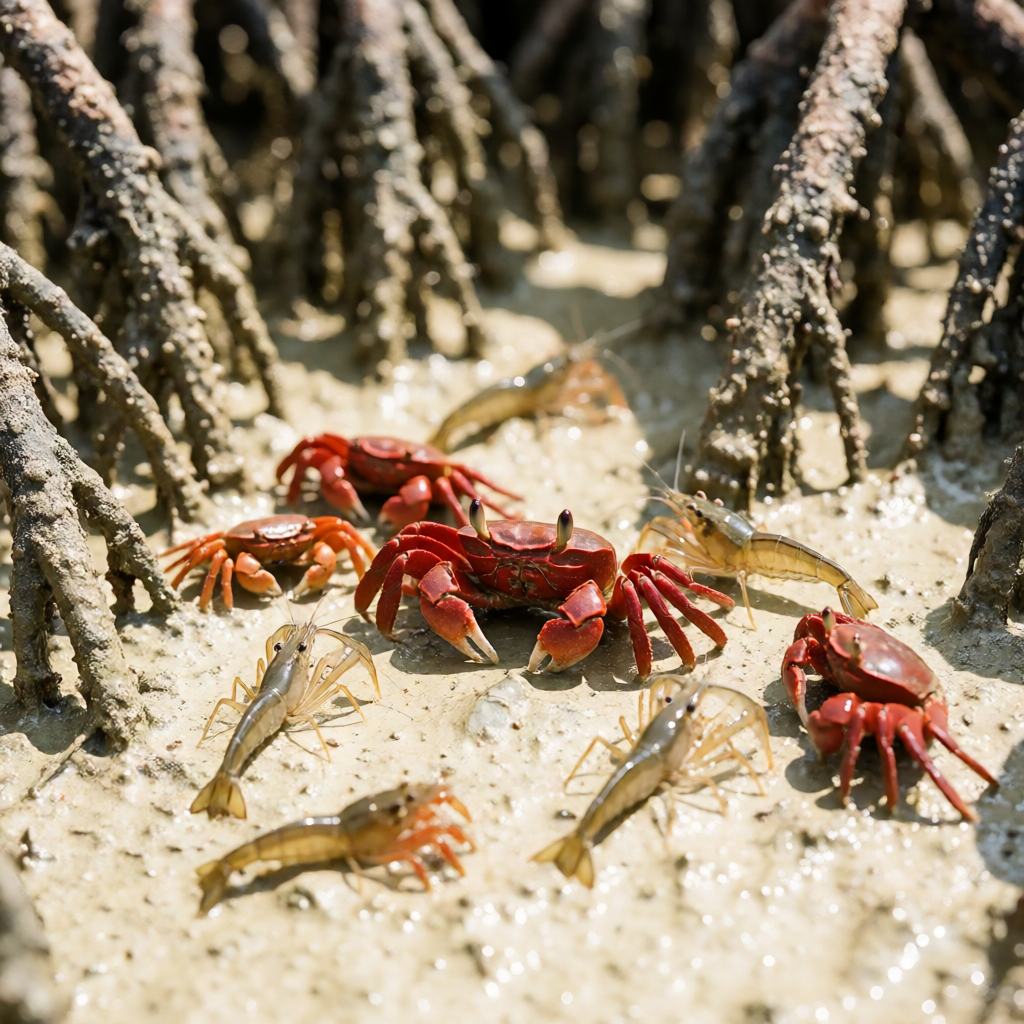
The diet is built around crabs and shrimps. Red pigments in these prey create the red colour. Bivalves and snails are eaten as well.
The bird also takes insects, small fish and frogs. It sometimes catches lizards and small snakes. It walks slowly and probes with its bill.
Feeding flocks hold 30 to 70 birds. A bird may also feed alone at the water edge.
Colonies in the mangroves
The breeding cycle
Breeding takes place in groups near water. These groups sit in mangroves or on brush islands. The season runs from September to December.
Pairs form after a show by the male. The female lays 3 to 5 pale greenish eggs. The eggs need 19 to 23 days of warmth.
Chicks can fly after about 35 days. They stay close to the parents for longer. Eggs hatch a day apart, so one chick grows faster.
Least Concern, but falling
Conservation
The IUCN lists this bird as Least Concern. Its numbers are thought to be falling slowly. The 2025 check put mature birds between 66,700 and 100,000.
Loss of wet ground affects several sites. Pollution and hunting add further strain. People also take eggs from the nests.
The bird is listed under CITES Appendix II. It draws visitors to swamps across its range.
Quick hits
Five things to remember
- Its Latin name means famous and red.
- Salt glands above the bill release strong salt water.
- A young bird needs 2 years of crabs to turn red.
- It was named for the scarlet shade of its feathers.
- Shorebirds of this family appear in fossils 60 million years old.