 By st20113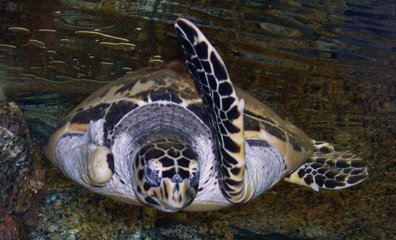
Introduction
The hawksbill sea turtle (Eretmochelys imbricata) is one of the most distinctive marine reptiles on Earth, named for its sharply curved parrot-like beak. Classified as critically endangered by the IUCN, this medium-sized sea turtle inhabits tropical and subtropical waters across the Atlantic, Indian, and Pacific Oceans. Hawksbills feed primarily on sponges in coral reef ecosystems, playing a critical role in preventing sponges from overgrowing reef-building corals. Despite decades of protection, populations remain severely depleted. The hawksbill is the only species in the genus Eretmochelys, representing a unique branch of the sea turtle evolutionary tree.
Taxonomy
The hawksbill belongs to the family Cheloniidae and is the sole living species in the genus Eretmochelys. Two subspecies are recognized: Eretmochelys imbricata imbricata in the Atlantic and E. i. bissa in the Indo-Pacific. The species was first formally described by Linnaeus in 1766. Phylogenetic studies place the hawksbill as a sister group to the green sea turtle, sharing the unique trait of overlapping shell scutes. The divergence of Atlantic and Indo-Pacific subspecies reflects the role of oceanographic barriers in driving speciation among wide-ranging marine turtles.
Physical Characteristics
Adult hawksbills reach 62 to 114 centimeters in carapace length and weigh 46 to 90 kilograms. Their broadly heart-shaped carapace is covered with overlapping scutes displaying amber, orange, reddish-brown, and black. The narrow head terminates in a distinctly curved beak adapted for extracting prey from coral crevices. Hatchlings measure about 4 centimeters with a dark, heart-shaped shell that elongates with age. Hawksbills cannot retract their limbs. Key diagnostic features include four costal scutes on each side of the carapace and two pairs of prefrontal scales on the head.
Habitat
Hawksbills are found throughout tropical and subtropical marine waters worldwide, with the highest densities in the Indo-Pacific, Caribbean, and western Atlantic. They are strongly associated with coral reef ecosystems, though they also inhabit rocky outcrops, mangroves, lagoons, and seagrass meadows. Juvenile hawksbills spend their early years in open ocean surface waters sheltering in floating Sargasso seaweed. Adults are predominantly coastal. Nesting occurs on sandy beaches throughout the range, with major colonies in the Caribbean, Seychelles, Maldives, and Great Barrier Reef. Female hawksbills exhibit natal homing, returning across ocean basins to the exact beach where they hatched.
Diet
The hawksbill sea turtle is primarily spongivorous, with sponges comprising up to 70 percent of its diet in many regions. It selectively feeds on particular sponge species while avoiding toxic varieties that other organisms cannot tolerate. In addition to sponges, hawksbills consume sea anemones, jellyfish, and marine invertebrates. They appear immune to the potent venom of the Portuguese man o war, which they consume without apparent ill effect. The beak-like jaws reach deep into coral crevices to extract sessile invertebrates inaccessible to most predators.
Reproduction
Hawksbill sea turtles reach sexual maturity between 20 and 40 years of age, one of the longest maturation periods among sea turtles. Mating occurs in shallow coastal waters near nesting beaches during the breeding season. A single female may mate with multiple males and store sperm for multiple clutches. She comes ashore at night to excavate a body pit and nest chamber, depositing an average of 130 to 160 leathery eggs. Incubation takes approximately 60 days. Sex is determined by nest temperature, with warmer sands producing predominantly females, a mechanism that makes hawksbill populations highly vulnerable to climate warming.
Conservation
The hawksbill sea turtle is classified as Critically Endangered globally by the IUCN. The principal historical threat has been commercial harvest of shells for tortoiseshell products, a trade that remains illegal under CITES but continues in some regions. Coastal development destroys nesting beaches, while artificial lighting disorients hatchlings. Fisheries bycatch in gillnets and trawls causes significant adult mortality, and marine plastic pollution affects hawksbills through both ingestion and entanglement. The leatherback sea turtle shares many of the same threats as the hawksbill, and integrated multi-species marine turtle conservation programs are particularly cost-effective.
Fun Facts
The hawksbill is named for its distinctive narrow, hawk-like beak. Hawksbill hatchlings are among the smallest sea turtle species at birth. They make clicking and grunting sounds underwater that scientists believe function as communication. Hawksbills can hold their breath for more than an hour during resting dives and descend to depths exceeding 70 meters. Like clownfish, hawksbills feature prominently in the folklore of coastal communities across their range. Ancient Pacific Islanders used hawksbill shells in traditional ornaments, and satellite telemetry has revealed trans-oceanic migrations exceeding 3,000 kilometers. The sea otter shares the hawksbill’s role as a flagship conservation species in its respective ecosystem.