 By Iris
Gastrotheca riobambae | Marsupial Frog
Species Profile · Hemiphractidae
Marsupial Frog
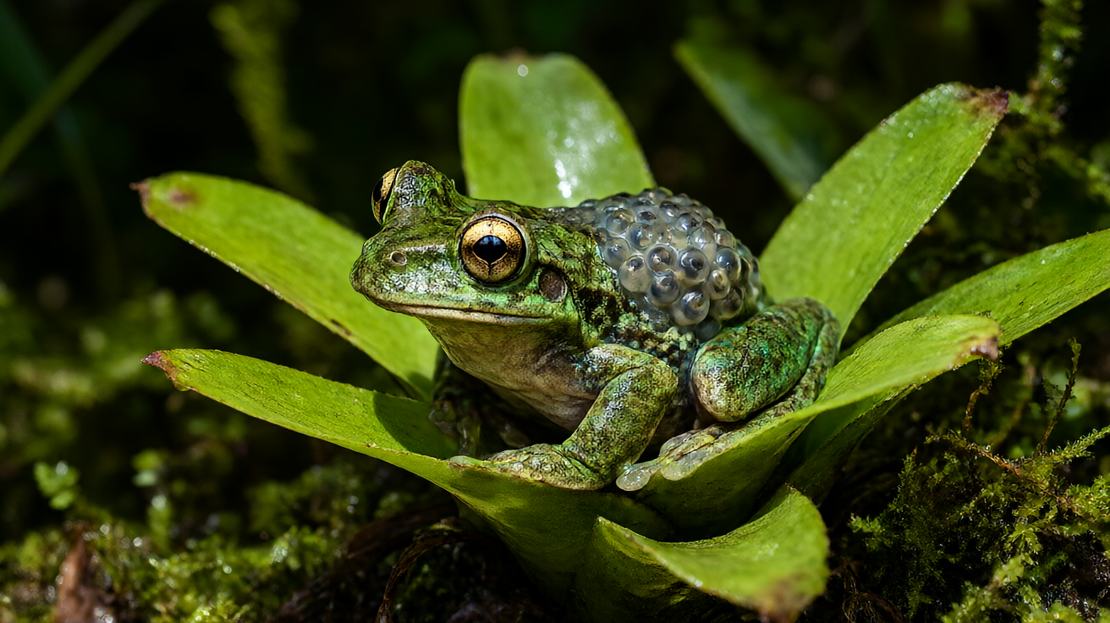
A frog sits on a bromeliad leaf with a row of pale eggs across her back.
Endangered
Length
Weight
Brood pouch
Young
Stage
Rating
The Marsupial Frog
A pouch along the spine
A frog sits on a bromeliad leaf with a row of pale eggs across her back. The eggs sit in a pouch, and the skin closes over them. No other frog in the Andes carries young quite like this.
Marsupial frogs live on the slopes around Quito, in Ecuador. Because the eggs stay on the mother, the species never needs a pond. That single habit explains much of how it lives.
Family tree
Hemiphractidae, frogs that carry
Its proper name is Gastrotheca riobambae, one of many marsupial frogs. Hemiphractidae is the family, a group found only in the Neotropics. A Glass Frog lays its eggs on leaves above a stream, though the parents offer no pouch at all.
Both species solve the same problem, which is how to keep eggs out of open water. A Golden Poison Frog carries tadpoles on its back instead, and the two habits look similar from a distance.
A pouch on the back
How to tell one
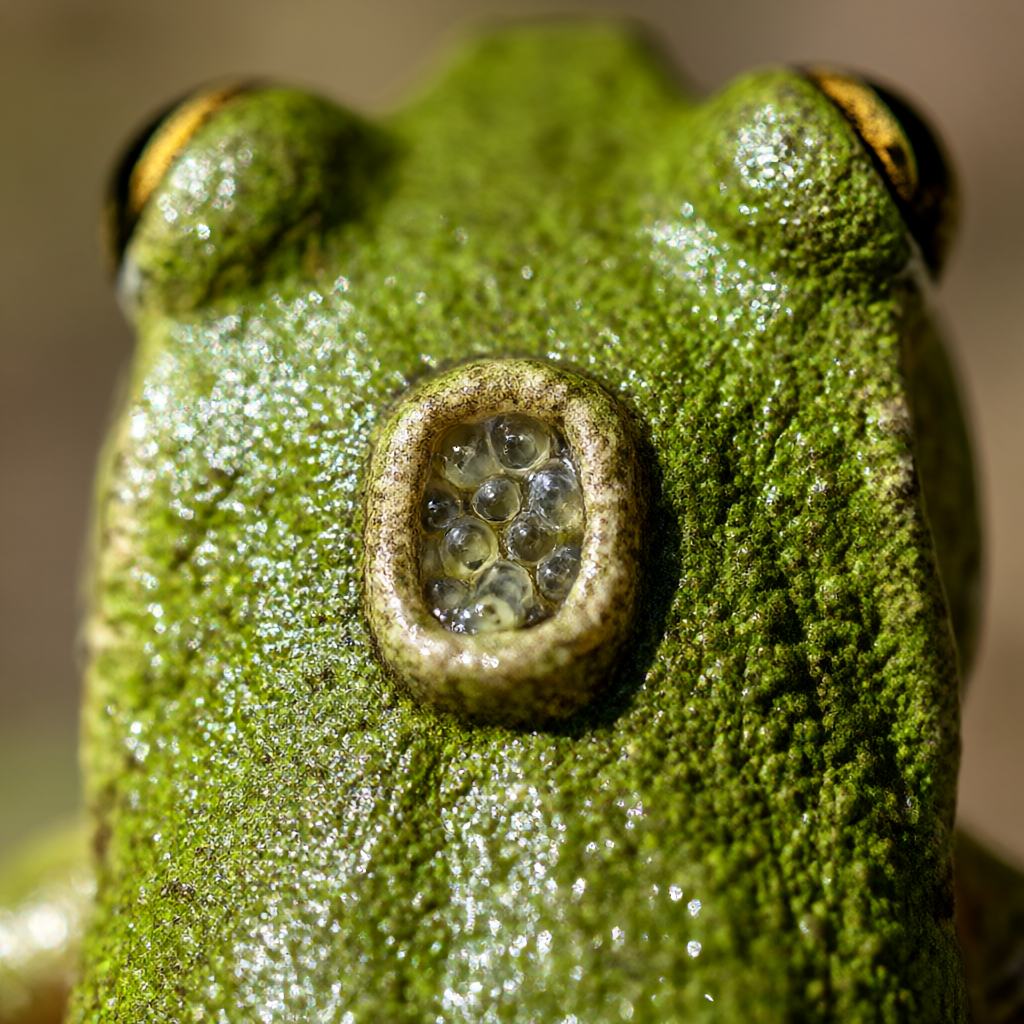
Body length runs 4 to 6 cm. Weight stays close to 10 g. A broad pouch opens along the spine. Skin colour runs olive or brown, with darker blotches that hide it on wet bark.
Because the pouch swells as the eggs develop, a carrying female looks unusually wide. Its eyes sit high and forward, and the pupils open wide at night. Toes end in discs, which help on smooth leaves.
1
2
3
Slopes around Quito
Where it lives
Andean slopes and valleys around Quito hold the species. It uses bromeliads, low shrubs and damp stone. Because the highlands have been farmed for centuries, the frog now lives in hedgerows and gardens as much as in forest.
Cool nights and mist suit it, and it avoids direct sun. The species also survives in eucalyptus stands, though numbers run lower there.
Crickets and moths
What it eats
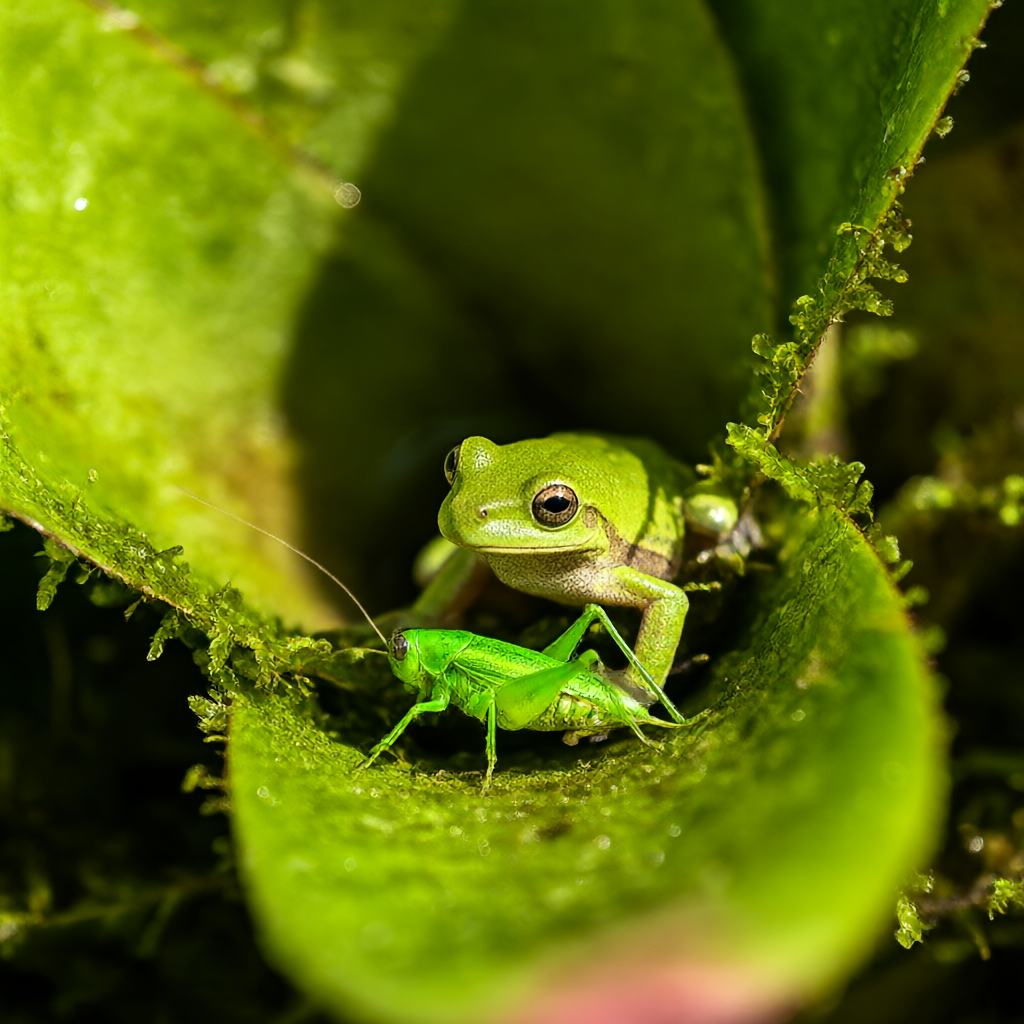
Insects make up the food. Crickets, moths and beetles come first. Because it hunts at night, it takes whatever moves across the leaves.
Its diet shifts with the season, and it eats less in the cool months. A feeding frog may stay on one shrub for hours.
Young arrive formed
The breeding cycle
The male calls from a concealed perch, and the female finds him. Eggs pass into the pouch within a day or two of fertilisation. Because the eggs develop inside the pouch, the mother carries them for weeks.
Each egg turns into a small frog, and no tadpole stage appears. The young leave the pouch fully formed. A female may carry a dozen at once, though she never feeds while carrying them.
Urban growth
Conservation
Red List status is Endangered. Urban growth around Quito removed much of the original habitat. Because the species needs damp cover, drainage and paving remove it completely.
Pesticides and polluted runoff add pressure on the remaining groups, so the losses compound over years. Some frogs survive in ditches and gardens, which gives the species a foothold.
Side by side
How It Compares
| Trait | Marsupial Frog | Glass Frog |
|---|---|---|
| Family | Hemiphractidae | Centrolenidae |
| Egg site | pouch on the mother | leaf above water |
| Stage | direct development | tadpoles |
| Range | Andes around Quito | Central America |
| Skin | opaque | translucent |
| Rating | Endangered | Least Concern |
Common misreadings
What People Get Wrong
- Not a mammal, despite the name. The pouch is skin. The name comes from the habit of carrying young, and nothing about the frog connects it to any marsupial lineage.
- Not a frog that lays in water. Damp cover replaces it. Eggs stay on the mother until they hatch, so the species never needs a pool and never produces a tadpole.
- Not a forest specialist any longer. Gardens now hold it. Hedgerows and bromeliads in settled valleys carry them through the year, and those groups sit closer to people than to forest.
Going further
Sources and Further Reading
Quick hits
Five things to remember
- The pouch opens along the spine, and the skin closes over the eggs after they settle.
- Young frogs leave the pouch fully formed, with no tadpole stage at all.
- A carrying female looks almost twice as wide as a male.
- The species lives in the same valleys that hold most of Ecuador’s human population.
- Males call from inside bromeliads, so the sound arrives muffled and hard to place.