 By Iris
Hura crepitans | Sandbox Tree
Species Profile · Euphorbiaceae
Sandbox Tree
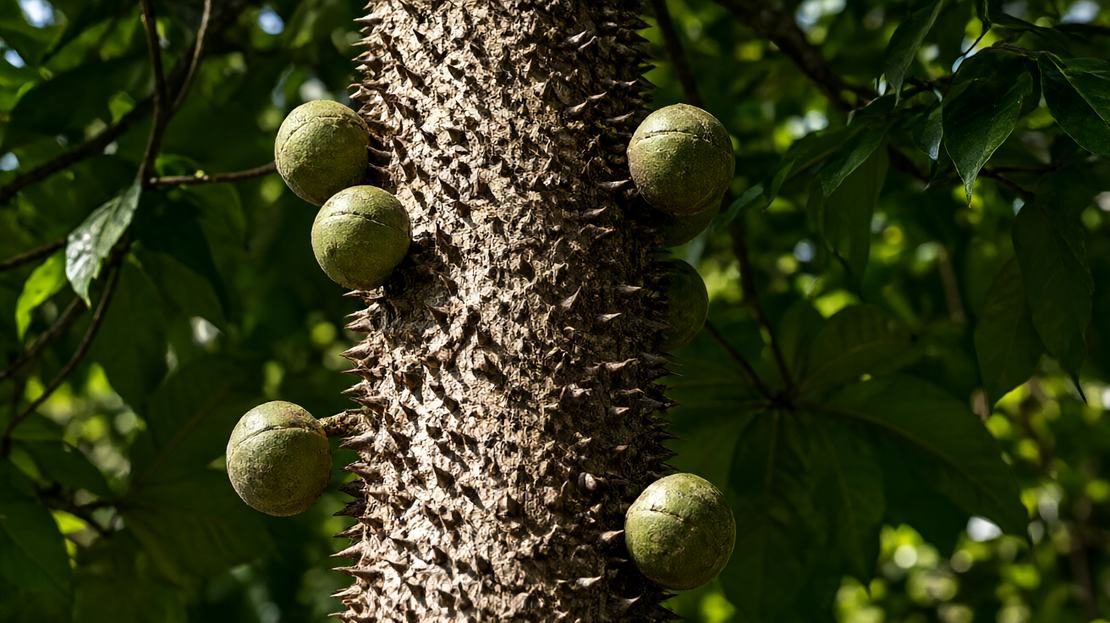
A tall trunk carries rows of sharp cones all the way up.
Not Evaluated
Height
Trunk
Seed speed
Fruit
Sap
Rating
The Sandbox Tree
A trunk that cannot be climbed
A tall trunk carries rows of sharp cones all the way up. Nobody climbs it without paying for the mistake. The fruit looks like a small pumpkin, and it dries until it splits.
When it goes, it goes hard enough to be heard across a clearing. Sandbox trees grow through the tropical Americas, and they are among the fastest trees in the forest. Because the seeds leave at speed, a person standing close can be injured.
Family tree
Euphorbiaceae, the spurge family
Its proper name is Hura crepitans, and it stands alone in its genus. Euphorbiaceae is the family, the spurges, which also holds cassava and castor oil. A Common Fig carries sap that stays harmless, though it grows in the same kind of warm forest.
A Coast Redwood reaches far higher, and that height comes from a different set of tricks entirely. Both trees reach the canopy, and both get there by very different routes.
Spines and soft wood
How to tell one
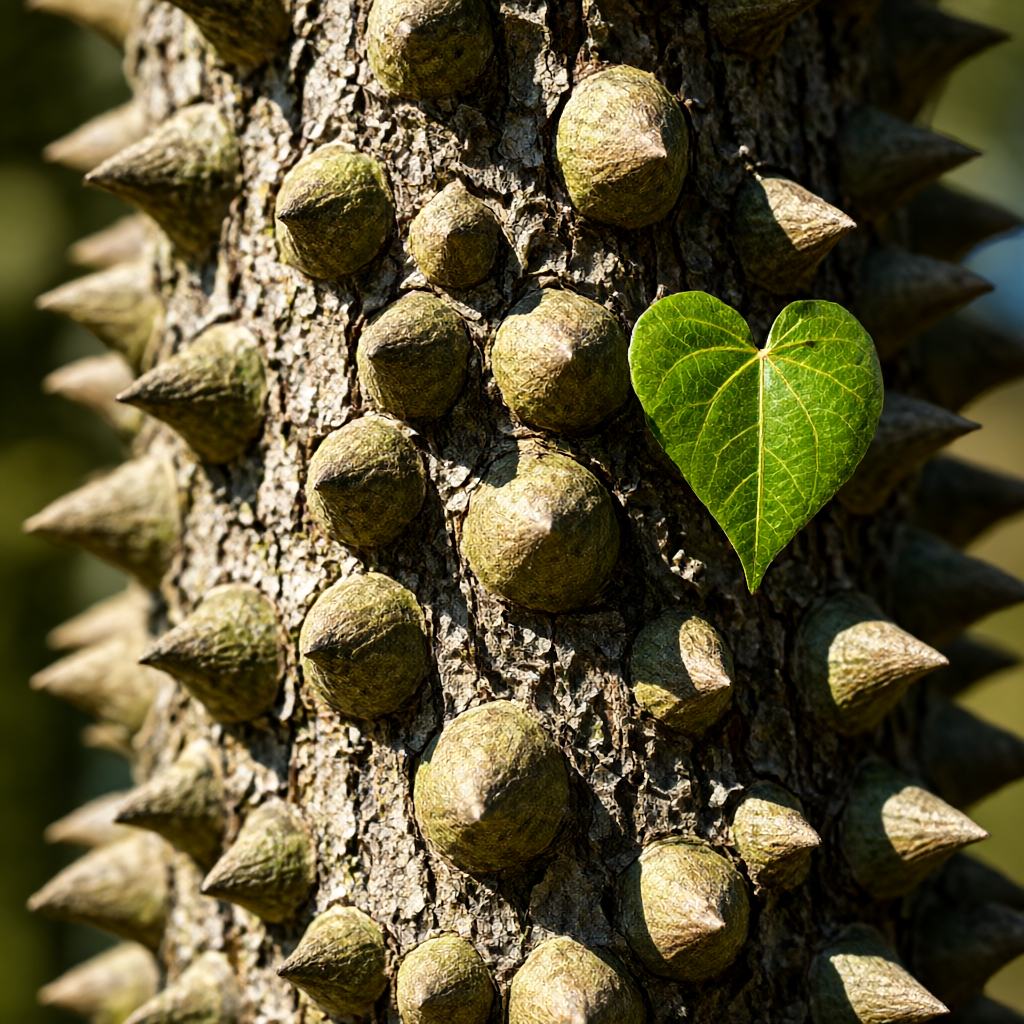
Height runs 30 to 60 m. Its trunk often lifts above the canopy. Bark carries short conical spines. Old trunks lose some of them.
Leaves are broad and heart shaped, though the tree drops them early. They turn yellow before they fall. The sap is milky, and it irritates skin on contact. The sap carries caustic compounds.
A cut branch can blind anyone who rubs an eye afterwards. Fruit hangs in clusters, and each capsule carries several large seeds, though most never germinate. The wood is light and soft, and it still saws easily.
1
2
3
River margins
Where it lives
Lowland rainforest and river margins hold the species, from Mexico down through the Amazon. Warm wet ground suits it best. Because the tree grows fast, it appears in clearings and on disturbed soil wherever light reaches the ground.
It also tolerates seasonally dry forest, though it grows slower there. Riverbanks carry the largest trees, and those trees shed fruit onto open ground.
Light and deep soil
What it eats
The tree makes its own food, so diet comes down to light and water. Deep soil supplies minerals, and the species grows fast where the ground stays damp. Because the trunk lifts high, the crown catches light that smaller trees lose.
Its roots spread wide rather than deep, which keeps the tree upright. Fallen leaves still return nitrogen to the soil beneath it.
An exploding capsule
The breeding cycle
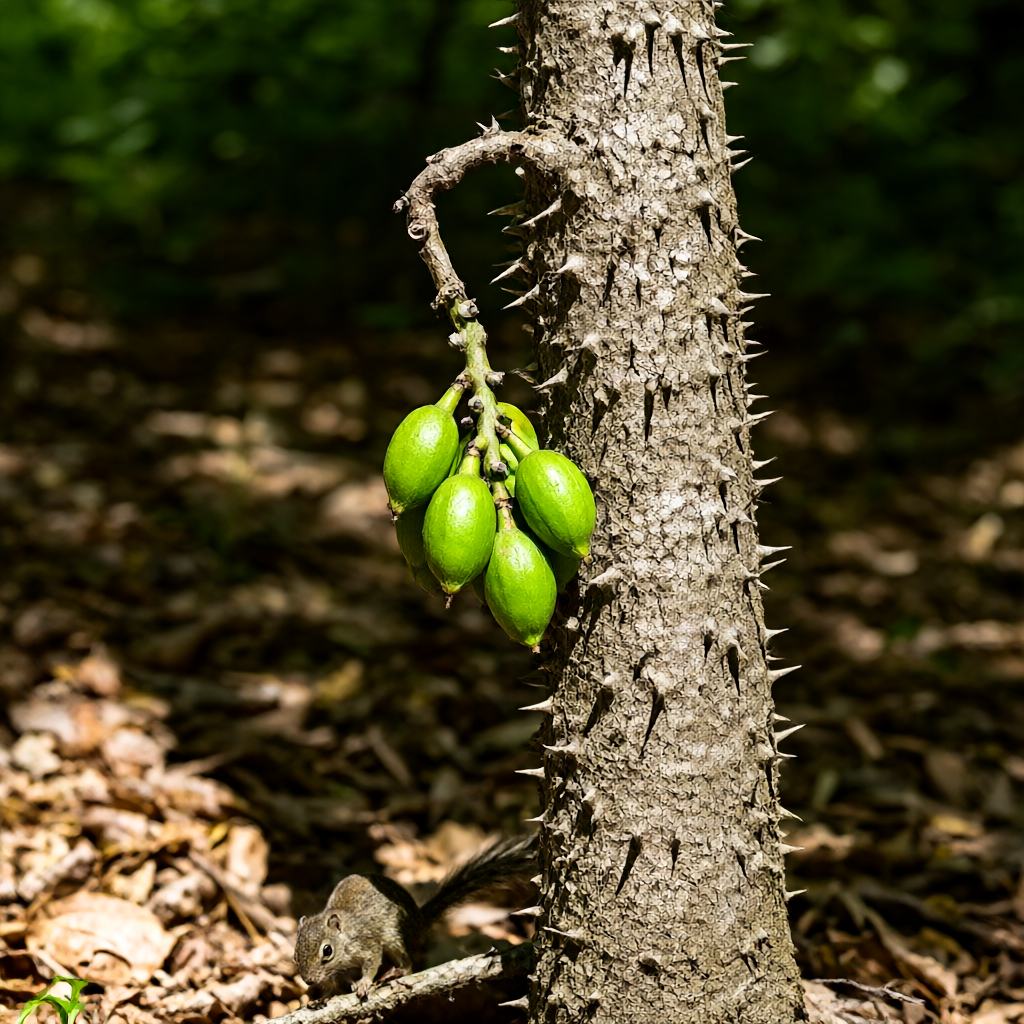
Flowers appear in small clusters along the branches. A capsule takes months to mature. It dries as the seeds ripen. Because the capsule splits along fixed seams, the release happens all at once.
Seeds leave at speeds of up to seventy metres per second. That blast scatters them many metres from the trunk. Rodents and birds move some seeds farther, and a few germinate.
Timber and pasture
Conservation
Red List status is Not Evaluated. Clearance for pasture and farmland removes trees across the range, and the losses have never been measured. Logging takes the timber. Old trees with the best wood go first.
Because the species grows fast, regrowth fills gaps within a few years. Protected forest holds large populations. Secondary growth still suits it.
Side by side
How It Compares
| Trait | Sandbox Tree | Common Fig |
|---|---|---|
| Family | Euphorbiaceae | Moraceae |
| Height | 30-60 m | up to 10 m |
| Trunk | spined | smooth |
| Fruit | exploding capsule | soft syconium |
| Sap | caustic | mild latex |
| Rating | Not Evaluated | Least Concern |
Common misreadings
What People Get Wrong
- Not a tree anyone should hug. Spines cover the bark. Conical thorns line the trunk for decades, and old trees keep enough of them to make climbing a poor idea.
- Not a fruit that falls quietly. The capsule explodes. Seams split along fixed lines and the seeds leave at speed, and the sound carries across a clearing.
- Not a plant with harmless sap. Contact burns skin. The milky latex irritates anyone who handles a cut branch, and an eye that catches a drop needs immediate washing.
Going further
Sources and Further Reading
Quick hits
Five things to remember
- A ripe capsule can throw seeds at seventy metres per second, which is faster than a car on a highway.
- The trunk carries spines for decades, and the cones can puncture a boot.
- Its sap was once used to poison fish, and the practice injured people as often as it fed them.
- Hollow old trunks were cut for sandboxes, which gave the tree its English name.
- The fruit is sometimes called the monkey’s dinner bell, because it sounds before it opens.