 By st20113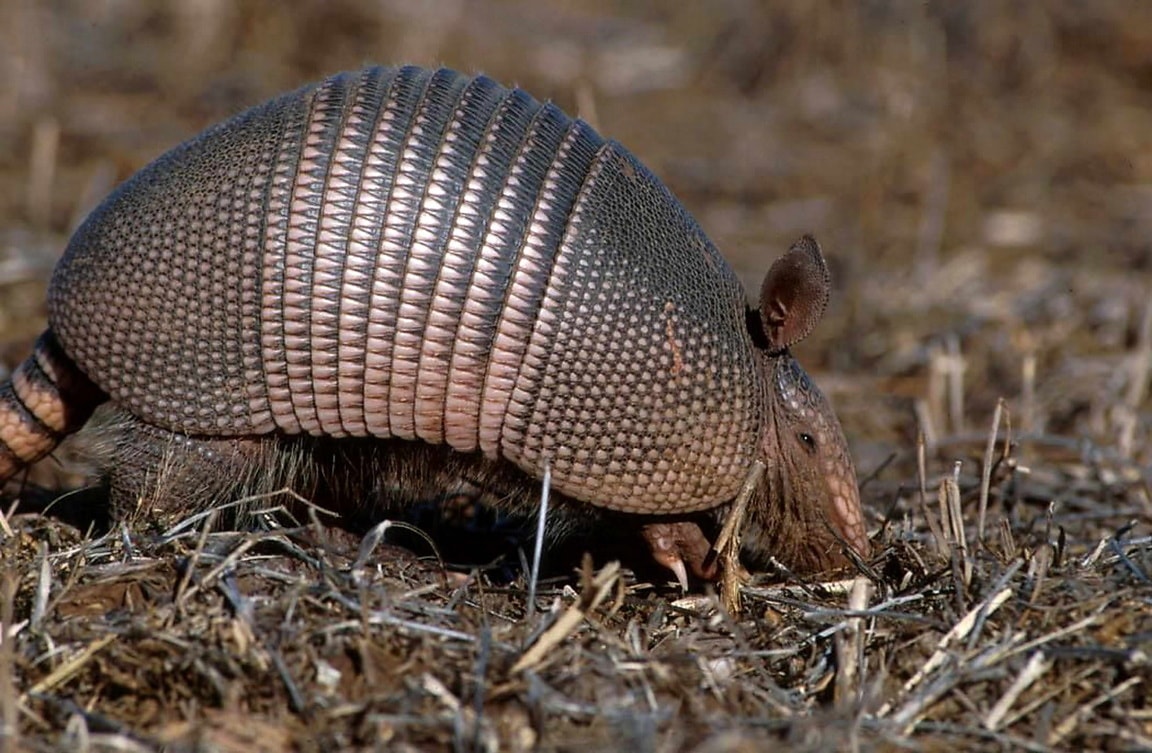
Introduction
Armadillos are unique mammals immediately recognizable by their armored shell of bony plates called osteoderms. The name “armadillo” is Spanish for “little armored one.” There are approximately 21 species of armadillo, all native to the Americas. The nine-banded armadillo is the most widespread species, ranging from southern USA through Central and into South America.
Taxonomy and Classification
Armadillos belong to the order Cingulata. Their closest living relatives are anteaters and sloths, with all three groups belonging to the order Xenarthra, characterized by unique features of the teeth and vertebrae. Despite being called “edentates,” armadillos do have teeth — but they are simple, peg-like teeth without enamel.
Physical Characteristics
Armadillos range dramatically in size depending on species. The smallest is the pink fairy armadillo, measuring just 9 to 12 cm, while the giant armadillo can reach 100 cm and weigh up to 30 kg. All armadillos are covered in a protective shell of leathery skin and bony plates arranged in bands. The nine-banded armadillo has the flexibility to curl its body into a ball. Armadillos have strong legs and large, powerful claws adapted for digging.
Distribution and Habitat
Armadillos are found throughout most of South and Central America, with the nine-banded armadillo extending its range northward into the southern United States. This northward expansion is attributed to climate warming and lack of natural predators. They inhabit tropical rainforests, grasslands, wetlands, and semi-arid scrublands.
Diet and Foraging
Armadillos are primarily insectivores, feeding on beetles, grubs, termites, ants, and other soil-dwelling invertebrates. They use their powerful claws to dig into soil, rotting logs, and termite mounds. Their long, sticky tongue is perfectly adapted for extracting insects from deep crevices.
Reproduction
Most armadillo species give birth to quadruplets — four genetically identical offspring from a single egg. The nine-banded armadillo routinely gives birth to four young that are always of the same sex and are genetically identical quadruplets.
Conservation Status
Most armadillo species are listed as Least Concern. The giant armadillo is listed as Vulnerable due to habitat loss and hunting. The pink fairy armadillo is classified as Data Deficient.