 By st20113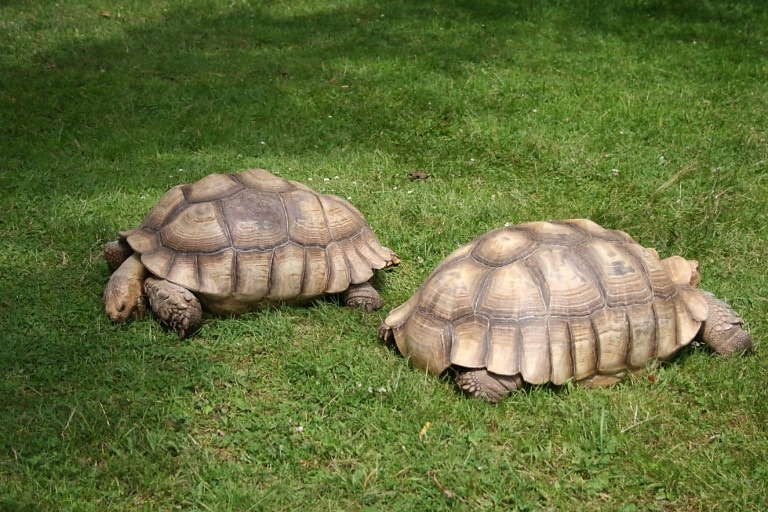
Introduction
The African spurred tortoise (Centrochelys sulcata), also known as the sulcata tortoise or African spurred tortoise, is the largest mainland tortoise species in the world. Native to the southern edge of the Sahara Desert across sub-Saharan Africa, from Senegal in the west to Eritrea in the east, this impressive reptile is known for its enormous size, distinctive shell patterns, and remarkable adaptations to life in some of Africa’s harshest environments.
Taxonomy and Classification
The African spurred tortoise belongs to the family Testudinidae, the true tortoise family, which contains all of the world’s land-dwelling tortoises. It is the sole species in the genus Centrochelys, though some older taxonomies placed it in Geochelone. Its closest relatives include other African tortoises, though genetic studies have confirmed its distinct status as a monotypic genus.
Physical Characteristics
The African spurred tortoise is an enormous reptile, with adults typically measuring 60 to 90 cm (24 to 35 inches) in carapace length and weighing 40 to 100 kg (88 to 220 lbs). Exceptional specimens have been recorded at over 100 kg and 100 cm in length, making it the largest tortoise in Africa and the largest mainland tortoise globally. Its carapace (upper shell) is brown to yellowish-brown, with prominent growth rings on each scute (shell plate). The name “spurred” refers to the large, conical spurs on the rear legs, which are used for digging. The forelimbs are covered in thick, pointed scales adapted for digging.
Distribution and Habitat
This tortoise inhabits the Sahel region and dry savannas at the southern edge of the Sahara Desert, from Mauritania and Senegal in the west, through Mali, Niger, Chad, Sudan, and Ethiopia, to Eritrea in the east. Its habitat consists of semi-arid grasslands, scrubland, and the edges of the Sahara where scattered trees provide shade. It is adapted to extreme heat and can withstand temperatures above 40 degrees Celsius.
Diet and Foraging
The African spurred tortoise is primarily herbivorous, feeding on a variety of desert and savanna plants including grasses, succulents, flowers, and cactus fruits. It can survive long periods without water and obtains most of its moisture from the plants it consumes. Juveniles are more omnivorous and will occasionally consume carrion or insects.
Reproduction
Breeding occurs during the dry season, and females lay clutches of 15 to 30 eggs in deep burrows dug into the sand. The eggs incubate for approximately 8 to 10 months — one of the longest incubation periods of any tortoise species. Hatchlings emerge during the rainy season when food is most abundant.
Conservation Status
The African spurred tortoise is listed as Endangered by the IUCN. Major threats include habitat loss from desertification and agricultural expansion, hunting for meat and the pet trade, and collection for traditional medicine. It is protected under CITES Appendix II.
[…] are closely related to the African Spurred Tortoise and other large tortoises. Genetic studies reveal complex relationships between island populations. […]