 By st20113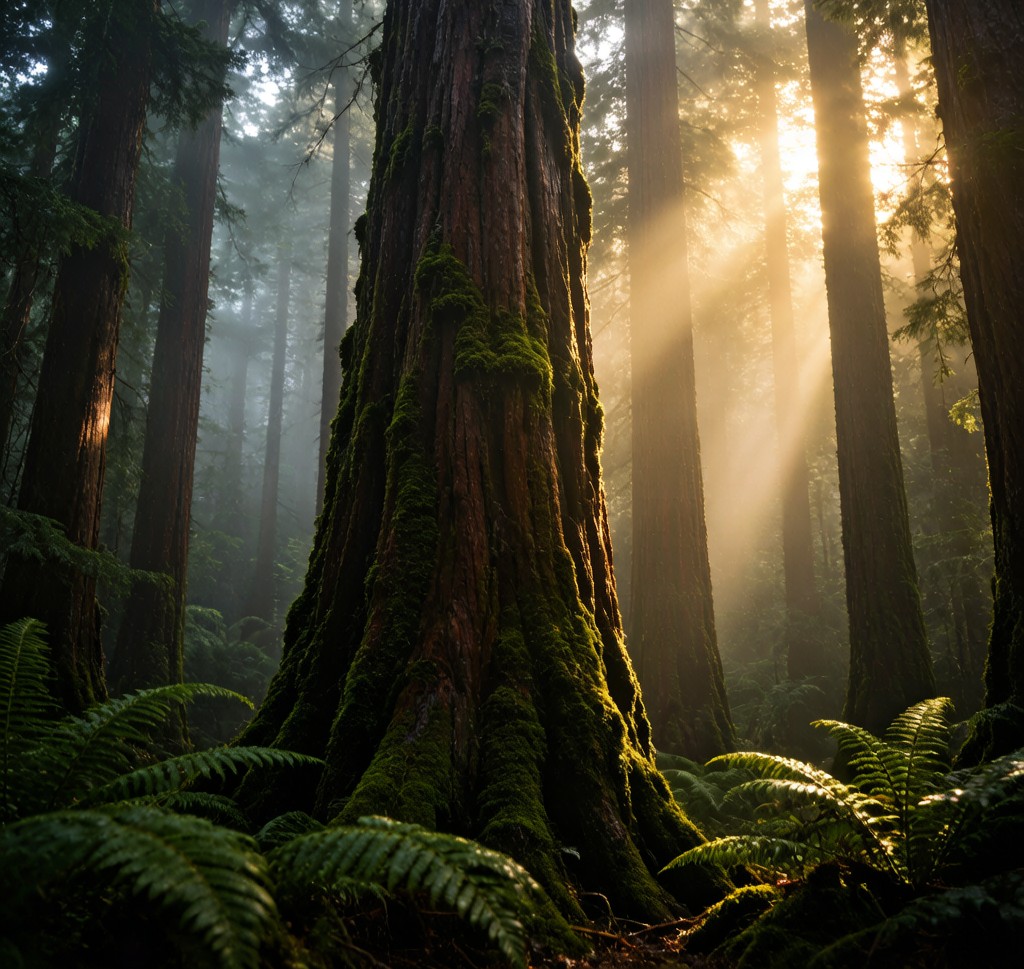
The coast redwood (Sequoia sempervirens) is the world’s tallest living tree species, an ancient and irreplaceable giant that has graced the fog-shrouded coastal forests of California and southern Oregon for over 20 million years. The tallest known specimen, named Hyperion, stands 115.92 metres tall, a height that represents one of the greatest feats of biological engineering on Earth — a column of wood and water that must generate sufficient hydraulic pressure to push water from the roots to the crown, a challenge akin to pumping water to the top of a 35-storey building every second of every day. Coast redwoods inhabit a narrow strip of the Pacific coast rarely more than 65 kilometres wide, where cool, moist fog blown in from the ocean during the summer months provides the majority of the water these enormous trees require, supplementing the winter rains and allowing them to thrive in a climate that would be too dry for such massive organisms in any other region. As a foundation species of the temperate rainforest ecosystem, the coast redwood supports an extraordinary web of life found nowhere else on Earth, and its ancient survivors represent irreplaceable genetic and ecological heritage from a world before humans walked the Earth.
## Physical Characteristics
The coast redwood is an evergreen conifer with a straight, massive trunk, a conical crown, and soft, flat, needle-like leaves that are typically dark green on the upper surface and pale blue-green below. The bark is exceptionally thick — up to 30 centimetres on mature trees — deeply furrowed, and a striking reddish-brown colour, providing remarkable resistance to fire damage and insect attack. Individual coast redwoods are among the oldest and largest living organisms on Earth: the species routinely lives for 500 to 700 years, with the oldest confirmed individual estimated at over 2,200 years of age, and some individuals have volumes exceeding 1,500 cubic metres, making them the most massive single organisms ever to have lived on land. The root system of the coast redwood is relatively shallow — typically only 1 to 1.5 metres deep — but extends widely across the forest floor, and the roots of neighbouring trees are grafted together, allowing the sharing of water and nutrients across vast areas of the forest. The cones are small and egg-shaped, about 2 to 3 centimetres long, maturing in one season but taking two years to complete the full reproductive cycle.
## Habitat and Distribution
The coast redwood forest occupies a remarkably narrow coastal strip on the western slopes of the Coast Ranges of California and southern Oregon, extending from the Chetco River in southern Oregon to just south of Monterey Bay in California, a distance of approximately 720 kilometres. The forest is found at elevations from sea level to approximately 900 metres, most commonly in valleys and lower slopes where moisture is most abundant. The fog that rolls in from the Pacific Ocean during the summer months is the single most important climatic factor determining the distribution of coast redwood: fog provides between 25 and 40 percent of the tree’s annual water input through fog drip — the process by which water condenses on the needles and drips to the ground — and significantly reduces water loss through transpiration during the dry summer months when little rain falls. Within the redwood forest, the understory is often dominated by sword ferns, redwood sorrel, and California huckleberry, while old-growth trees provide nesting habitat for the marbled murrelet and habitat for the endangered northern spotted owl.
## Ecology and Significance
Coast redwoods are foundation species that create and maintain the physical structure of their unique ecosystem. Their enormous fallen trunks — which can persist on the forest floor for centuries without decomposing — serve as nurse logs that support the regeneration of new seedlings and provide habitat for dozens of species of fungi, salamanders, and invertebrates. The trees host a complex community of epiphytes including mosses, liverworts, ferns, and lichens, which in turn provide food and habitat for insects and small vertebrates. Coast redwoods play an outsized role in carbon storage: the combination of their massive size, dense wood, and long lifespan makes them among the most carbon-dense forests on Earth. The ancient old-growth redwoods store enormous quantities of carbon in their wood and soil, and the loss of old-growth stands represents a significant and largely irreversible release of stored carbon into the atmosphere.
## Conservation
Although the coast redwood is not globally threatened as a species, the temperate rainforest ecosystem it creates is severely fragmented and endangered. Less than 10 percent of the original old-growth coast redwood forest remains, with most of the old-growth stands protected within California state and national parks. The primary ongoing threats include the cumulative impacts of climate change, which is reducing fog frequency along the coast and altering the hydrology that sustains the forest, fragmentation and degradation of habitat, and the impacts of altered fire regimes that threaten the resilience of the forest ecosystem.