 By Iris
Pelecanus crispus | Dalmatian Pelican
Species Profile · Pelecanidae
Dalmatian Pelican
The heaviest flying bird that nests in a reed bed.
Near Threatened
Wingspan
Weight
Bill
Nest
Range
Rating
Thirteen kilos over a lagoon
A three and a half metre span
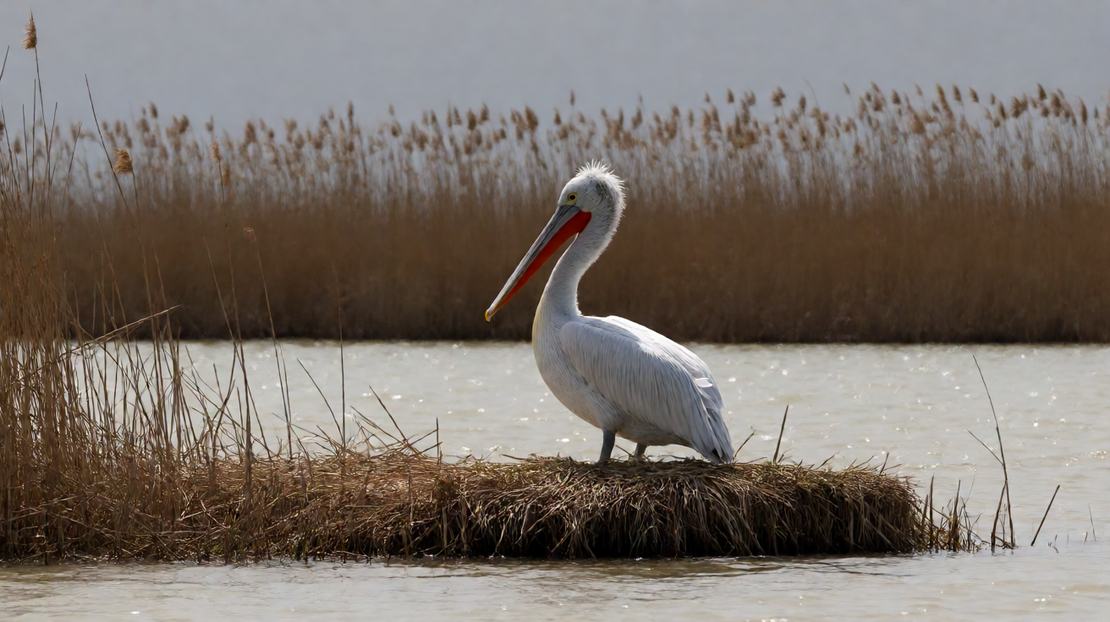
Grey legs and a silver white body mark this bird at a glance. Its wingspan reaches 3.5 m, which puts it among the largest flying birds. Weight runs 10 to 13 kg, though a large male can pass that figure. Only a few swans fly heavier, and none of them nests in a reed bed.
Breeding lakes in south east Europe hold the European stronghold. Reed islands in shallow water make the best nest sites, because a fox cannot reach them. Birds from Asia nest in Kazakhstan, Mongolia and western China. Autumn pushes the northern groups south, and some reach the Persian Gulf.
Winter flocks gather on lagoons and river mouths, since the shallows stay warm. Watching a flock lift off is loud, because the wings beat slowly and the birds need a long run.
Family tree
Pelecanidae, the pelicans
Pelecanus crispus sits in Pelecanidae, the pelican family. Bruch named the species in 1832 from a Dalmatian specimen. Eight pelicans are recognised today, and this one is the heaviest. The Great White Pelican breeds in the same wetlands, while this bird keeps to the eastern lakes.
Both scoop fish into a pouch, and both nest in colonies. Their habits differ, though, since one winters in Africa and the other stays on cold water. Curly feathers on the head give the species its older name. No subspecies is named today, although older texts list two.
Genetic work places the bird close to the Australian pelican. The family split from the other water birds long ago, and no close relative remains.
Eight pelicans, this one heaviest
How to tell one
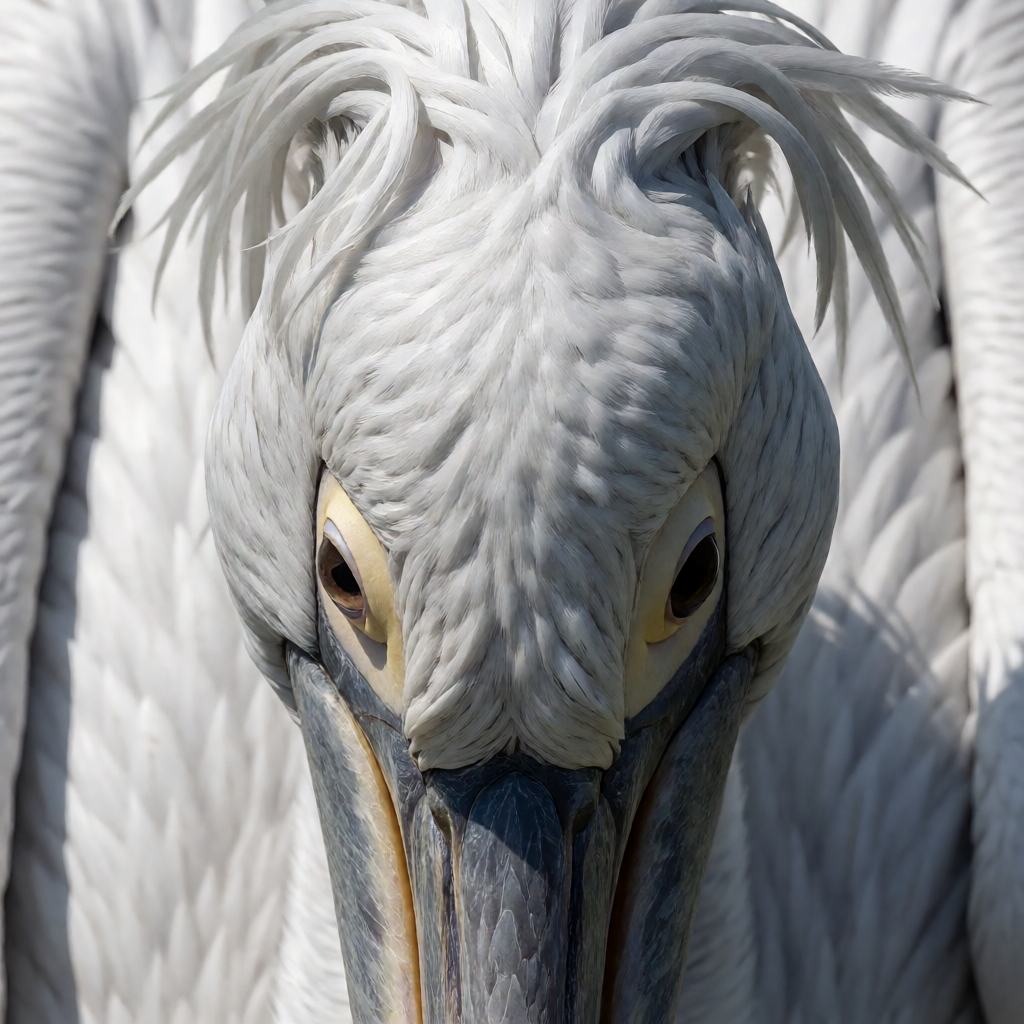
Body length runs 160 to 180 cm. Wingspan reaches 3.5 m in a large male. Plumage is silver white, with grey tips on the flight feathers. A crest of curled feathers grows in the breeding season.
The bill is long and pink, and the pouch below turns orange red. Legs are grey, which separates the bird from the white pelican. Males grow heavier than females, and the bill of an old male turns deepest pink. Wings are broad, and the flight looks slow and steady.
The pouch holds several litres of water and fish. A bird this heavy needs strong wind to climb, so flocks wait for a breeze before setting off across a ridge.
1
2
3
A bill that scoops
Where it lives
Shallow lakes with reed beds hold the breeding birds. Deltas, lagoons and fish ponds also carry winter flocks. Breeding colonies sit on islands or floating reed rafts. Water must stay quiet, since boats empty a colony in minutes.
Birds need open water nearby for fishing. Range runs from the Balkans through Turkey and Iran to Mongolia. Small numbers breed in Greece, Bulgaria, Romania and Ukraine. Winter range spreads along the Mediterranean and the Black Sea.
The Persian Gulf and the coast of India hold Asian birds in winter. Wetland drainage has removed much of the old habitat, and the birds now depend on a few managed sites in Greece and Bulgaria.
Shallow lakes with reeds
What it eats
Fish form nearly the whole diet. Carp, roach and perch are the usual catch in fresh water. Mullet and gobies appear on the coast, though fresh water fish still dominate. A bird scoops fish and several litres of water into the pouch, then squeezes the water out before it swallows.
Food is swallowed head first, which stops the gill covers from catching. Daily needs run 1 to 2 kg of fish. Fishing happens in shallow water near the reeds. Groups sometimes drive fish toward the shore, and several birds then feed together.
Chicks are fed from the pouch for weeks, and they reach into the throat for fish. Pelicans also take eggs and small birds, although fish still fill most of the stomach.
Fish taken at the surface
The breeding cycle
Breeding starts in March on southern lakes and later in the east. Pairs gather in colonies of a few dozen nests. A nest is a heap of reeds and grass on wet ground. Two or three eggs are usual.
Incubation takes about 31 days. Chicks hatch naked, although down appears within ten days. Young leave the nest at around 12 weeks. Parents feed the brood through the whole period, and both birds share the work of guarding the nest.
Females breed at three or four years old. Colonies fail when water levels rise fast, since a flood drowns every nest on the raft within hours.
Near Threatened, and gaining
Conservation
IUCN lists the bird as Near Threatened, in an assessment from 2017. Numbers have risen in Europe, which is rare among large water birds. Wetland drainage remains the main threat. Disturbance at colonies costs eggs and chicks.
Power lines kill birds on migration, because a heavy bird cannot turn fast. Illegal shooting still happens along the flyway, although wardens are few. Protected areas now cover the main colonies in Greece and Bulgaria. Water levels at managed lakes are held for the nesting season.
Poisoning and lead shot add smaller losses. A colony that is disturbed twice in a season usually fails, so wardening matters more than fences.
Side by side
How It Compares
| Trait | Dalmatian Pelican | Great White Pelican |
|---|---|---|
| Wingspan | 3.0 to 3.5 m, among the widest of any flying bird | 2.6 to 3.6 m, and it flies in tight formation |
| Weight | 10 to 13 kg, and the heaviest pelican alive | 9 to 11 kg, and lighter than its eastern cousin |
| Home | reed lakes from Greece to Mongolia | lagoons and deltas across Africa and southern Asia |
| Bill | long and grey, with an orange pouch | long and pink, with a yellow pouch |
| Food | fish herded into the shallows of a lagoon | fish taken in deep water, often after dark |
| Nest | a mound of reeds on a floating island | a ground scrape on a dry island |
Common misreadings
What People Get Wrong
- Many people think the bird scoops fish in its pouch, yet it drains the water first.
- Some guides place the colony on bare ground, although the nest sits on floating reeds.
- A common claim says the species is declining everywhere, yet European numbers have risen.
Going further
Sources and Further Reading
Quick hits
Five things to remember
- Wingspan reaches 3.5 m.
- Weight runs 10 to 13 kg, though a large male can pass that figure.
- The pouch turns orange red in spring.
- Two or three eggs are usual.
- Colonies nest on reed rafts.