 By st20113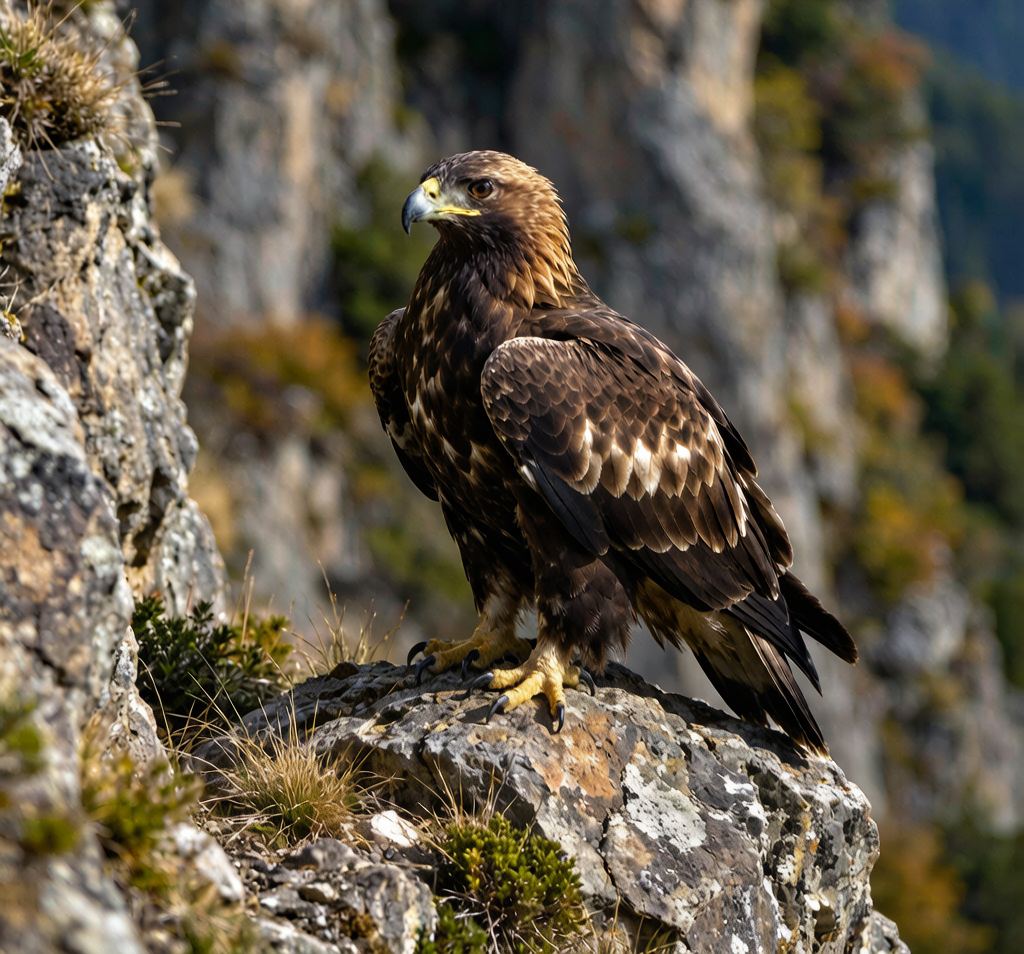
Introduction
The golden eagle (Aquila chrysaetos) is one of the largest and most formidable birds of prey in the Northern Hemisphere. Revered across cultures as a symbol of strength and freedom, it soars over mountains, grasslands, and open woodlands on broad, fingered wings. A masterful hunter, the golden eagle captures mammals and birds with spectacular stoops from great height. Unlike the flightless ostrich of the African savanna, which relies on running to escape danger, the eagle commands the skies as an apex aerial predator.
Taxonomy
Golden eagles belong to the family Accipitridae, which includes hawks, kites, and Old World vultures, within the genus Aquila, the true eagles. The species name chrysaetos combines Greek words for gold and eagle, referencing the bird’s golden nape feathers. Among close relatives are the snowy owl of the Arctic and various sea eagles, though the golden eagle is a dedicated terrestrial hunter. Birds such as the emperor penguin of Antarctica represent a very different evolutionary path within the class Aves, having sacrificed flight for diving. The golden eagle remains a supreme example of an open-country apex predator.
Physical Characteristics
Adult golden eagles measure sixty to one hundred centimeters long with a wingspan of one point eight to two point three meters and a weight of three to six point eight kilograms. Females are noticeably larger than males, a common trait among raptors. Dark brown plumage covers the body, while the head and nape shine golden in sunlight. Feathered legs and hooked beaks suit a life of catching and tearing warm-blooded prey. The king penguin of southern oceans is flightless and streamlined for swimming, contrasting sharply with this eagle’s airborne build.
Habitat
Golden eagles favor open and semi-open landscapes such as mountains, canyonlands, steppe, and temperate grasslands where they can spot prey from the air. They also use forested edges and desert scrub, avoiding dense tropical rainforest. These birds are largely resident, though northern populations may migrate short distances to escape deep snow. The emu of Australia and the ostrich of Africa also inhabit open terrain, yet as flightless runners rather than soaring hunters. In North America the species thrives in the west’s rugged highlands, while in Eurasia it ranges from Mediterranean hills to Arctic tundra. Golden eagles defend large home ranges and return to the same nesting territory each year.
Diet
Golden eagles are apex predators that prey mainly on small to medium mammals such as rabbits, hares, ground squirrels, and marmots. They also take birds, reptiles, and carrion when opportunity allows, and may cooperate in pairs to hunt larger quarry like young deer or foxes. Unlike the fish-dependent emperor penguin, the eagle secures terrestrial prey through speed and surprise. Hunting from a high perch or soaring flight, it drops swiftly and strikes with outstretched talons. Their diet shifts seasonally with prey availability, and they cache food in cooler months. This flexibility helps golden eagles occupy vast, sometimes harsh ranges where specialist hunters would struggle to find enough to eat.
Reproduction
Golden eagles form long-term, often lifelong pairs that return to the same territorial eyrie each spring. Females lay one to three eggs in a massive stick nest lined with greenery, incubated by both parents for around forty-three days. Young fledge at about ten weeks but continue to rely on parents for food and training through the summer. The king penguin and the emperor penguin rear chicks in enormous crowded colonies on Antarctic shores, a social strategy unlike this eagle’s solitary nesting. Successful pairs may reuse the same eyrie for many consecutive seasons.
Conservation
The golden eagle is classified as Least Concern, with a wide distribution and generally stable numbers across the Northern Hemisphere. It faces threats from habitat loss, illegal poisoning, lead ammunition, and collisions with wind turbines and power lines. Once heavily persecuted, the species is now protected by law in many countries, and reintroduction efforts have restored populations in parts of Europe. The ostrich and the emu confront different challenges as flightless birds, yet all large birds need intact habitat. Conservation focuses on reducing toxins, safeguarding nesting cliffs, and careful siting of energy infrastructure so that these magnificent raptors continue to ride the thermals above wild landscapes.
Fun Facts
Golden eagles can dive at speeds exceeding two hundred forty kilometers per hour, among the fastest of any animal. Their eyesight is roughly six to eight times sharper than human vision, letting them track movement from staggering distances. In some cultures, golden eagles have been trained for falconry to hunt foxes and wolves for centuries. The snowy owl and the golden eagle occasionally share northern skies, though one hunts by day and the other by night. A single pair may defend a territory of hundreds of square kilometers. Perhaps most astonishing, golden eagles have been documented carrying prey heavier than their own body weight, a feat of strength that underscores their status as supreme aerial predators.