 By st20113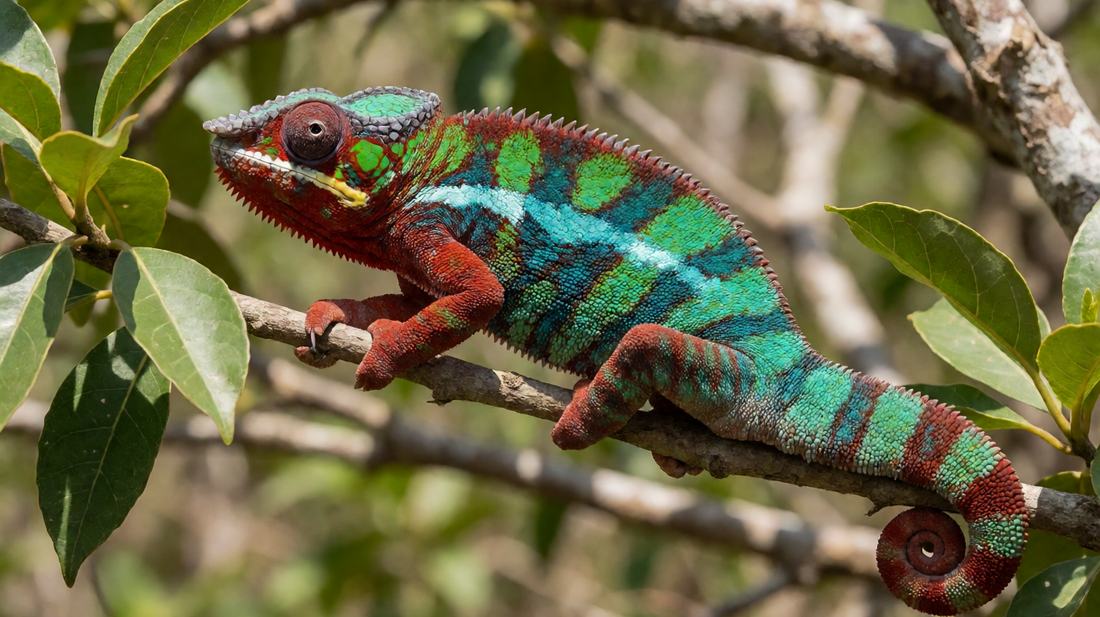
Furcifer pardalis | Panther Chameleon
Species Profile · Chamaeleonidae
Panther Chameleon
A slow, brilliant lizard of northern Madagascar, gripping thin branches with tong-like feet and striking insects with a tongue that fires in a blink.
Least Concern
Males
Females
Tongue strike
Clutch
Incubation
Rating
The Panther Chameleon
A lizard that hunts from one perch
A bright lizard grips a branch in the low forest of Madagascar. Its feet clamp like tongs. Its tail curls into a tight coil. Two eyes swivel apart, each one on its own.
Colour shifts with mood, light and heat, in fact. Males blaze with blue, red and green. Females stay duller by far. Insects are taken with one fast strike.
The tongue shoots out and back in a blink. Because the whole animal hunts from one perch, it can afford to be slow, bright and utterly fearless of being seen.
Family tree
Chamaeleonidae, the chameleons
The species belongs to the family Chamaeleonidae. Georges Cuvier described it in 1829. Roughly 20 species now sit in the genus Furcifer.
Most live only on Madagascar. The chameleon page covers the wider family and its odd feet. All members share that split-toe grip, of course.
Both groups use colour to talk. Yet the family holds more than 200 species in the wild, and only a few of them show colour this loud.
Colour that shifts with mood
How to tell one
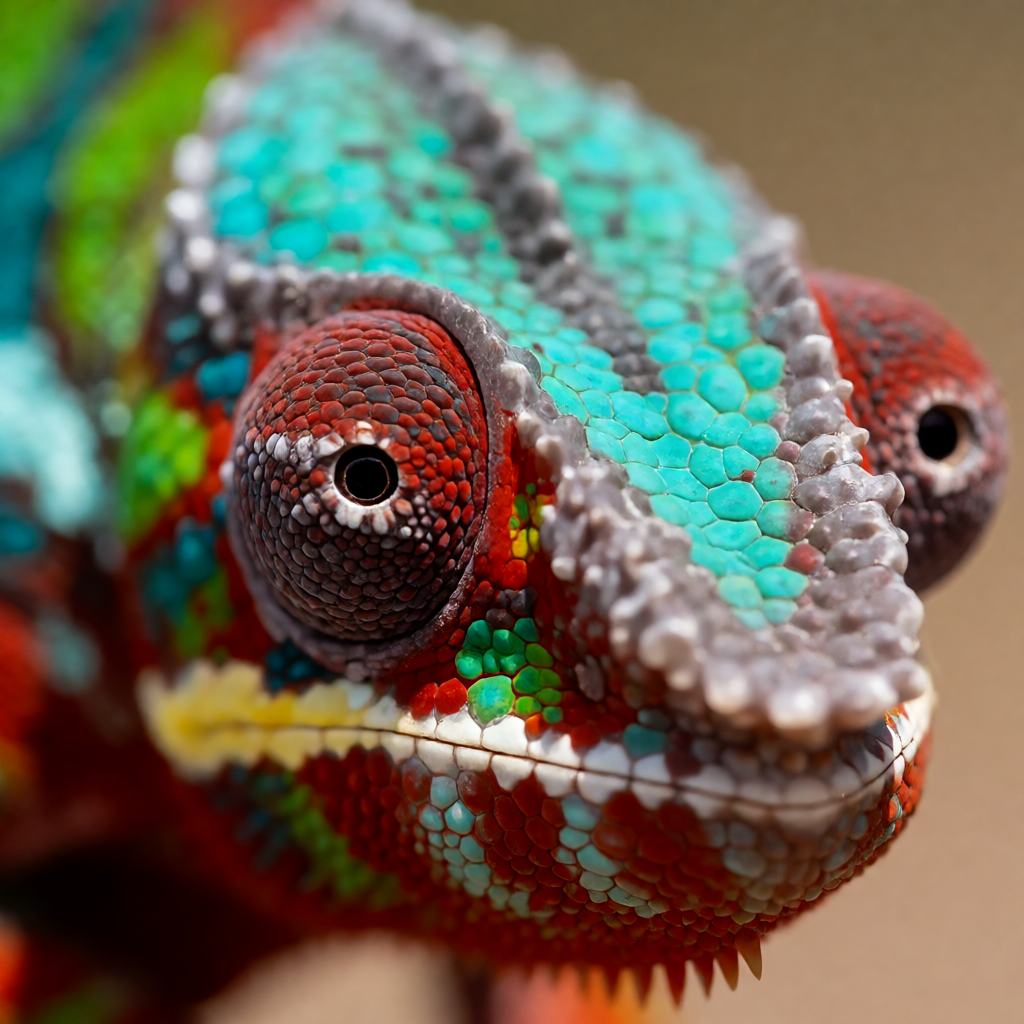
Males reach 50 cm from nose to tail tip, while females stop nearer 30 to 38 cm. A tall casque sits on the head. Feet are split into 2 and 3 toes.
That grip works like pincers. In addition, the tail curls and holds fast. Skin is beaded with tiny scales.
A stripe runs along each flank. Nothing about the body is built for speed, and every part of it is designed instead for one slow, perfect grip on a thin branch.
1
2
3
Lowland forest and plantation edge
Where it lives
Lowland forest is the main home. Northern and eastern Madagascar hold the wild range. Introduced animals live on Reunion and Mauritius.
Second growth suits it well. Even so, plantations sometimes hold more animals than wild forest. Heat and light matter a great deal.
Basking branches are needed each morning. Dense, dark, closed canopy holds few animals, however. Because the lizard needs sun to warm up and insects to eat, a mixed edge of trees and open ground suits it best of all.
Insects taken by sight
What it eats
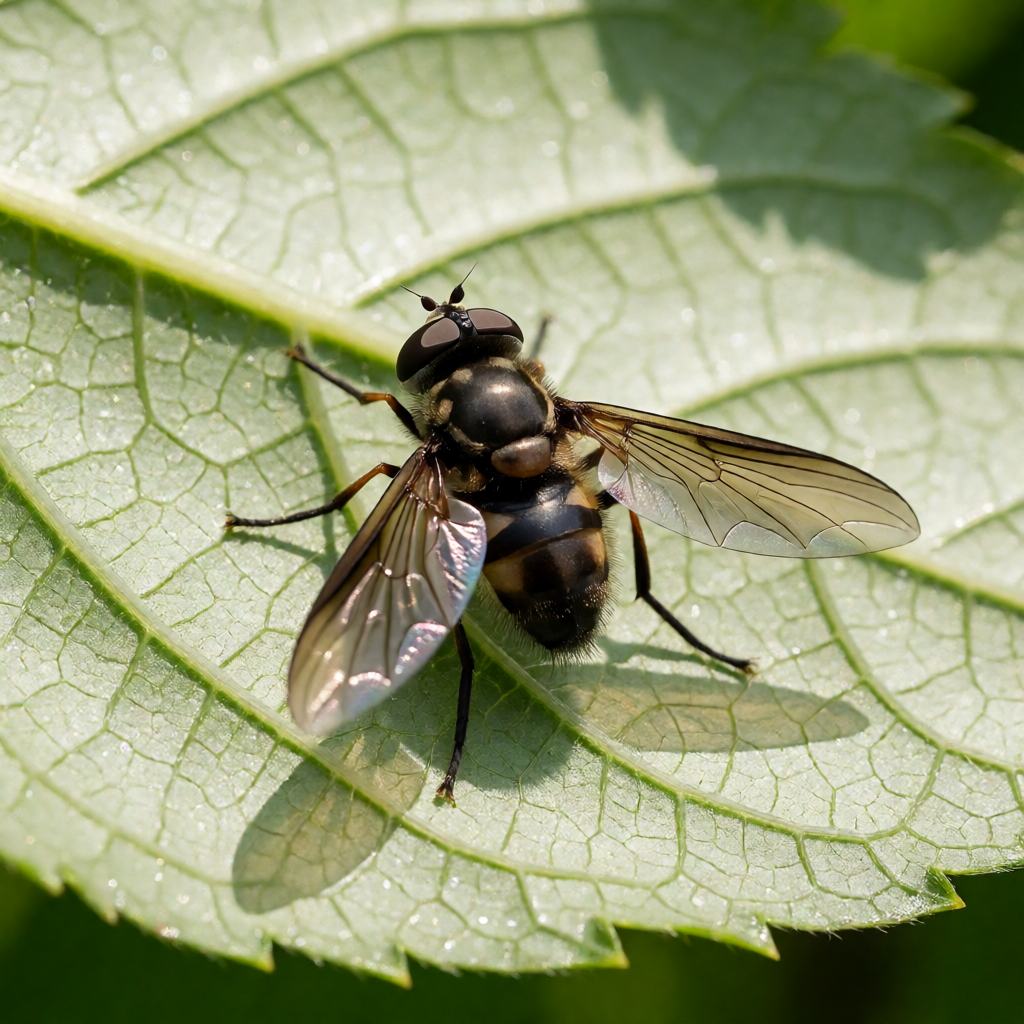
Crickets and grasshoppers are staples. Locusts, moths and flies follow. Beetles and roaches are taken as well.
Hunting is done by sight alone. The tongue launches in 0.07 seconds. Its tip is sticky and muscular.
Prey up to half the body length can be taken. Plant matter is eaten now and then. Water is licked from wet leaves, since the animal will not drink from a pool on the ground.
Eggs buried in warm sand
The breeding cycle
Males fight with bright displays first. Colour flares along the flank. Losers pale and walk away. Females signal readiness with pale marks.
Mating lasts only minutes, though. Eggs are laid in a burrow. Clutches run 10 to 40 eggs. Warm sand hides them from view.
Like the crocodile, it buries the clutch in warm ground and leaves the eggs to develop on their own. Incubation takes 7 to 12 months in the soil, so the young dig out long after the mother has gone.
Least Concern
Conservation
The IUCN lists the species as Least Concern. Its range is wide for a Madagascar reptile. Animals thrive in disturbed habitat.
Trade is the real pressure, however. Thousands leave the island each year. Quotas now limit that export.
In addition, forest clearing cuts into wild numbers. Short lives mean a bad year can bite hard, since most adults breed only once or twice before they die.
Side by side
How It Compares
| Trait | Panther Chameleon | Veiled Chameleon |
|---|---|---|
| Native range | Madagascar | Yemen and Saudi Arabia |
| Males | blue, red and green | green with gold bands |
| Casque | tall on the head | taller, helmet-like |
| Tongue strike | 0.07 seconds | about the same |
| Eggs | 10 to 40 in a burrow | 30 to 85 |
| IUCN status | Least Concern | Least Concern |
Common misreadings
What People Get Wrong
- Chameleons change colour to hide. Colour mostly signals mood and heat.
- The tongue is slow and sticky. It fires in 0.07 seconds.
- Bright males attract danger. Colour here is how rivals and mates are read.
Going further
Sources and Further Reading
- Wikipedia, Panther chameleon
- IUCN Red List, Furcifer pardalis. The IUCN Red List of Threatened Species.
- Animal Diversity Web, University of Michigan. Furcifer pardalis.
- Ferguson, G. W., J. B. Murphy, J.-B. Ramanamanjato and A. P. Raselimanana. 2004. The Panther Chameleon. Krieger.
Quick hits
Five things to remember
- The tongue can shoot out in 0.07 seconds.
- A chameleon can look forward and backward at the same time.
- Colour differs by region, and collectors name each local form.
- Females turn dark with pale marks when they are ready to mate.
- Wild adults rarely live past 5 years.