 By st20113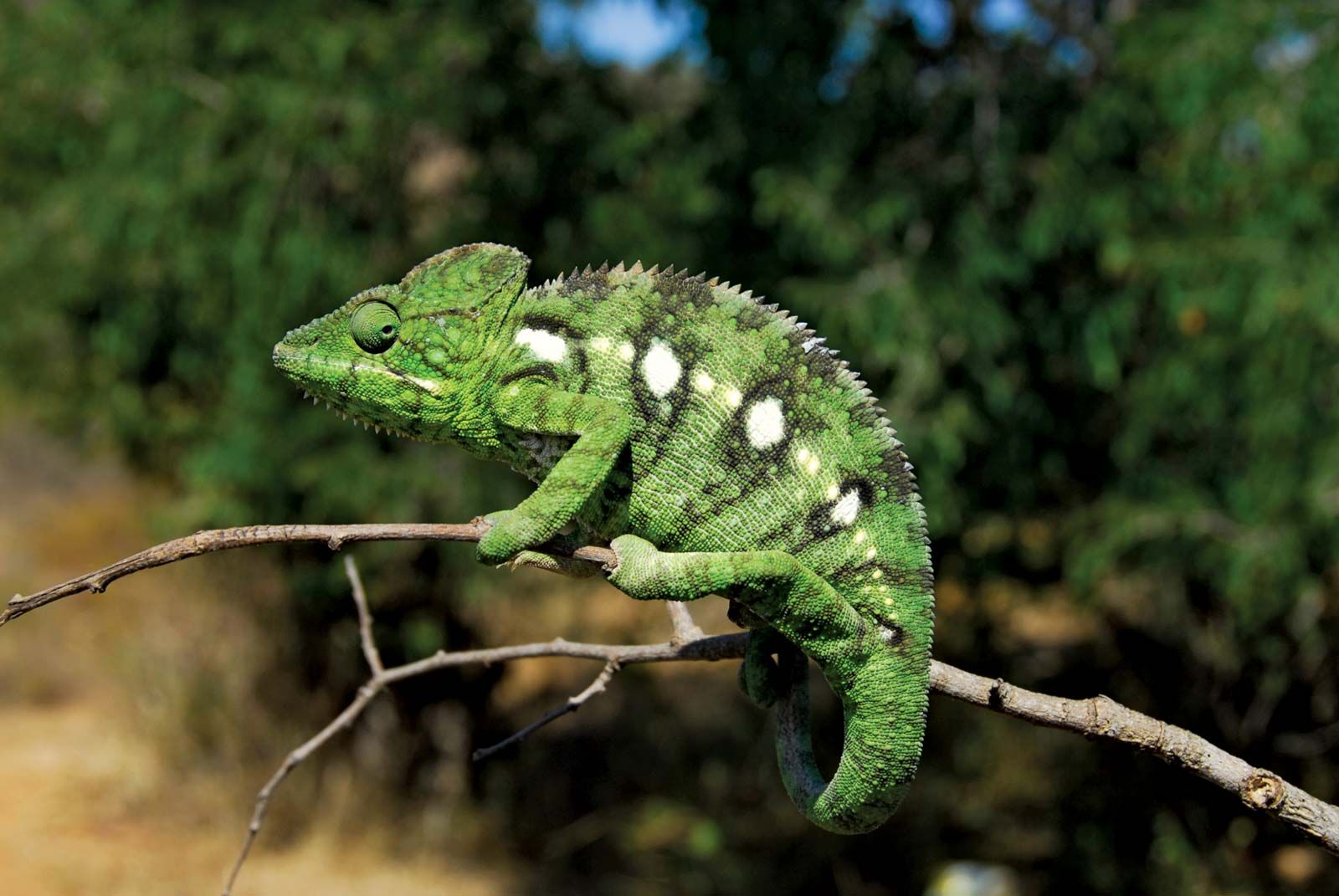
Chameleons are a family of lizards (Chamaeleonidae) renowned for their ability to change color, eyes that move independently, and extraordinarily long tongues used to catch prey. Found mainly in Madagascar and Africa, with some species in southern Europe and Asia, chameleons are among the most specialized reptiles in their ecosystem.
Physical Characteristics
Chameleons are instantly recognizable by their laterally compressed bodies, casqued heads, and grasping feet with toes fused into opposing groups of two and three-like a pair of tongs. Many species have a prehensile tail used as a fifth limb. Their tongue can extend up to twice their body length to capture insects in less than 0.07 seconds. Like the red-eyed tree frog, chameleons are masters of camouflage in tropical environments.
Color Change
Contrary to popular belief, chameleons do not primarily change color to match their background. Color change serves communication (signaling mood, aggression, or readiness to mate) and thermoregulation (darker colors absorb heat, lighter colors reflect it). Specialized cells called iridophores contain nanocrystals that alter light reflection when the skin is stretched or relaxed.
Vision
Chameleons have the most distinctive eyes of any reptile. Each eye moves independently, scanning the environment with a 360-degree field of view. When it spots prey, both eyes converge forward to provide depth perception for the strike. Their visual acuity is exceptional-they can spot a small insect from 10 meters away.
Habitat and Behavior
Most chameleons are arboreal, living in trees and shrubs. They move with a slow, swaying gait that mimics leaves moving in the wind. They are remarkably antisocial: most species live alone and will fight if forced together. Males display vibrant colors to intimidate rivals and attract females.
Conservation Status
Nearly half of all chameleon species are threatened, primarily by deforestation, the pet trade, and climate change. Many are endemic to small island or mountain areas, making them especially vulnerable to habitat loss.