 By st20113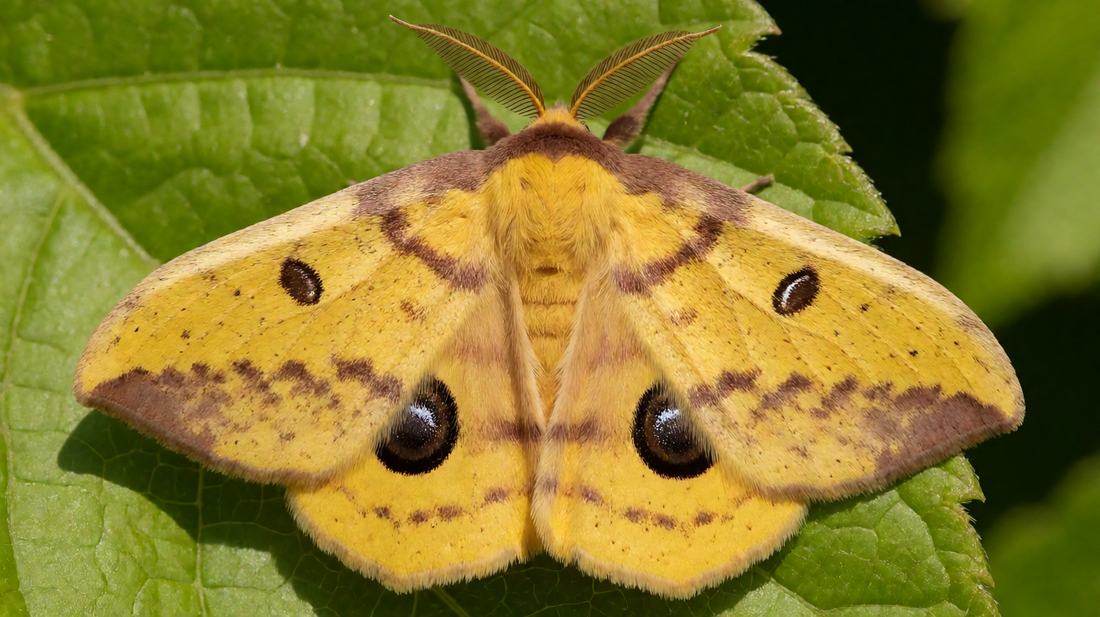
Automeris io | Io Moth
Species Profile · Saturniidae
Io Moth
A North American silk moth with eyespots that flash at a touch and a caterpillar whose spines sting for hours.
Not evaluated
Wingspan
Adults
Eggs
Hatch
Stages
Rating
The Io Moth
Eyes that are not eyes
This moth carries two false eyes. They sit on the hindwings. Each one is black with a pale centre. Males are bright yellow.
Females are reddish brown, though the eyespots stay the same. Wings span 5 cm to 8.7 cm, while the body stays thick and furry. Adults live about 1 week. They never eat.
Their mouthparts are gone. Because the adult has no mouth at all, it lives on the fat it stored as a caterpillar and dies within days of mating. This is the io moth.
Family tree
Saturniidae, the silk moths
This moth belongs to the family Saturniidae. Fabricius described it in 1775. He placed it among the silk moths. Later workers gave it a new genus.
Its name comes from a Greek myth. Io was a figure in that myth. Atlas Moth shares the family. So do the giant silk moths of Asia, while others live in Africa.
The family holds about 2,300 species, since the group spread across every warm continent and most temperate ones too. Its closest relatives are tropical, though this one reaches Canada. Two subspecies are sometimes named.
8.7 cm of yellow and purple
How to tell one
Forewings are 3 cm to 4 cm long. Colour depends on sex. Male wings look lemon yellow. Female wings look rusty purple.
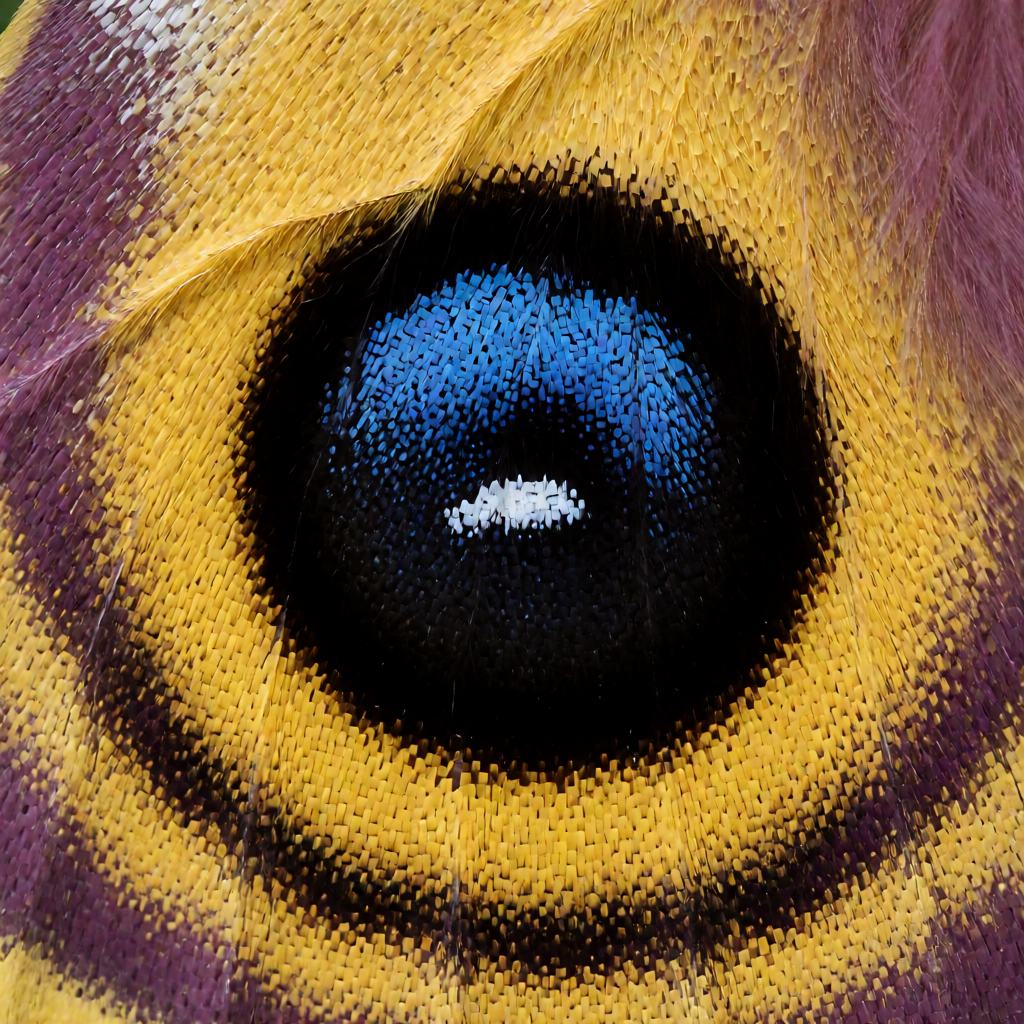
Both carry a dark band, though its width varies. The hindwings hold the eyespots. Each spot has a blue-black ring. A white dash sits in the middle.
Antennae of males are wide and feathery, while those of females are thin. Because the eyespots appear only when the moth is alarmed, they work as a sudden surprise rather than a warning shown all the time. The body is thick and furry.
1
2
3
Woodland edges and gardens
Where it lives
Woodland edges suit it best. Old fields and hedgerows also work. Suburbs with trees do well, though lights confuse the adults. It lives from Manitoba to Florida.
Its range reaches Texas and Utah. Some populations live in Mexico. It avoids deep conifer forest. Larvae need hardwood leaves.
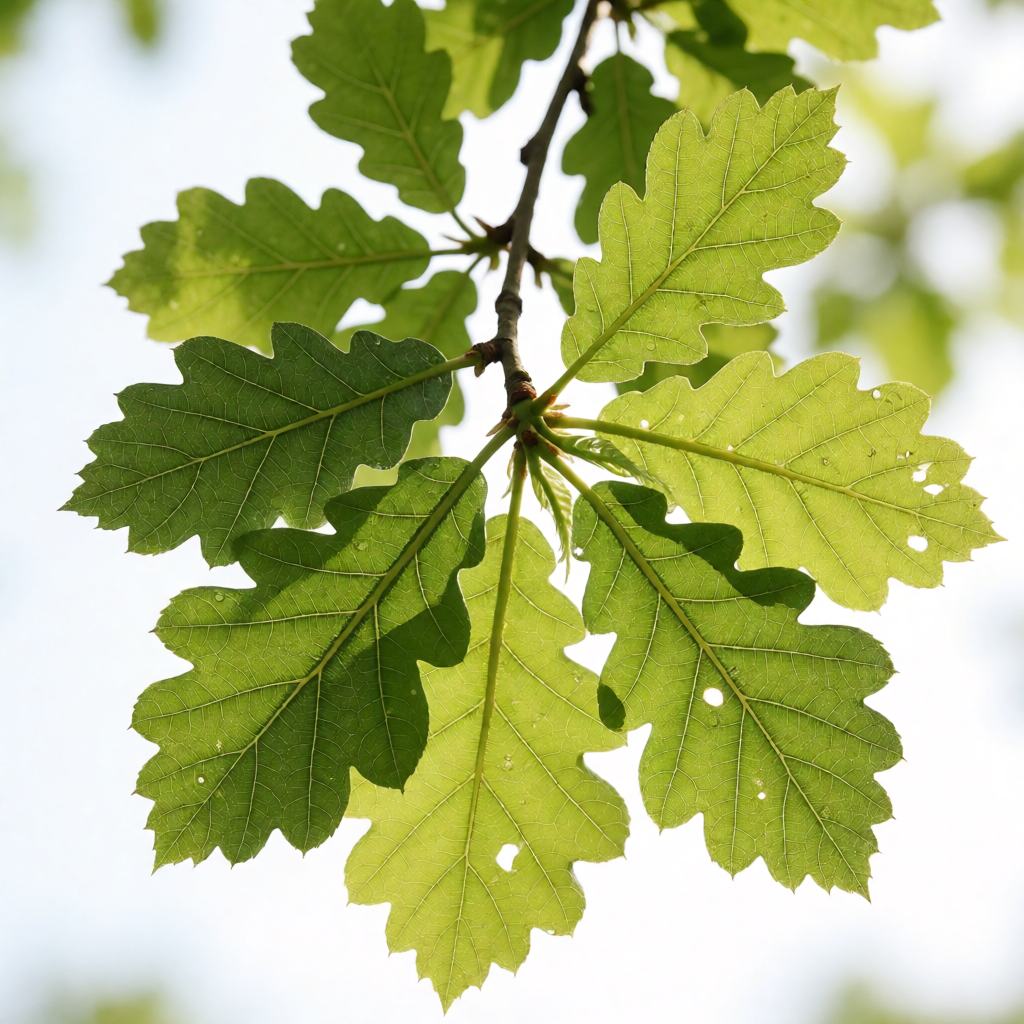
Oaks, willows, and maples are favourites. The moth rests in leaf litter, since its colours blend with dead leaves. Because the species uses so many host plants, it survives in gardens and city parks where other silk moths fail.
Leaves for larvae, nothing for adults
What it eats
Caterpillars eat leaves. They take many kinds. Willow and oak top the list. Birch, cherry, and clover also serve.
Rose and corn are eaten too, though clover is easier to find. Young larvae feed in groups. Older ones spread out. They eat at night.
A caterpillar can strip a small branch. Adults take nothing at all, since their mouthparts are reduced to stubs. Because the larvae can digest so many plants, the species needs no single host and never runs short of food.
More than twenty eggs a cluster
The breeding cycle
A female releases scent at dusk. Males detect it from far away. They fly in fast, because the trail is faint. The pair mates for hours, while other males keep searching.
Eggs are laid in clusters. A cluster holds more than 20 eggs. They hatch within 8 days, though cold weather slows them. Larvae pass through 5 stages.
Each caterpillar grows to 7 cm. It spins a papery cocoon in the leaf litter, and there it waits until warmth returns the following spring.
No global rating
Conservation
No IUCN rating exists for this moth. NatureServe calls it secure. Numbers, however, are falling in New England. Habitat loss explains part of that.
An introduced fly attacks the larvae. That fly was brought in against other pests. Pesticides also take a toll. Lights at night exhaust the adults.
The stinging caterpillars are often killed on sight. Because the moth still thrives across the south, the species as a whole is not yet in trouble. Local losses, though, keep growing.
Side by side
How It Compares
| Trait | Io Moth | Atlas Moth |
|---|---|---|
| Wingspan | 5 cm to 8.7 cm | up to 25 cm |
| Range | North America | southeast Asia |
| Larva | striped, with stinging spines | plain green, harmless |
| Defence | eyespots that flash | wingtips like snake heads |
| Cocoon | thin and papery | thick and silky |
| Sexes | very different in colour | almost alike |
Common misreadings
What People Get Wrong
- An adult moth feeds on leaves. Adults have no working mouth.
- Those eyespots are true eyes. They are only patterns on the hindwings.
- A caterpillar is safe to touch. Its spines sting for hours.
Going further
Sources and Further Reading
- IUCN Red List search for Automeris io
- Wikipedia, Automeris io
- Tuskes, P. M. et al. 1996. The Wild Silk Moths of North America. Cornell University Press.
- Fabricius, J. C. 1775. Systema Entomologiae.
Quick hits
Five things to remember
- Its eyespots flash when it is touched.
- A caterpillar’s sting hurts for hours.
- Adults cannot eat at all.
- A female lays more than 20 eggs at a time.
- Males smell a mate from far away.