 By st20113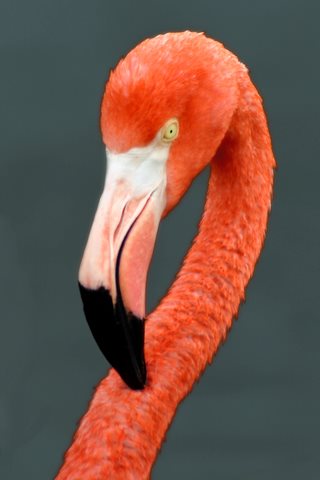
Introduction
The American Flamingo, Phoenicopterus ruber, is the most vibrantly colored of the six flamingo species and one of the most visually striking birds of the Western Hemisphere. With its pink-to-coral plumage, impossibly long pink legs, and distinctive downward-curving bill, this large wading bird is instantly recognizable against the turquoise lagoons and white salt flats of its Caribbean and South American habitat. Standing 90 to 150 centimeters tall, the American Flamingo is compact and heavily built compared to its taller Old World relatives. Though famously associated with the Caribbean islands, small populations also inhabit the Galápagos Islands, where they represent one of the archipelago’s most unexpected avian residents. Their elaborate group courtship displays rank among the most spectacular wildlife performances in the Americas.
Taxonomy
The American Flamingo belongs to the family Phoenicopteridae, order Phoenicopteriformes. The genus name Phoenicopterus derives from the Greek phoinix (crimson) and pteros (winged), and the species name ruber is Latin for “red.” Once considered a subspecies of the widespread Greater Flamingo of Africa and southern Asia, genetic research confirmed it as a distinct species. Despite superficial similarities, flamingos and Penguins represent opposite evolutionary extremes—flightless swimmers versus filter-feeding fliers—demonstrating how different lineages evolve analogous adaptations to their respective environments.
Physical Characteristics
The American Flamingo stands 90 to 150 centimeters tall, with males slightly larger. Its plumage ranges from pale pink to vivid coral and scarlet, with the most intensely colored individuals typically being older and in better nutritional condition. The legs are long and pink, adapted for wading in deep water, and the feet are partially webbed for stability in soft mud. The bill is uniquely bent sharply downward at the midpoint and works upside down during feeding—the bird submerges its head and sweeps the bill through the mud, pumping water through lamellae with its tongue to trap algae and small prey. Young flamingos are grey or white, acquiring pink plumage over two to three years as dietary carotenoid pigments are incorporated into the feathers.
Habitat
American Flamingos are found from the Bahamas and Cuba through the Yucatán Peninsula, Colombia, Venezuela, and the Galápagos Islands, with the largest breeding colony on Great Inagua in the Bahamas, numbering over 70,000 birds. They inhabit brackish and hypersaline lagoons, mudflats, salt pans, and estuaries, sometimes wading in water deep enough to submerge their lower body. Breeding colonies are established on low mud mounds safe from terrestrial predators. The species is expanding its range, with increasing sightings along the Florida Keys and Texas coast. Flamingos are highly gregarious, forming colonies that can number in the hundreds of thousands.
Diet
The American Flamingo feeds primarily on algae and brine shrimp larvae, using its specialized bill to filter food from mud and water. Algae and brine fly larvae—rich in carotenoid pigments—are the primary source of the flamingo’s distinctive pink coloration. Without these dietary sources, a flamingo’s feathers would be white. In areas where these foods are abundant, flamingos may consume up to 20 percent of their body weight daily during peak feeding periods. Like the Green Sea Turtle, which shares coastal lagoons with flamingos and also grazes on algae, the flamingo plays an important role in nutrient cycling in hypersaline wetlands.
Reproduction
American Flamingos form monogamous pair bonds after elaborate group courtship displays involving synchronized head-flagging, wing-saluting, and group marching, performed in unison by hundreds or thousands of birds. A single chalky white egg is laid on a conical mud-mound nest, incubated by both parents for 28 to 32 days. The chick hatches with grey down and joins large crèches watched over by a few adults. Both parents feed the chick on a nutrient-rich crop secretion, similar to pigeon milk. Fledging occurs between 65 and 75 days, after which the young bird gradually acquires adult pink plumage over two to three years.
Conservation
The American Flamingo is classified as Least Concern, with stable or increasing populations across much of its range. Localized threats include habitat loss, pollution, and human disturbance at breeding sites. Conservation efforts focus on protecting key sites such as Great Inagua in the Bahamas. Like the recovering populations of Sea Otters along the Pacific coast, flamingo populations benefit from the protection of critical coastal habitats and international cooperation.
Fun Facts
The flamingo can sleep standing on one leg with the other tucked beneath its body, a posture that reduces heat loss from the legs in cool water. The downward-bending bill is a filter-feeding adaptation otherwise found only in baleen whales. A large flamingo colony marching in synchronized formations across a pink-tinted lagoon is one of the most spectacular natural displays in the Americas. Flamingos have been kept in captivity for over 100 years, with some individuals living beyond 60 years of age. Flamingos drink fresh water when available but can also tolerate highly alkaline and salty water that would kill most other birds.