 By st20113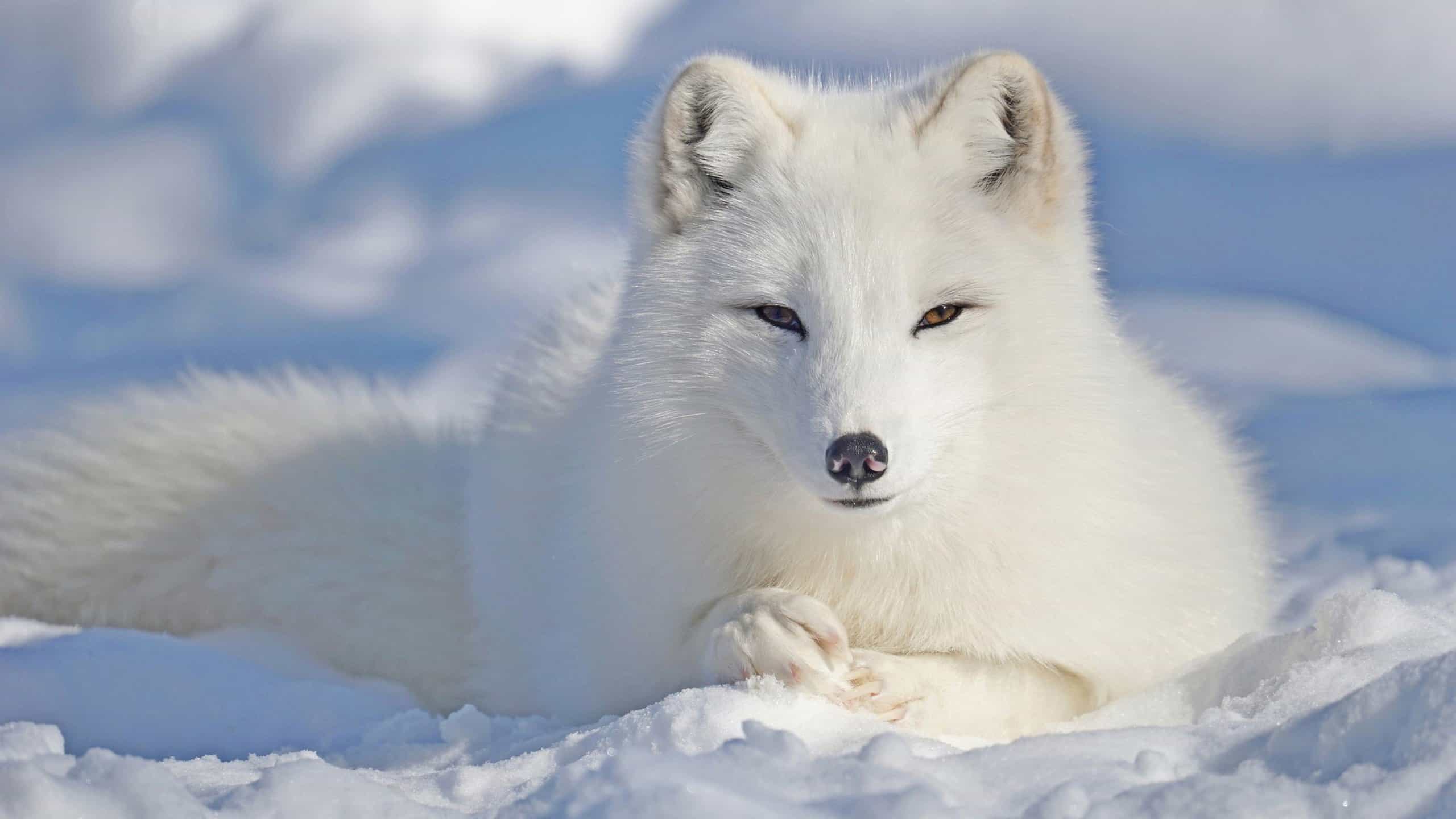
The Arctic Fox (Vulpes lagopus) is one of the most beautifully adapted mammals on Earth, a small omnivorous canid whose remarkable seasonal camouflage, physiological cold tolerance, and ecological versatility have allowed it to thrive in one of the planet’s most extreme environments — the Arctic tundra. Weighing just 3–8 kg (7–18 lbs) and measuring approximately 75–100 cm (30–39 inches) in body length plus a 30-cm tail, the Arctic Fox is the only land mammal endemic to the Arctic — found throughout the circumpolar Arctic, from Scandinavia and Russia through Alaska and Canada to Greenland, with populations even occurring on the northernmost islands of the Arctic archipelago. Its coat changes with the seasons: pure white in winter, providing perfect camouflage against the snow, and brownish-grey or blue-grey in summer when the tundra melts — one of the most dramatic examples of seasonal pelage change in the animal kingdom.
Physical Adaptations
The Arctic Fox’s suite of cold-weather adaptations is nothing short of extraordinary. Its fur is among the densest of any mammal — up to a million hairs per square inch — providing exceptional insulation against temperatures that can plunge to −50°C (−58°F) during the Arctic winter. The fur covers the entire body, including the soles of the feet, minimizing heat loss through any body surface. The Arctic Fox’s compact body plan — short legs, short ears, and a relatively short snout compared to other foxes — reduces the surface-area-to-volume ratio, minimizing heat loss. This follows the same principle of Allen’s Rule, an evolutionary pattern observed across many Arctic and alpine mammals, including the Polar Bear (which has proportionally smaller ears and limbs than other bear species) and the Emperor Penguin (which has small, compact body dimensions relative to its mass).
Beneath the surface, the Arctic Fox possesses remarkable circulatory adaptations. Its legs and extremities are equipped with a counter-current heat exchange system: warm arterial blood flowing to the feet and paws passes its heat to cold venous blood returning from the extremities, maintaining the feet just above freezing while preserving core body warmth. The metabolic rate of the Arctic Fox increases only modestly in extreme cold (unlike many mammals that must dramatically increase their metabolism to generate more heat), thanks to its exceptional insulation and behavioral thermoregulation — burrowing beneath the snow, which is an excellent insulator, and curling into a compact ball with the thick, bushy tail draped over the nose to conserve heat.
Ecology and Diet
The Arctic Fox is an opportunistic omnivore whose diet varies dramatically with season and location. In summer, when prey is abundant, the Arctic Fox consumes a varied diet including lemmings (its most important prey), voles, Arctic hares, birds and their eggs, berries, and carrion. In winter, when the tundra is blanketed in snow and prey is scarce, the Arctic Fox follows apex predators such as the Polar Bear and Arctic Wolf, feeding on the remains of seal and whale carcasses left behind by these larger predators. This facultative scavenging is a critical winter survival strategy that links the Arctic Fox to the broader Arctic ecosystem.
The Arctic Fox also plays an important role in the Arctic ecosystem as a keystone predator whose population fluctuations directly influence prey species populations. Arctic fox numbers fluctuate dramatically in response to lemming population cycles — during lemming “boom” years, Arctic Fox litter sizes increase significantly (up to 14–18 cubs per litter) and survival rates improve dramatically; during lemming “bust” years, litter sizes shrink to 4–6 cubs and starvation rates increase. This predator-prey dynamic is one of the classic case studies in population ecology, demonstrating the complex feedback loops that connect species across trophic levels in the Arctic ecosystem.
Climate Change Vulnerability
Despite its extraordinary cold-weather adaptations, the Arctic Fox faces serious threats from climate change. Arctic temperatures are warming at approximately 2–3 times the global average rate — a phenomenon known as Arctic amplification — and the consequences for the Arctic Fox are profound. The expansion of red fox (Vulpes vulpes) populations into the Arctic, facilitated by climate warming and the loss of snow cover that previously excluded red foxes from northern ranges, creates direct competitive pressure on Arctic Fox populations. Red foxes are larger and more aggressive, and they typically dominate Arctic Fox interactions. Furthermore, reduced sea ice and earlier snowmelt disrupt the Arctic Fox’s traditional movement patterns and prey availability, potentially pushing populations into decline in parts of their range.
[…] As temperatures drop, the coat grows longer and turns grayish-brown with a dark face mask. Like the Arctic Fox, which also undergoes seasonal coat changes for camouflage, the addax transforms completely with […]
[…] hares distributed across the Northern Hemisphere. The Snowshoe Hare is sometimes confused with the Arctic Fox, though the two species occupy different habitats and have distinct morphological […]
[…] areas with some vegetation. These habitats provide both food and shelter from harsh winds. The Arctic Fox shares these same frozen […]
ponds and coastal marshes, where the open landscape lets them spot approaching predators such as Arctic Foxes and keeps them company with other Arctic breeders such as Snowy Owls. In winter they migrate south