 By st20113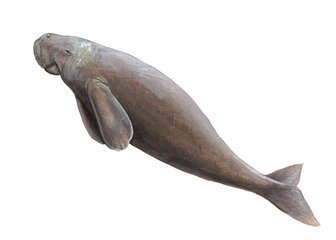
Introduction
The dugong (Dugong dugon) is a large marine mammal often called the sea cow. It is the only living species of the family Dugongidae and the only exclusively marine herbivorous mammal. Dugongs inhabit warm coastal waters from East Africa to the western Pacific, grazing on seagrass meadows that form the foundation of shallow marine ecosystems. Closely related to the manatee of the Atlantic, the dugong has inspired centuries of mermaid legends among sailors who glimpsed it from afar.
Taxonomy
Dugongs belong to the order Sirenia, which includes the manatees and the extinct Steller’s sea cow. The family Dugongidae once contained several species, but today only Dugong dugon survives. Sirenians are distant relatives of elephants, sharing an ancestor that returned to the water roughly fifty million years ago. Unlike the streamlined blue whale of the open ocean, the dugong is built for shallow, near-shore life with a fusiform body and a distinctive downturned snout. Its paddle-like flippers and fluked tail aid slow maneuvering through seagrass.
Physical Characteristics
Adult dugongs reach lengths of two point seven to three point three meters and weigh between two hundred and thirty and four hundred kilograms. Their bodies are grey brown above and paler below, with a thick, wrinkled hide and sparse bristles on the snout. A muscular upper lip helps them uproot seagrass, and molar teeth grind the tough plant matter. The tail fluke is horizontal like that of whales, while the forelimbs are rounded flippers. The humpback whale and the orca share the same basic mammalian body plan but are far larger and built for pelagic travel. Dugongs have small eyes, poor hearing, and a keen sense of taste used to select the best seagrass shoots.
Habitat
Dugongs depend on shallow, sheltered coastal waters where seagrass grows in clear, warm conditions. They favor protected bays, lagoon systems, and the lee sides of islands, usually at depths under ten meters. Seagrass meadows require clean water and intact substrate, making dugongs sensitive indicators of marine health. The great white shark occasionally patrols the same waters, though it rarely targets adult dugongs. Migration is limited, so local populations are tied to the quality of nearby meadows. Northern Australia supports the largest remaining herds, while smaller groups persist around Sri Lanka, the Philippines, and East Africa, wherever seagrass still thrives undisturbed.
Diet
Dugongs are strict herbivores, feeding almost entirely on seagrass, particularly the nutritious rhizomes and roots of certain species. An adult may consume tens of kilograms of seagrass each day, cropping meadows in a way that promotes new growth. They avoid unsuitable plants using sensitive lips and will travel to find preferred beds. Unlike the predatory orca, which hunts fish, squid, and marine mammals, the dugong poses no threat to other creatures. Its feeding creates cleared patches that benefit other grazers and recycle nutrients. Seasonal changes in seagrass quality drive local movement, and calves learn feeding grounds by following their mothers through the meadows.
Reproduction
Female dugongs reach maturity around eight to eighteen years of age and give birth to a single calf after a gestation of roughly thirteen months. Calves nurse for up to eighteen months and remain with their mothers for several years, learning vital foraging routes. Because maturity is late and reproduction is slow, populations recover poorly from losses. Males establish dominance through tusk displays and gentle contests rather than open fighting. Birthing typically occurs in calm, shallow nurseries where predators are fewer. The long interval between calves means that a dugong population can decline for decades before the effects become obvious to observers counting animals in the field.
Conservation
The dugong is listed as Vulnerable by the International Union for Conservation of Nature, with some regional populations Critically Endangered. The greatest threats are habitat loss from coastal development, pollution, and declining seagrass due to climate change and poor water quality. Entanglement in fishing nets and boat strikes add direct mortality. Traditional hunting persists in parts of its range despite legal protection. Conservation measures include marine protected areas, seagrass restoration, and community stewardship programs. The dugong’s future is inseparable from the survival of seagrass ecosystems, which also store carbon and shelter countless juvenile fish that support coastal fisheries and human livelihoods alike.
Fun Facts
Dugongs can live more than seventy years, making them among the longest-lived marine mammals. Their closest living relatives are elephants, a link visible in their toenails and rugged skin. Sailors’ tales of mermaids likely arose from dugongs nursing calves at the surface with their flippers raised. Unlike the speedy blue whale, dugongs cruise at a leisurely pace and can hold their breath for several minutes. Their constant grazing helps seagrass meadows stay productive and resilient. Perhaps most endearing, a dugong’s gentle, whiskered face and slow, deliberate movements have made it a beloved symbol of ocean conservation across the tropical waters it calls home.