 By st20113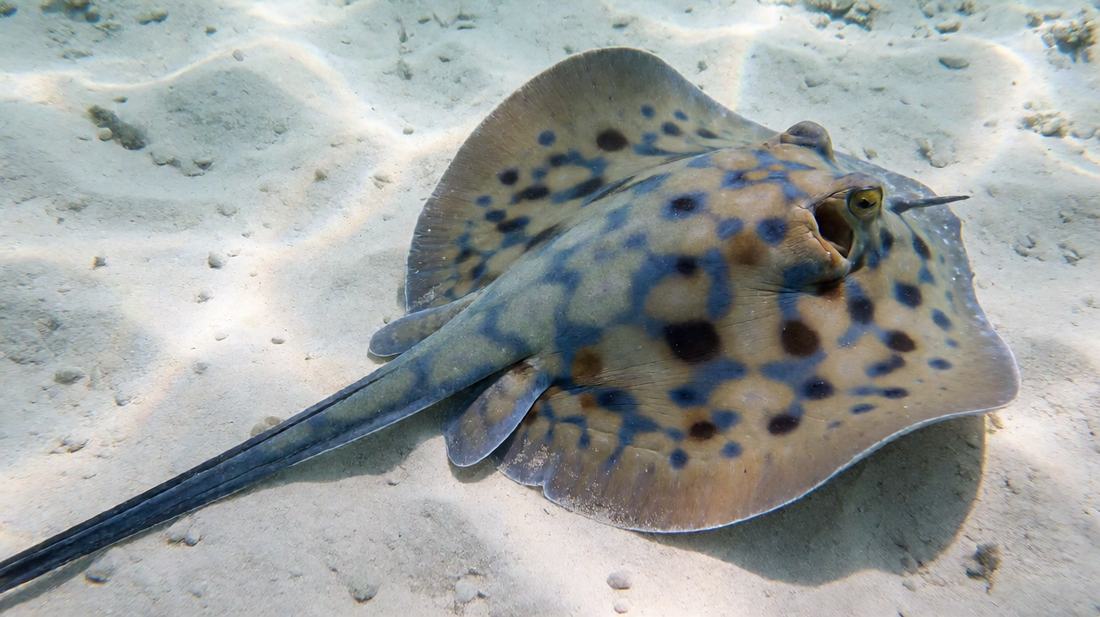
Dasyatis marmorata | Marbled Stingray
Species Profile · Dasyatidae
Marbled Stingray
A small stingray of the eastern Atlantic that hides on the sea bed by day and hunts crabs and shrimps by night.
A golden stingray with blue blotches and a venomous tail spine
Disc
Depth
Tail
Litter
Colour
Family
The Marbled Stingray
A small ray of warm coastal water
The Marbled Stingray is a small flat fish of warm coastal water. It is 1 of the stingrays of the eastern Atlantic. Its disc carries blue blotches on a golden brown ground.
A venomous spine sits on the tail. It rests on the sea bed by day.
Family tree
Myliobatiformes, Dasyatidae
The Marbled Stingray belongs to the phylum Chordata. Its class is the Chondrichthyes, the cartilaginous fishes. Its order is the Myliobatiformes. Its family is the Dasyatidae, the stingrays.
Our fish shares the family with the Common Stingray. That family holds about 90 species. All of them have a whip like tail.
75 cm across a blue blotched disc
How to tell one
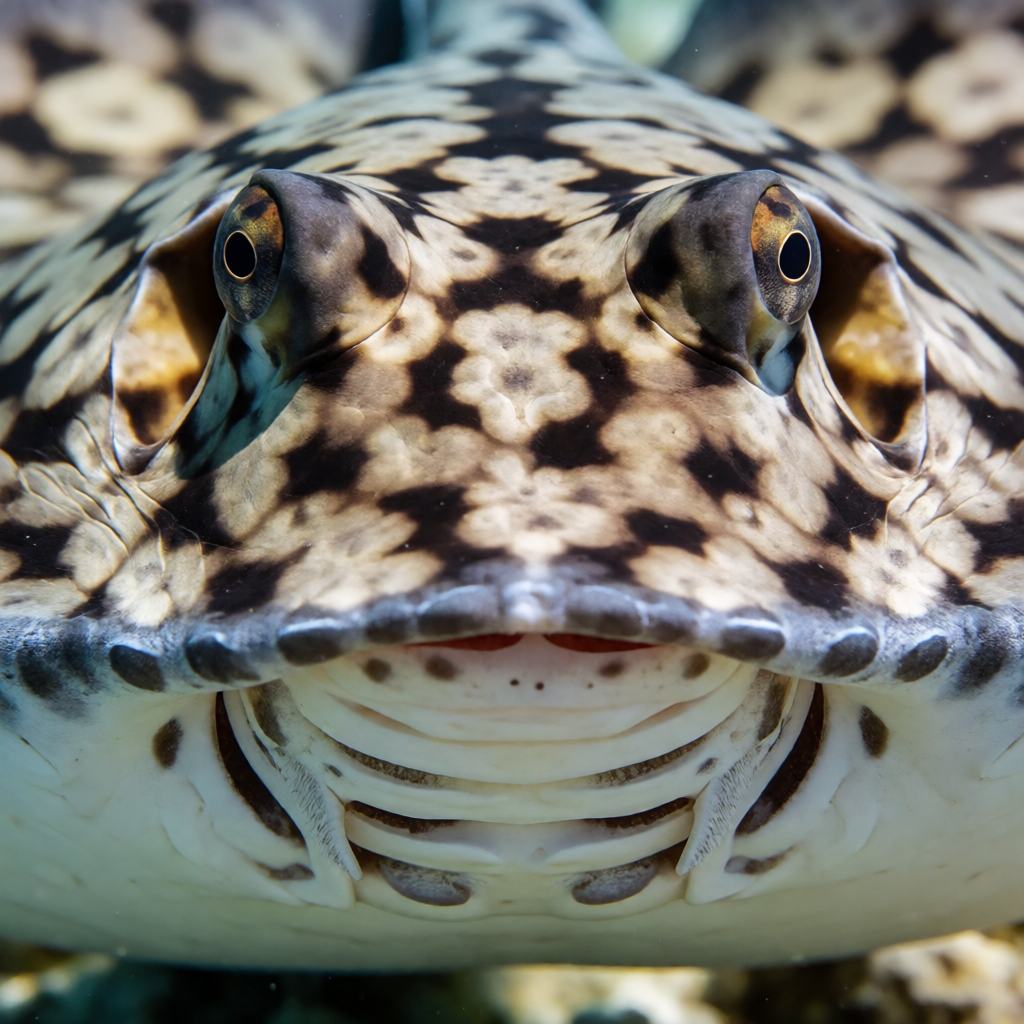
The disc reaches about 75 cm across. It is diamond shaped and flat. The tail is long and thin.
A spine sits near the base of the tail. The upper surface is golden brown. Bright blue blotches mark the disc.
No spines cover the disc. The underside is pale.
1
2
3
Sandy and muddy sea beds
Where it lives
The species lives on sandy and muddy bottoms. It is found in shallow bays and near reefs. It moves into deeper water in winter.
It is taken between 12 and 65 m down. It needs warm water. It stays close to the sea bed.
Crabs, shrimps and worms
What it eats
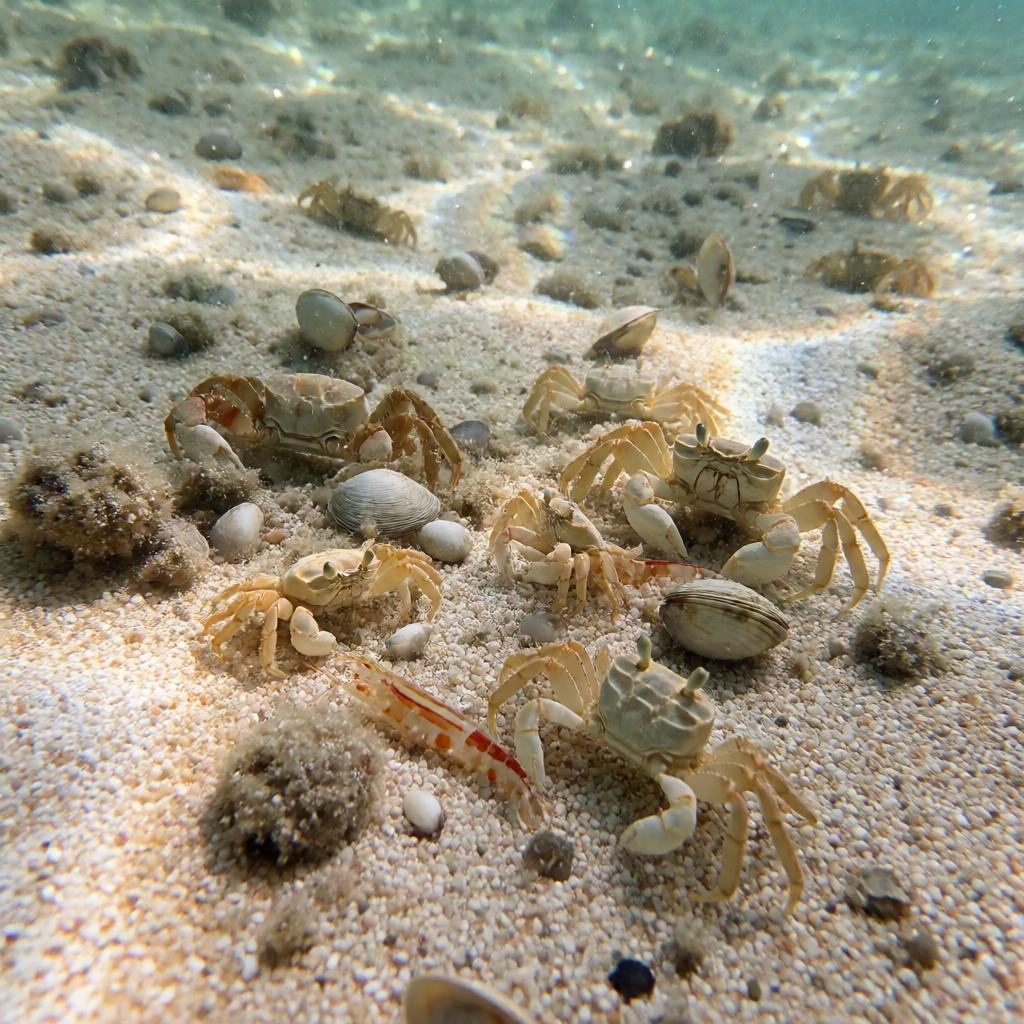
The fish feeds on crabs and mantis shrimps. It also takes worms and small fish. It crushes shells with flat teeth.
It hunts at night. It stirs the sand to find prey. It may rest for hours after feeding.
Young born live
The breeding cycle
The young grow inside the mother. The female gives birth to live young. A litter holds 1 to 4 young.
The young look like small adults. They feed on their own at once. The species grows slowly.
Trawlers, building and pollution
Conservation
The Marbled Stingray is listed as Near Threatened by the IUCN. Its numbers are falling. Trawlers catch it by accident. Its slow growth makes recovery hard.
Coastal building damages its nurseries. Pollution also causes losses. Better fishing gear would help.
Quick hits
Five things to remember
- The blue blotches may warn other animals of its spine.
- It swims with a rippling wave along its disc.
- It can hide by covering itself with sand.
- The tail spine can cause a painful wound.
- It is often confused with the common stingray.