 By st20113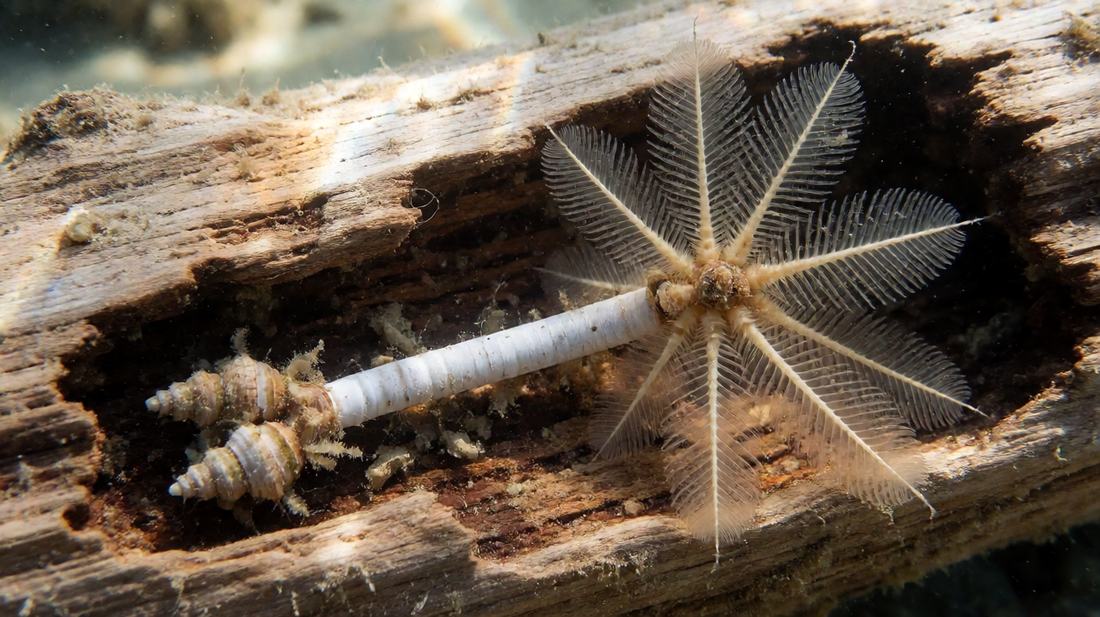
Bankia setacea | Feathery Shipworm
Species Profile · Teredinidae
Feathery Shipworm
A long soft mollusc that bores into timber and digests wood with the help of microbes living in its gills.
A wood eating mollusc that hides inside a tunnel it cuts itself
Body
Shell valves
Siphons
Tunnel
Diet
Family
The Feathery Shipworm
A wood eating mollusc of the coast
The Feathery Shipworm is a long soft animal that bores into timber. It is 1 of the few molluscs that can eat wood. It looks like a pale worm rather than a shellfish.
Its body lies deep inside a tunnel it has cut. Two feathery siphons reach out into the water.
Family tree
Bivalvia, Teredinidae
The Feathery Shipworm belongs to the phylum Mollusca. Its class is the Bivalvia, the two shelled molluscs. Its order is the Myida. Its family is the Teredinidae, the shipworms.
Our animal shares the family with the Shipworm. The family holds a few dozen species. All of them bore tunnels in wood.
60 cm inside a wooden tunnel
How to tell one
The body may reach about 60 cm in length. It is long, soft and worm shaped. The skin is pale and thin.
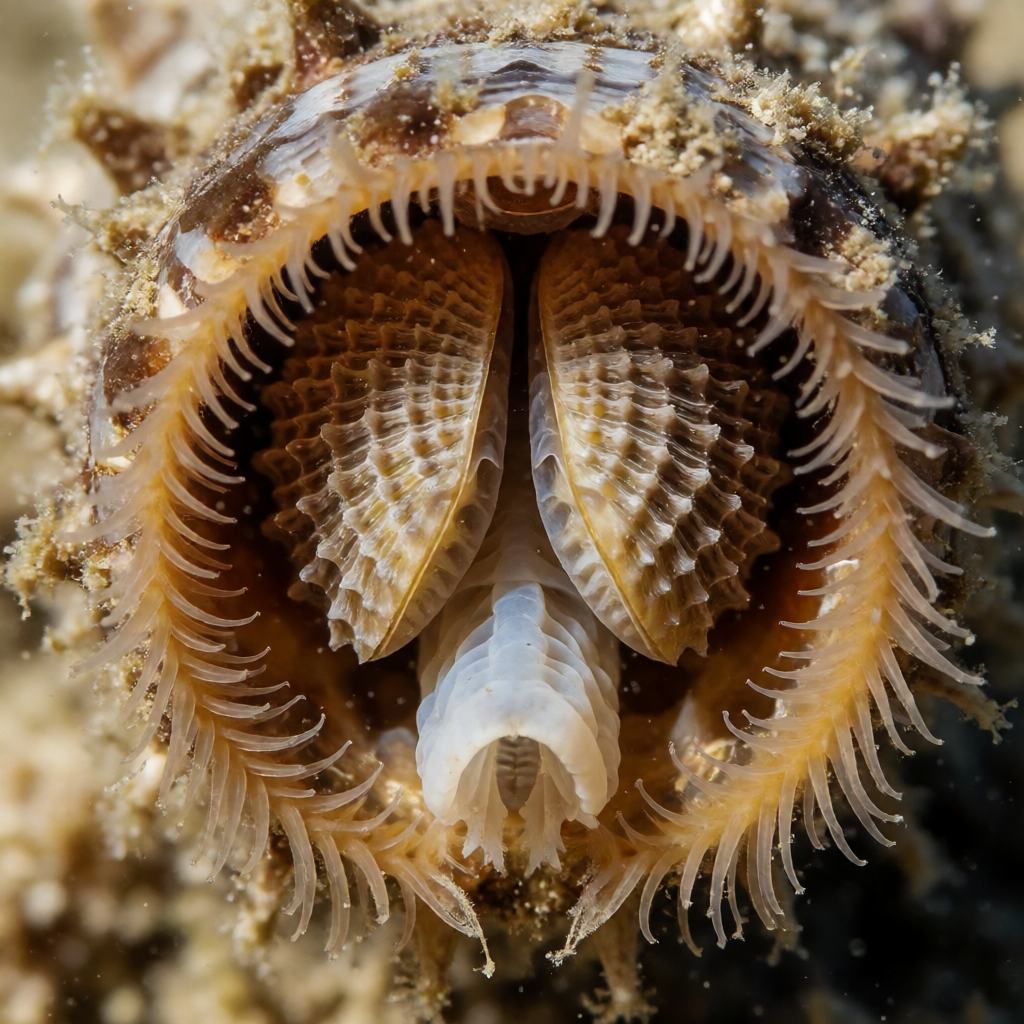
Only 2 small shell valves sit at the front. Those valves carry fine ridges. They rasp the wood as the animal turns.
The rear end holds 2 long siphons. Each siphon carries a pair of feathery pallets.
1
2
3
Driftwood, pilings and harbour timber
Where it lives
The species lives in salt water on the coast. It is found in driftwood and harbour timbers. It also attacks wooden pilings and boats. It needs water with normal salt levels.
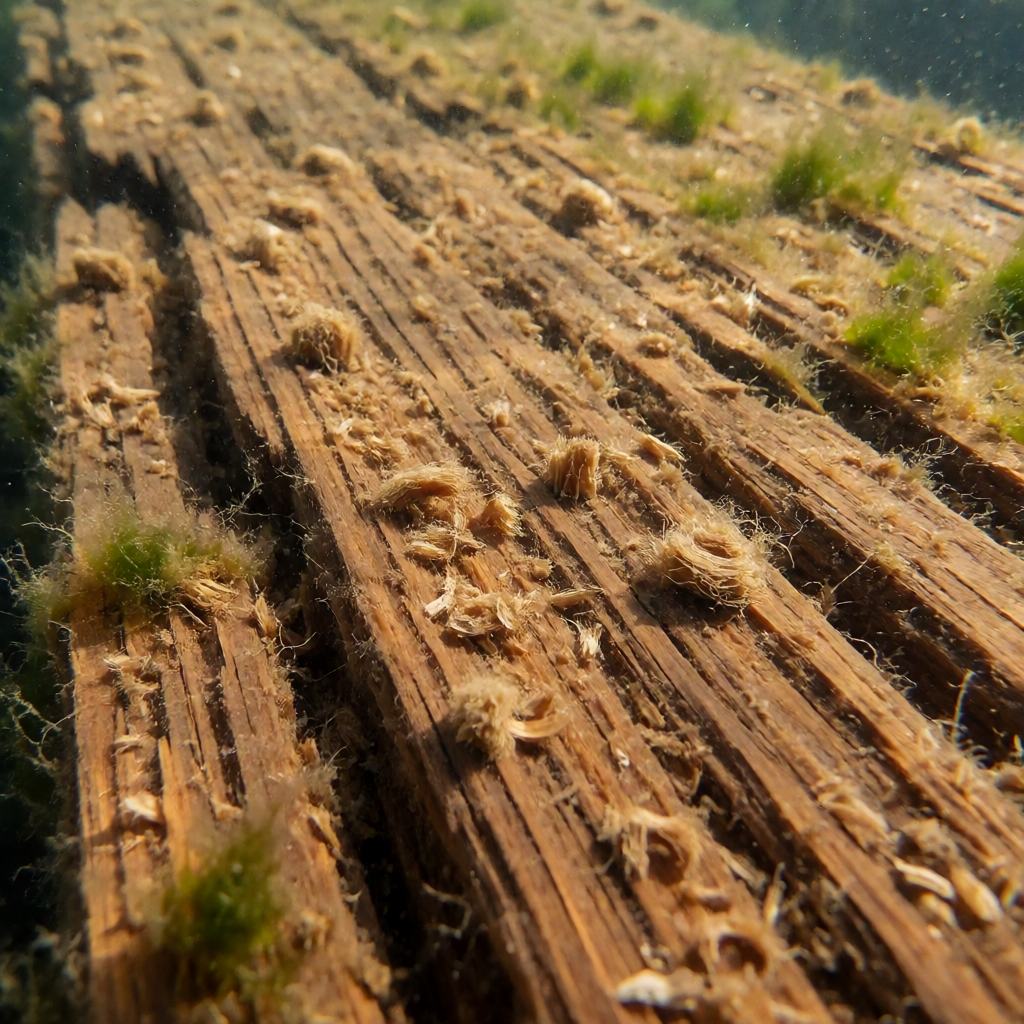
It cannot survive long in fresh water. The animal stays inside its tunnel for life. Young animals settle on bare wood surfaces.
Wood and fine drifting matter
What it eats
The animal feeds on wood and fine drifting matter. Fine threads in its gills break the wood down. Tiny living partners in the gills help with that work. The animal also filters small plants from the water.
It draws water in through one siphon. It pushes the used water out through the other. Wood alone gives it little energy.
A larva that settles on bare wood
The breeding cycle
The sexes are separate in this species. The adults release their cells into the water. Free swimming larvae drift with the current. Each larva settles on a piece of bare timber.
It then begins to bore into the surface. It grows inside the tunnel as it feeds. Growth continues there for several years.
Harbour cleaning and pollution
Conservation
The Feathery Shipworm is not assessed by the IUCN. It is common along the Pacific coast of North America. Its main need is salt water and bare timber. Cleaning harbours removes some of its sites.
Pollution can also harm the young. The species is treated as a pest by builders. It does help to break down dead wood.
Quick hits
Five things to remember
- It eats wood with the help of microbes in its gills.
- The two small shells at the front work like a drill.
- It never leaves the tunnel it cuts as a larva.
- Its long body is protected by nothing but the tunnel.
- Wooden ships once sank because of animals like this.