 By Iris
Xylocopa violacea | Violet Carpenter Bee
Species Profile · Apidae
Violet Carpenter Bee
A large dark bee hovers in front of a wooden beam.
Not assessed
Length
Wings
Nest
Cells
Range
Rating
The Violet Carpenter Bee
The bee that drills wood
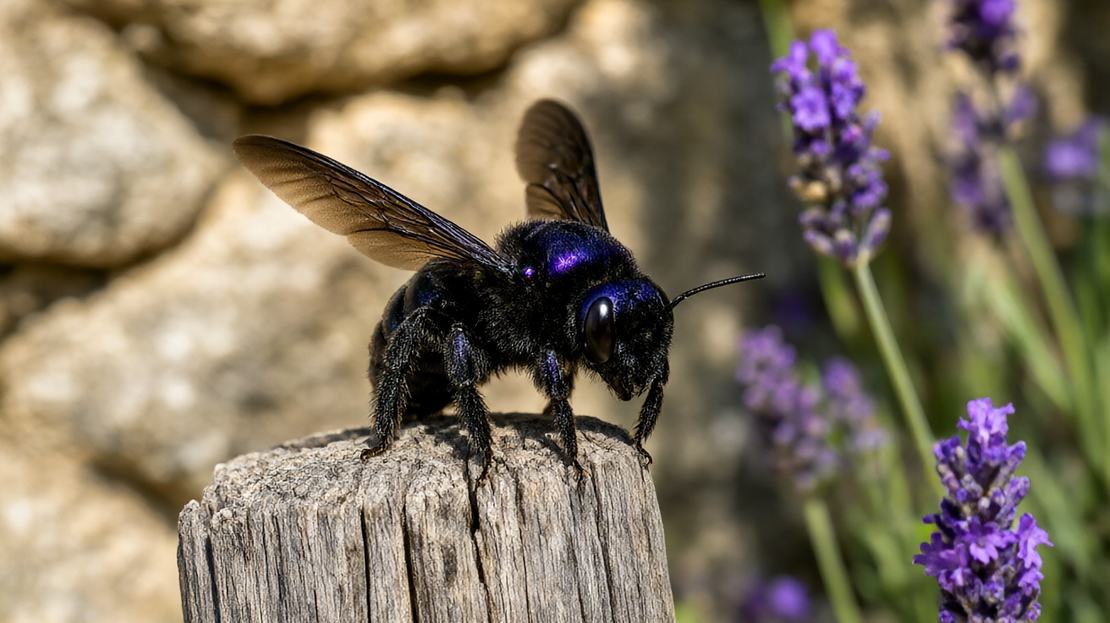
A large dark bee hovers in front of a wooden beam, and it sounds lower than a honeybee while it moves more slowly. Sunlight turns the body deep violet. Its wings look almost black. No hive belongs to this insect, since each female works alone.
She chews a tunnel into dead wood and lays her eggs inside. Because the bee needs old timber, a tidy garden holds few of them. Gardeners often mistake it for a bumblebee and worry about damage.
Family tree
Apidae, a family it shares with honeybees
Its proper name is Xylocopa violacea, one of some 500 carpenter bees, and the genus sits in the same family as honeybees and bumblebees. Carpenter bees split from the social bees long ago. Because they never formed a colony, they kept a lone habit.
Some similar species live around the Mediterranean. The violet sheen splits this one from most kin. No subspecies are named across its wide range.
Wings and gloss
How to tell one
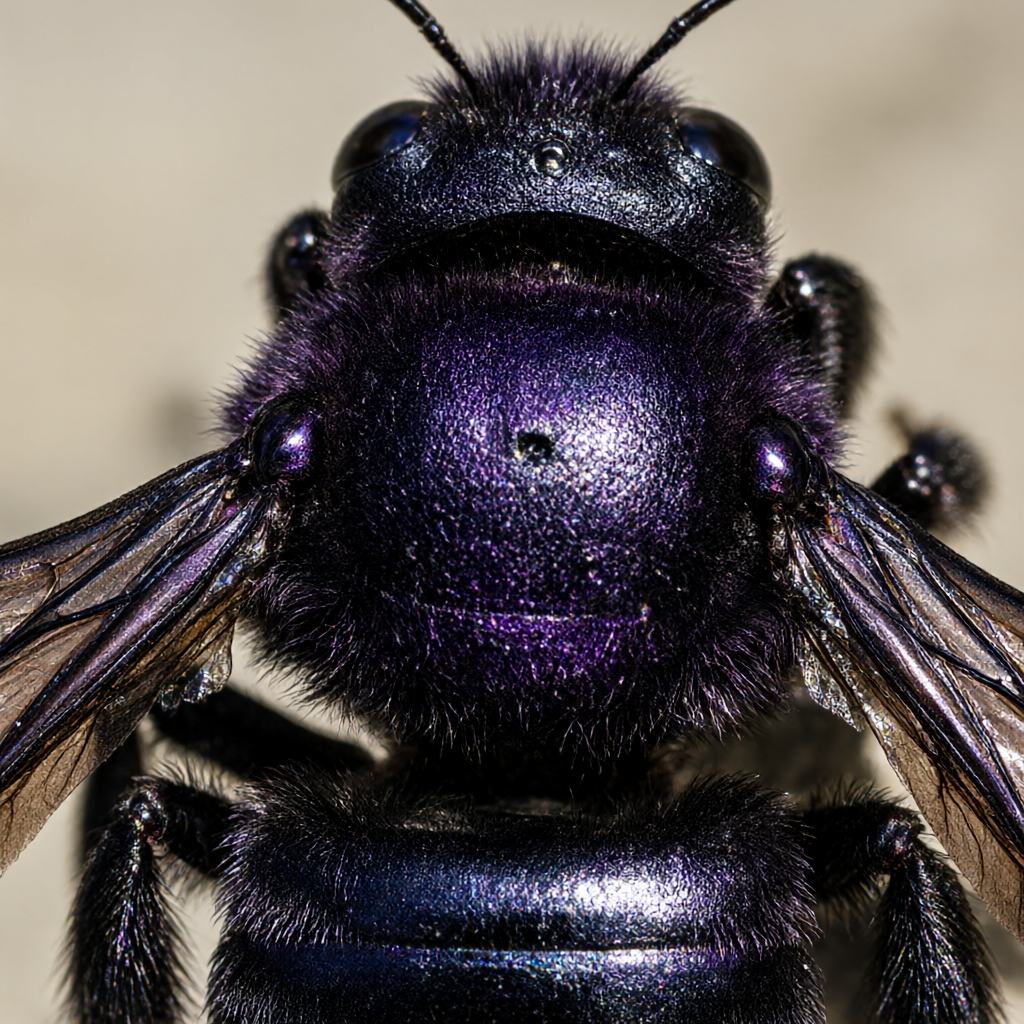
Adults run 20 to 25 mm, which makes them large for a bee. Weight stays modest, since the body runs slender. Black hair covers the thorax, and the abdomen shows a violet gloss.
Wings run dark and smoky, and they look nearly black in shade. Because the wings are so large, the bee flies with a low hum. The tongue runs long and reaches deep into a flower, and females carry a sting they use if handled.
Males have no sting and patrol patches in flight. Legs carry stiff hairs, and those hairs collect pollen. Strong mandibles let the female chew wood.
1
2
3
Warm open country
Where it lives
Warm open country suits the species, and so does Mediterranean scrub. Gardens, orchards and old buildings all give timber. Because the bee needs dead wood, bare beams matter, and open sunny ground speeds the flight while the insect avoids shade.
The species ranges across southern Europe and into Asia. Northward spread has followed warmer summers in recent decades. A bamboo cane also suits it, since the hollow stem needs little work to open.
Nectar and pollen
What it eats
Nectar makes up the adult diet. Pollen feeds the larvae, and the female stores it inside the tunnel. Because the bee works alone, each nest holds only a few cells.
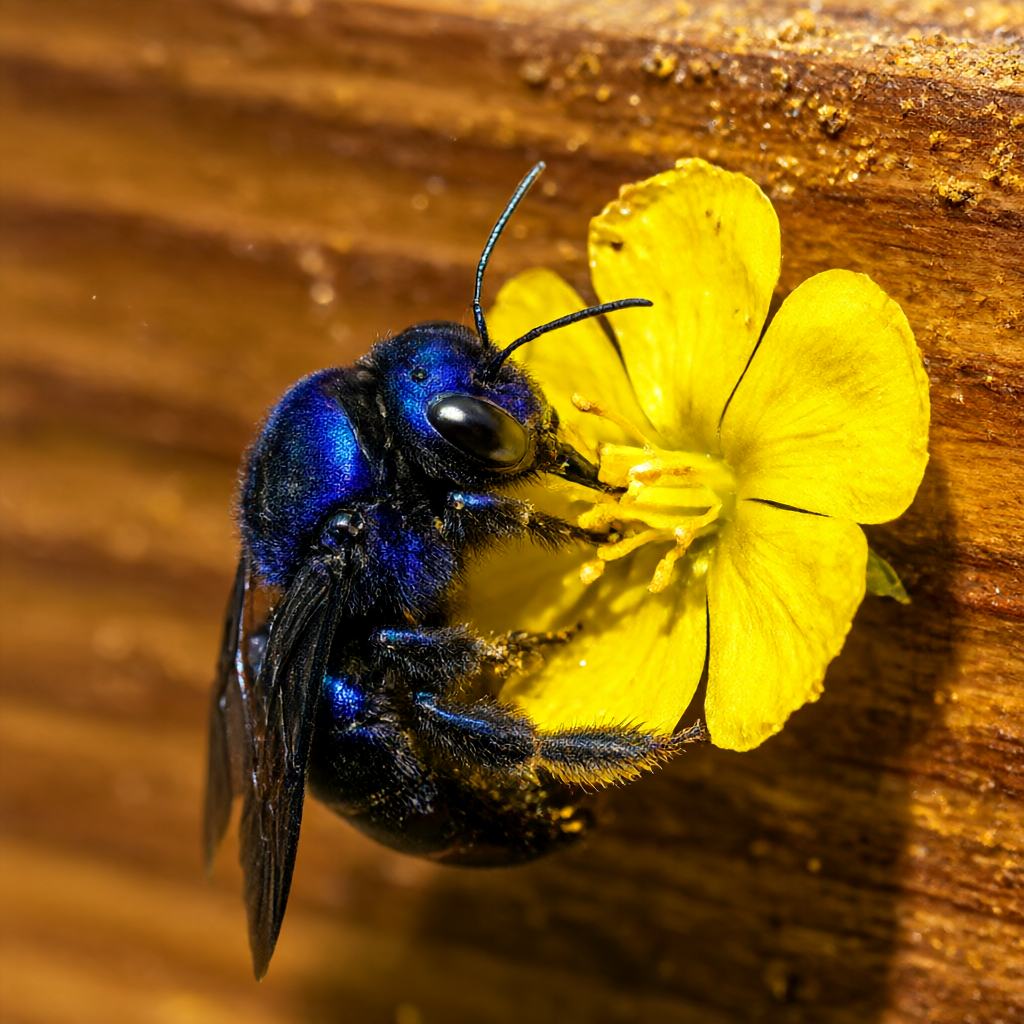
Flowers of sage, lavender and wisteria get used often. The long tongue reaches nectar that short tongued bees cannot. Adults also steal nectar by cutting a slit at the base of a flower.
A tunnel, not a hive
The breeding cycle
A female chews a tunnel into dry wood. The entrance runs inward, then turns along the grain. Because she builds alone, one female may finish several tunnels in a season. Each cell holds an egg and a ball of pollen.
A wooden wall splits one cell from the next. Larvae hatch, feed and pupate inside the tunnel. Young adults emerge in late summer and feed before winter.
Tidy gardens
Conservation
The species has not been assessed by the Red List. Because the bee depends on dead wood, tidy gardens remove nest sites. Old buildings get repaired, and the tunnels disappear with the beams.
Warmer summers now push the range further north. Pesticide sprays reduce the flowers it depends on. Nothing suggests a serious decline, and gardens still hold bees.
Side by side
How It Compares
| Trait | Violet Carpenter Bee | Honeybee |
|---|---|---|
| Family | Apidae | Apidae |
| Length | 20-25 mm | 10-15 mm |
| Nest | tunnel in dead wood | wax combs in a cavity |
| Society | each female works alone | colony with one queen |
| Sting | present, rarely used | barbed, dies after use |
| Rating | Not assessed | Not assessed |
Common misreadings
What People Get Wrong
- Not a bumblebee. The animal is black with a violet shine. Gardeners hear the low hum and assume a bumblebee, yet the wings run smoky and the abdomen carries a gloss no bumblebee shows.
- Not a wood eater. A tunnel is a nest, not food. She chews into dead beams and old fence posts, and sound timber with a dry surface is the only thing she uses.
- Not a honey maker. No hive, no comb and no honey store exist. Each cell holds a ball of pollen with one egg, so the nest feeds larvae rather than a colony through the winter.
Going further
Sources and Further Reading
Quick hits
Five things to remember
- It chews tunnels in dead wood.
- It looks nearly black in shade.
- It has no hive at all.
- Its tongue reaches deep flowers.
- Males cannot sting.