 By st20113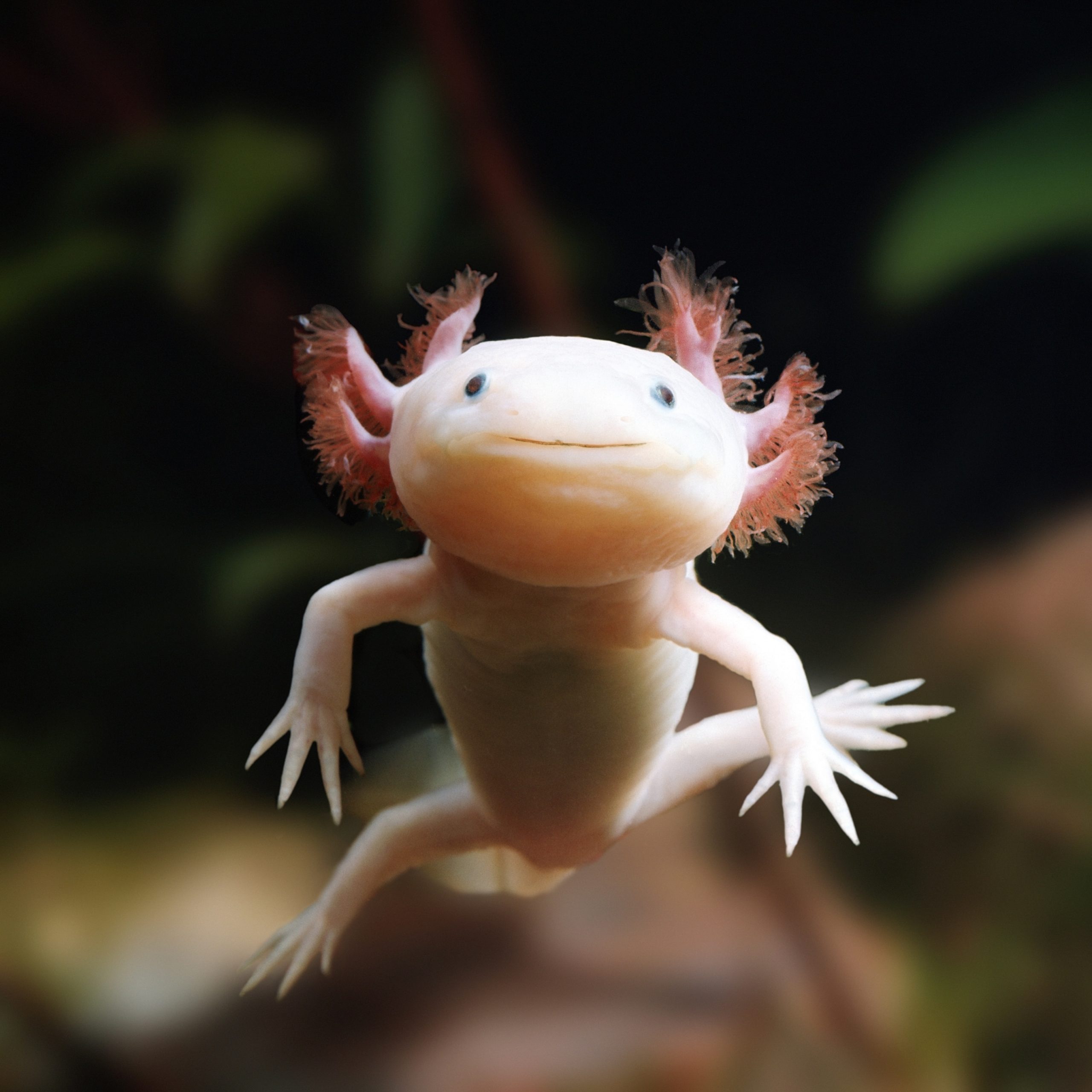
Introduction
The axolotl (Ambystoma mexicanum), often called the Mexican walking fish, is a neotenic salamander belonging to the family Ambystomatidae. Despite its common name, it is not a fish but an amphibian, closely related to the tiger salamander. Native exclusively to the lake underlying Mexico City—Lake Xochimilco—the axolotl retains its larval features throughout its entire life, a phenomenon known as neoteny. This means it keeps its external gills, dorsal fin, and fully aquatic lifestyle even as an adult, never undergoing the dramatic metamorphosis that its relatives undergo to become land-dwelling adults. The axolotl has become one of the most widely studied organisms in biology, developmental biology, and regenerative medicine due to its extraordinary ability to regenerate lost body parts, including limbs, spinal cord, heart tissue, and even parts of its brain.
Physical Characteristics
Adult axolotls typically measure 15–45 centimetres (6–18 inches) in length, with males generally being slightly larger than females. Their most distinctive feature is the set of three pairs of external gill stalks protruding from the sides of the head, which are richly supplied with blood vessels and function as respiratory surfaces. These gills are accompanied by small, underdeveloped internal gills. Axolotls possess a broad, flat head with lidless eyes, a finned tail that aids in swimming, and four stubby legs used primarily for bottom-walking rather than fast locomotion.
Natural colouration varies from wild-type brownish-green (carrying pigment cells called melanophores) to lighter leucistic and white forms that are common in captive populations. The widely studied leucistic strain, prized in the pet trade, has white or pale pink skin with visible pink gills and black eyes. Albino, golden albino, and melanoid (excess black pigment) variants are also selectively bred. Wild populations, confined to the murky, cool waters of Lake Xochimilco’s remaining canal system, tend toward darker colours that provide camouflage against the lake bed.
Habitat and Distribution
The axolotl is endemic to Lake Xochimilco in the Valley of Mexico, a high-altitude lake system at approximately 2,200 metres above sea level. The species once inhabited both Lake Xochimilco and the now-drained Lake Chalco, but it has been extirpated from the latter since the 1900s due to drainage and urban development. Today, wild axolotls survive only in the remaining freshwater canals of Xochimilco, a UNESCO World Heritage Site, where they live among submerged vegetation, roots, and soft sediments at depths of one to three metres.
The water in Xochimilco is cool (18–22 °C / 64–72 °F), oxygen-rich, and seasonally variable in quality. Axolotls are ambush predators that spend much of their time resting motionless on the lake bottom, emerging at night to hunt. Their habitat faces severe pressure from urbanisation, water pollution, invasive species (particularly African tilapia and Asian carp introduced for aquaculture), and the shrinking of Xochimilco’s canal network through land conversion and sedimentation.
Diet and Behaviour
Axolotls are carnivorous and opportunistic, feeding primarily on small prey they can swallow whole. Their diet includes worms, insect larvae, crustaceans, small fish, and occasionally smaller axolotls (cannibalism is not uncommon, especially under crowded or food-scarce conditions). They locate prey primarily through smell and vibration detection, employing a suction-feeding mechanism: they open their mouths rapidly to create negative pressure that draws prey in along with surrounding water.
Social behaviour is generally solitary, with individuals maintaining loosely defined home ranges within their preferred canal territory. They are not territorial in the strict sense but will avoid or confront conspecifics depending on size and resource availability. Courtship involves a complex series of behaviours initiated by the male, who deposits spermatophores (gelatinous sperm packets) on the substrate, which the female then picks up with her cloaca. Females can lay 100–1,000 eggs per breeding event, attaching them individually to vegetation or submerged objects.
Regeneration and Scientific Significance
The axolotl’s regenerative capacity is among the most remarkable in the animal kingdom. Unlike mammals, which form scar tissue at wound sites, axolotls are capable of regenerating complex structures with near-perfect fidelity. After limb amputation, a mass of undifferentiated cells called a blastema forms at the wound site within days; these cells proliferate and differentiate to reconstruct the lost limb, including bone, muscle, cartilage, skin, and blood vessels, restoring near-normal form and function within weeks to months.
Researchers have identified several molecular and cellular mechanisms underlying this regeneration, including the activation of immune cells called macrophages that prevent inflammation-driven scarring, the dedifferentiation of mature cells back into a pluripotent-like state, and the upregulation of genes associated with embryonic development. These findings have profound implications for human regenerative medicine, particularly in understanding why mammals cannot regenerate complex organs the way axolotls can. Genomic studies have revealed that axolotls possess an exceptionally large genome—approximately 32 billion base pairs, among the largest of any known organism—encoding over 20,000 protein-coding genes.
Conservation Status
The axolotl is classified as Critically Endangered by the International Union for Conservation of Nature (IUCN). The wild population in Lake Xochimilco has declined dramatically, with surveys reporting fewer than 35–100 individuals per square kilometre in recent years—a fraction of historical densities. Major threats include habitat degradation and canal drying, water pollution from agricultural and urban runoff, invasive species competition and predation, over-collection for the pet trade and traditional medicine, and the broader impacts of climate change on the high-altitude lake ecosystem.
Conservation efforts include canal restoration and water quality improvement projects, removal of invasive fish, captive breeding and reintroduction programmes, and the creation of axolotl sanctuaries and ‘refugios’ within Xochimilco. Mexico has designated the axolotl as a subject of special cultural and ecological significance, and the species serves as a flagship conservation symbol for the Xochimilco ecosystem. Despite these efforts, the survival of self-sustaining wild populations remains uncertain without sustained, large-scale habitat protection.