 By Iris
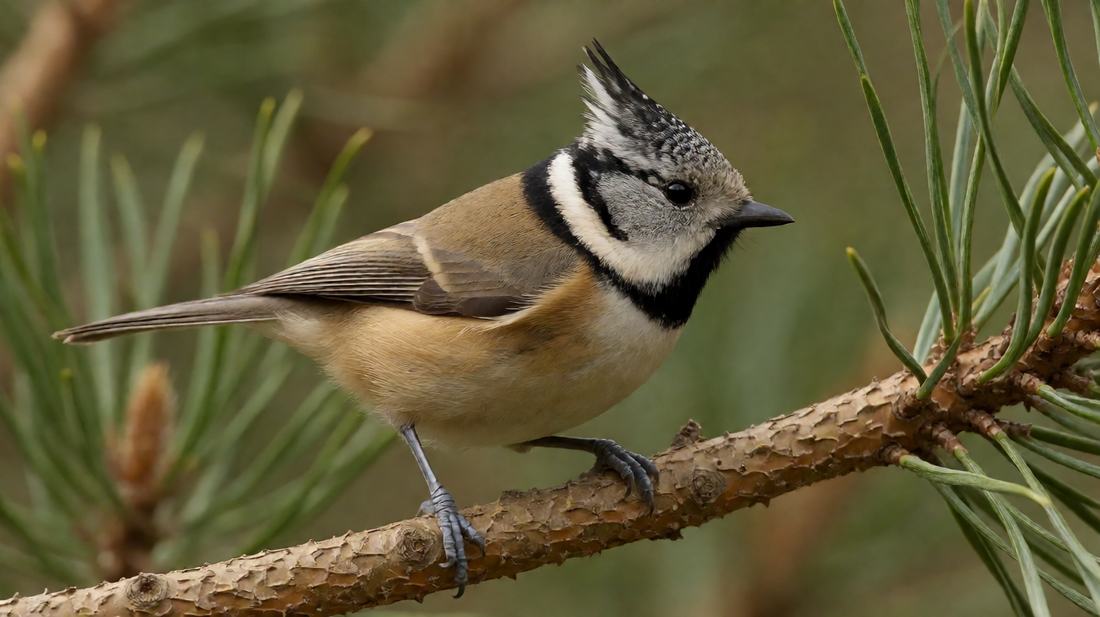
Lophophanes cristatus | Crested Tit
Species Profile · Paridae
Crested Tit
A small, sharp-looking tit of the old pinewood whose speckled crest marks it at once — an emblem of the Caledonian forest and a bird of the rotting trunk.
IUCN: Least Concern
Range
Length
Weight
Nest
Habit
The tit of the pinewood
An emblem of the old wood
The crested tit is a small, sharp-looking tit of the family Paridae. It is among the most local and most emblematic birds of the pine forest of Europe. The same bird flits among the old pines of the Caledonian wood in Scotland. It also lives in the cork oak and black pine of Iberia and the spruce of the Alps. It is a creature of the conifer, not the garden, even where the familiar tits have followed people to town. The bird is unmistakable among the tits. It has a black-and-white speckled crest.
Its back is buff. Its cheeks are white. It has a small black bib. It lives in the canopy and on the branch, not at the feeder. It creeps along the pine needles in search of the aphid. It gives a ringing, laughing call from the top of a tree. It nests in a hole of a rotting trunk.
This makes it a constant presence of the old wood. The crested adult and the dull young show the clearest change with age among tits. The crested tit likes standing, decaying pine, not open park. In Scotland its numbers have caused concern. The loss of the old pinewood has shrunk its range. It is now a priority of the Caledonian forest. The continental populations have held their numbers in the managed wood.
Family tree
Lophophanes, the crested tits
The crested tit is in the genus Lophophanes, a small group of tits. They differ from the blue and great tits by the crested head. They have a speckled, not plain, nape. The crested tit is close to the Blue Tit (Cyanistes caeruleus). That more colourful tit shares the insect-eating habit and the love of twig and branch.
This shows that the tits are a successful spread of small predators. They have colonised the insects of the northern trees in several lines. Linnaeus described the bird in 1758. Experts now see several subspecies across the range. The small dark birds of the Scottish pine differ from the large pale birds of the Iberian oak.
The Scottish form is the nominate cristatus. It differs from its kin by the dark crest and the buff back. The break-up of the pinewood has split the populations apart. Some treat them as distinct races of one bird. The old name of the crested tit refers to the crest that is its most obvious feature.
Crest, cheek and bib
How to identify one
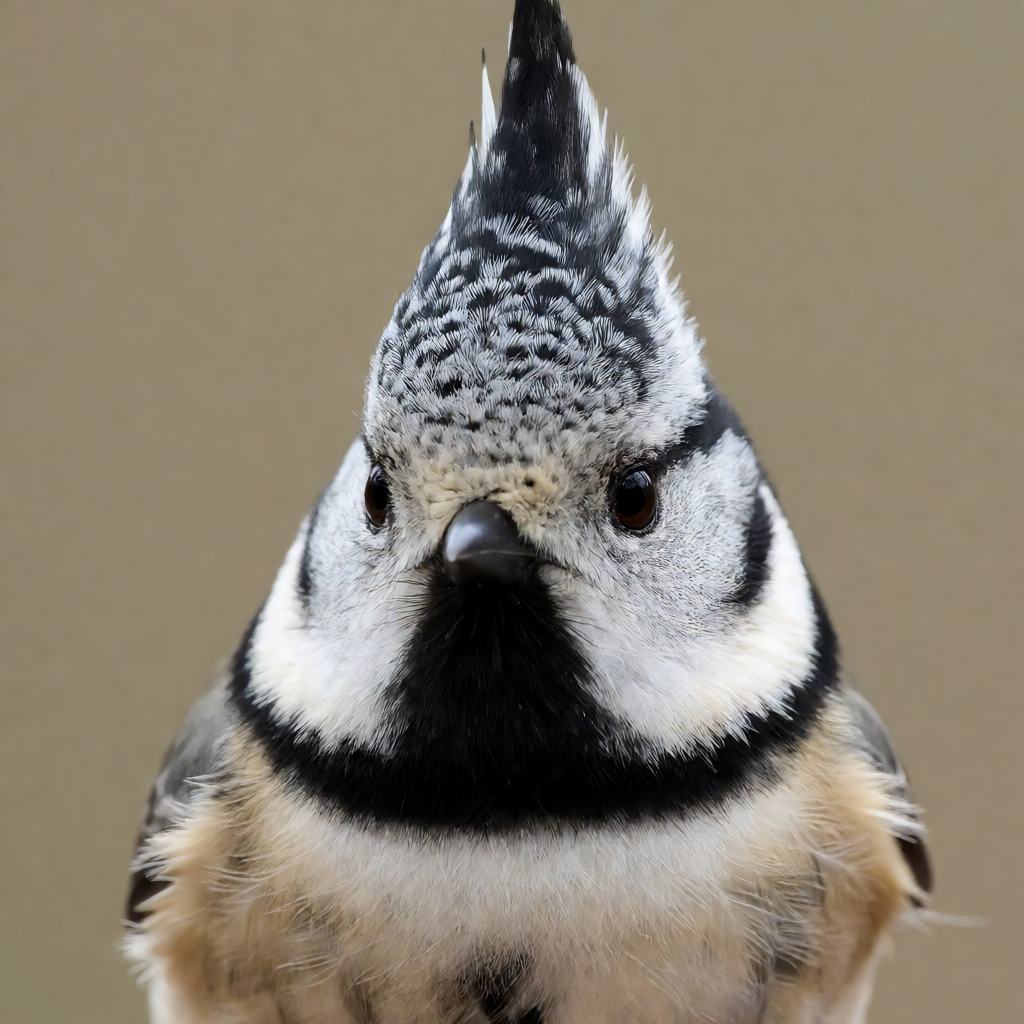
An adult crested tit is 11.5 to 12 centimetres long. Its wingspan is 17 to 20 centimetres. The female weighs about 10 grams. The larger male can reach 13 grams. The small size and fine pointed bill give it a neat shape on the twig. Its flight is fast and darting. It flaps and glides among the branches of the tree. The adult has a black-and-white speckled crest it can raise and lower.
Its back is buff and grey. Its cheek is white. A black line runs through the eye. It has a small black bib. Its underpart is grey and buff. The young bird is a duller version with a shorter, browner crest. The two are told apart by the brightness of the head. The sexes look alike.
The wings are short and round. Flight is fast and direct with a tight progress among the branches. The voice is a ringing, laughing call in flight and from the perch. A soft warbling song is sung from an open post in spring. The wing feathers moult soon after breeding. The birds then gather in family parties that take them through the autumn.
1
2
3
Old pine and decaying trunk
Where it lives
The crested tit lives in the conifer and the mixed wood with a fringe of old, decaying pine. Above all it needs the insect of the needle and the hole of the rotting trunk. It also needs the open, sunny glade of the forest. The species is absent from the closed broadleaf wood of the low plain and the treeless field. It is a creature of the boreal and planted forest of the north and upland alike.
In Europe the birds are resident across the southern pine and the northern spruce. They breed from the Caledonian wood of Scotland to the black pine of Iberia wherever the trunk is old enough to rot. In the colder east the birds hold their ground through winter and move only to the wood’s edge. The crested tit is a settled, regular resident. It travels chiefly in the family party and for short distances.
Rings show a single bird may stay on one territory for the whole of a life that can exceed eight years. The young disperse along the woodland to find their own ground. The loss of the old pine has shrunk its range in Scotland.
An insect eater
What it eats
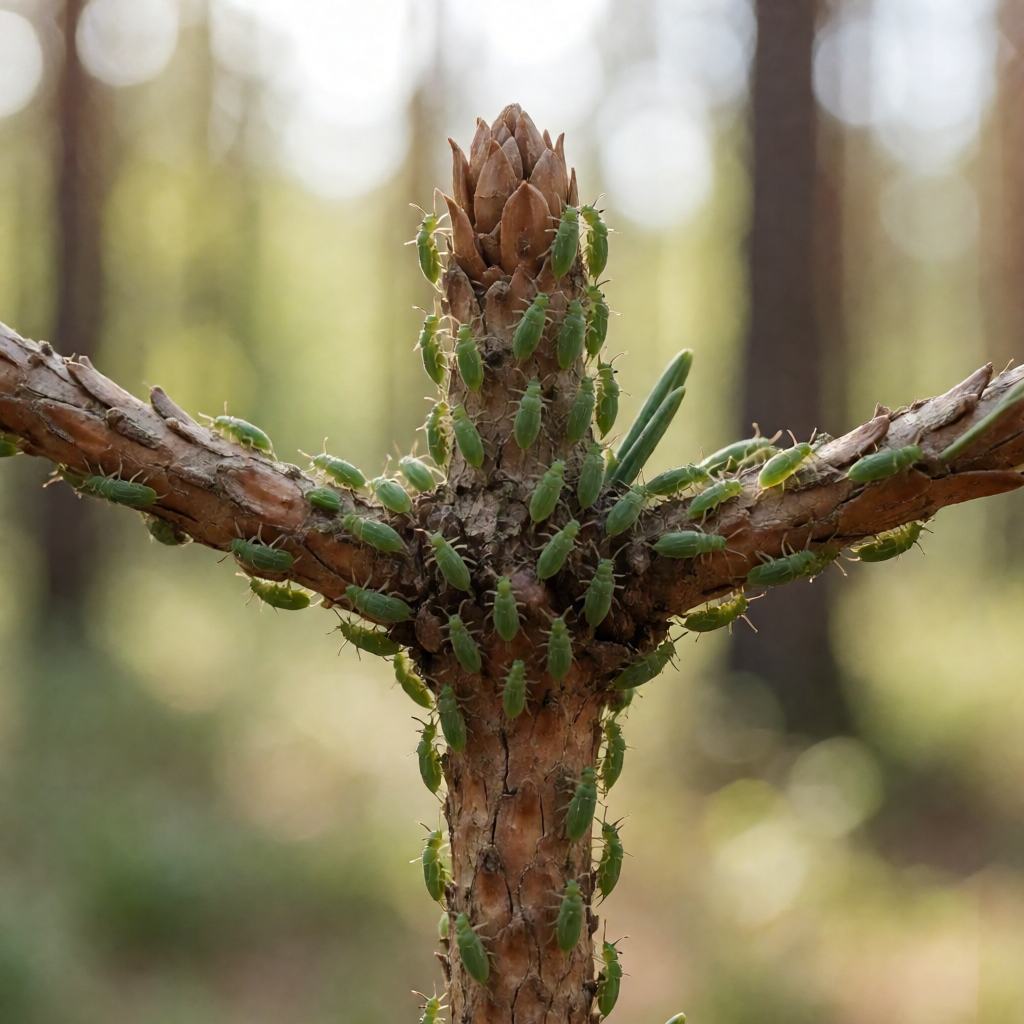
The crested tit feeds almost wholly on insects. Its diet is the small arthropods of the pine needle and the bark. It takes them by creeping along the twig and probing the crevice with a fine but strong bill. A bird in an old pine eats the aphid, the spider, the caterpillar and the scale of the trunk. To this animal diet it adds seed and cone where they are many.
In the breeding season it takes the invertebrates that supply protein for the eggs and the young. The crested tit feeds by creeping and probing, not by digging. It swallows grit to help the gizzard crush the hard seed. It tolerates cold and snow well. This is why it thrives on the pine of the north and the peanut feeder of the forest lodge.
It is among the tits least at risk from the loss of the broadleaf. The conifer is unaffected by the improvement of farmland. The planting of pine has multiplied the food the bird depends on, though the old, decaying trunk stays the key.
A hole in the rot
The breeding cycle
Crested tits pair in the spring. The bond lasts one breeding season or, in the mild south, the whole year. The two adults share the nest, the sitting and the care of the young. The male takes a full part in the brood. This lets the species raise a single family in the short northern summer. Nesting starts in late April and runs into June.
The site is a hole in a rotting pine. Most often it is the old chamber of a woodpecker or the rot hole of a broken trunk. The female lines the hole with moss, hair and feathers from her breast. She lays a clutch of five to eight eggs. They are white and spotted with red. She sits on them alone for fourteen to sixteen days.
The male feeds her on the nest. The chicks are born naked and blind. Both parents feed them and defend them against wood predators. They can fly at eighteen to twenty-two days. By then the family has split up and the young have joined the autumn parties that take them through the winter.
A bird of the old wood
Conservation
The crested tit is Least Concern on the global Red List. Yet its recent history in Scotland is one of concern. The population of the Caledonian pinewood has fallen and shrunk. The loss of the old, decaying pine to the plough and pasture caused this. So did the draining of the bog. So did the change in forest care that replaced the native pine with the closed, even-aged plantation. The continental populations of Iberia and the Alps have held their numbers across the huge range.
The species is protected across its range. In Scotland the key pinewoods are reserves. They are managed to hold the old, decaying trunk the bird needs. The international deals on migratory landbirds have cut the trapping on passage and winter flocks. Yet the bird depends on the native pine. It is vulnerable to the loss of the Caledonian forest. It is listed on the European Union’s birds directive as a priority species.
The main threats are the ploughing and draining of the pinewood to the field. The replacement of native pine with even-aged plantation is another. The loss of the decaying trunk to the tidy forest hurts. The predation of the nest by introduced and feral mammals also hurts. Managing the crested tit means keeping the old pine and dead trunk across the Caledonian landscape and paying the forester to leave the hole the bird needs.
Quick hits
Five things to remember
- The crested tit has a black-and-white speckled crest it can raise and lower. This is why it is unmistakable among the tits. It takes its English name from the crest alone.
- The Scottish crested tit is a bird of the Caledonian pinewood. Its range has shrunk with the loss of the old, decaying pine. It is now a priority of the conservation of the native forest.
- The crested tit nests in a hole in a rotting pine. Most often it is the old chamber of a woodpecker. She lines it with moss, hair and the feathers she plucks from her own breast.
- The bird feeds by creeping along the pine twig and probing the crevice for the aphid and the spider. It is one of the tits that followed the conifer, not the garden, into the modern landscape.
- The crested tit is a settled bird that may stay on one territory for the whole of a life that can exceed eight years. The young birds disperse along the woodland to find their own ground.