 By st20113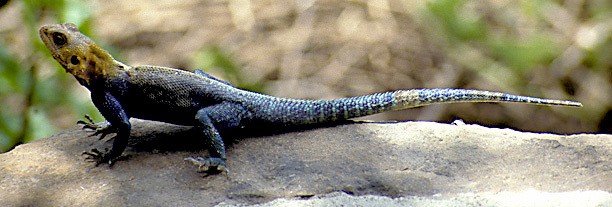
Introduction
The red-headed rock agama (Agama agama), commonly known as the common agama or rainbow agama, is a brightly coloured lizard widespread across sub-Saharan Africa. Males are especially striking, displaying vivid orange-red heads and blue bodies during breeding season, a spectacle that has made the species a familiar sight around human settlements. Highly adaptable, agamas thrive in savannas, rocky outcrops, and urban environments where they bask on walls and fences. They are diurnal, insectivorous, and socially structured around territorial males. lizard chameleon
Taxonomy
The common agama belongs to the family Agamidae, a diverse group of Old World lizards that includes theAustralian dragons and the African agamas. The species Agama agama was described by Linnaeus in 1758. The genus Agama encompasses numerous African species, several of which were historically confused under the same name. Genetic and morphological work continues to refine species boundaries within the complex. Agamids are distinguished from iguanids by anatomical features including their teeth and the structure of the skull, reflecting a separate evolutionary history.
Physical Characteristics
Common agamas are medium-sized lizards, with males reaching 30 to 40 centimetres in total length including the long tail, and females somewhat smaller at 20 to 30 centimetres. Males exhibit dramatic sexual dichromatism: in breeding condition the head turns brilliant orange to red, the body becomes deep blue, and the tail bears orange and blue banding. Females and non-breeding males are more subdued, grey-brown with faint markings. The body is flattened with rough, keeled scales, a crest of small spines along the neck and back, and long powerful limbs for climbing. A distinctive feature is the long, whiplike tail used for balance and signalling.
Habitat
These agamas occupy savannas, open woodlands, rocky hills, and increasingly human-dominated landscapes including villages, farms, and city walls across tropical Africa. They favour warm, sunny surfaces for basking and nearby crevices or vegetation for escape. Their tolerance of disturbed habitats has made them among the most successful and visible lizards in the region. They are largely ground-dwelling but readily climb rocks, trees, and buildings to thermoregulate and surveil territory. Access to basking sites and refugia within a few metres is essential for their daily activity.
Diet
Common agamas are primarily insectivorous, feeding on ants, beetles, grasshoppers, crickets, and other arthropods captured by sit-and-wait foraging. They may also consume small amounts of plant matter, flowers, and occasionally smaller lizards or soft fruits when available. Foraging occurs during the warm daylight hours, with individuals darting from a perch to seize prey before returning. In agricultural and urban areas they provide valuable pest control by consuming crop and household insects. Water is obtained mainly from dew and prey, though they will drink from available sources during dry periods.
Reproduction
Breeding in common agamas is triggered by the rainy season and warmer temperatures, when males intensify their colouration and establish territories. Males perform push-up displays and head-bobbing to advertise dominance and attract females, defending small harems from rivals. Females lay clutches of two to twelve eggs in moist soil or sand, with several clutches produced across a single season. Eggs incubate for roughly eight to ten weeks depending on temperature. Hatchlings are independent from birth, rapidly dispersing to forage and avoid predation. Sexual maturity is reached within one to two years.
Conservation
The common agama is listed as Least Concern, with a vast range and abundant populations across Africa. Its adaptability to human environments has insulated it from the pressures affecting more specialised reptiles. In some regions it is kept as a pet or locally harvested for food. The species has been introduced, deliberately or accidentally, to parts of Florida and other tropical localities outside its native range, where it can establish in warm urban areas. Continued habitat conversion has had limited impact owing to the species’ ecological flexibility.
Fun Facts
Male common agamas can change colour dramatically within minutes, shifting from dull brown to vivid orange and blue as breeding hormones surge. Their characteristic push-up displays are not just for show but communicate body size and fighting ability to rivals and mates. Agamas can run remarkably fast on their hind legs when fleeing, a bipedal sprint that enhances speed across open ground. The species is sometimes called the “rainbow lizard” because of the male’s multicoloured breeding plumage. In many African cultures the agama is a familiar garden resident, often tolerated and even welcomed for its insect-eating habits.