 By Iris
Tichodroma muraria | Wallcreeper
Species Profile · Tichodromidae
Wallcreeper
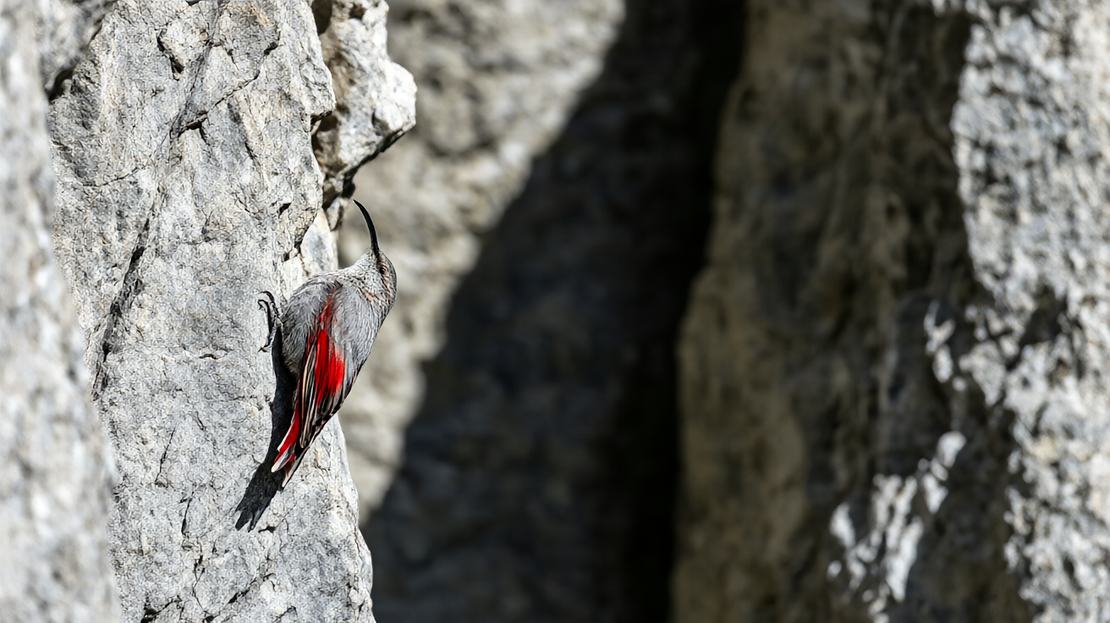
A grey bird opens crimson wings against a limestone wall and starts to climb.
Least Concern
Length
Weight
Clutch
Incubation
Fledge
Rating
The Wallcreeper
A butterfly that climbs rock
A grey bird lands on a limestone wall and starts to climb. It moves upward in quick hops, then works sideways along a narrow crack in the limestone. When it opens its wings, crimson flashes against the pale grey rock behind it.
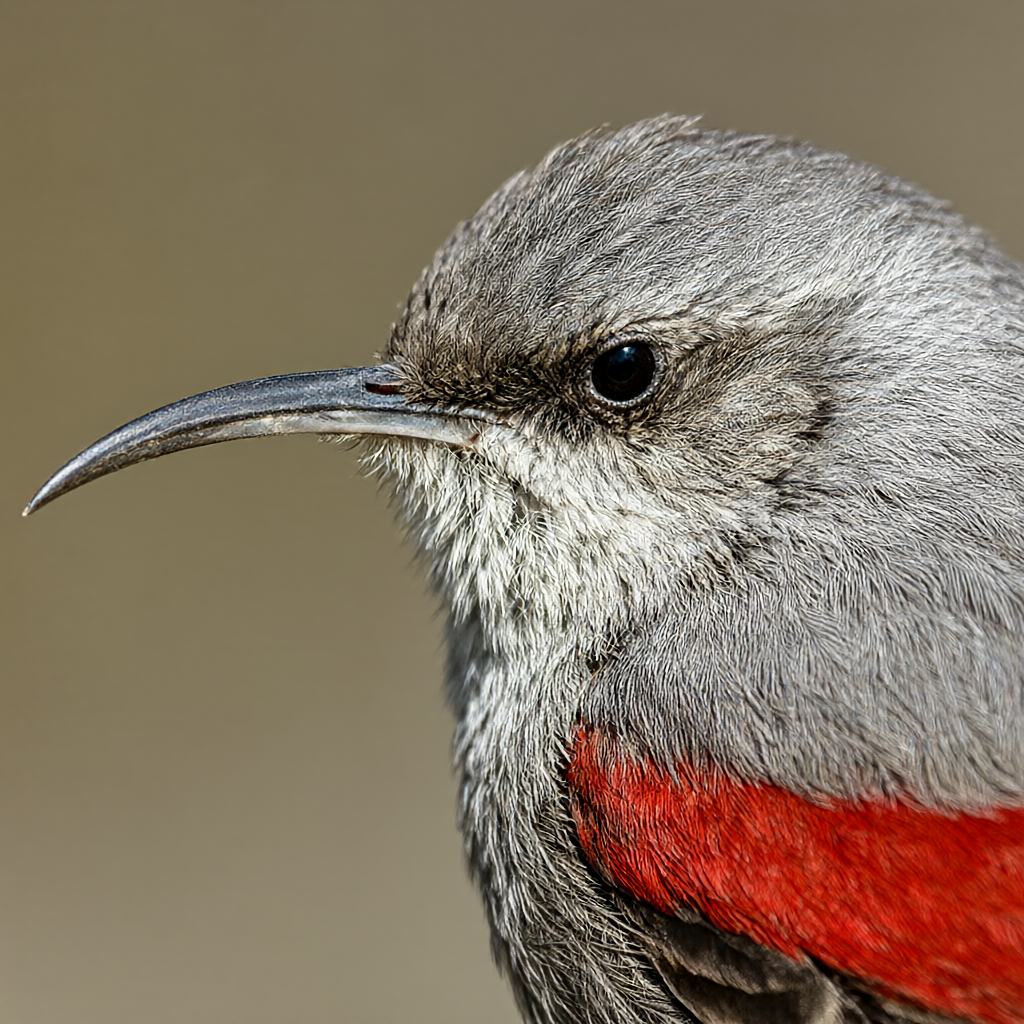
Nothing else in Europe carries that colour on a cliff. The bill is long and thin, and it curves gently downward at the tip. Grey plumage covers the back, and the tail stays black.
Because the bird feeds inside narrow cracks, the bill does almost all the work. Most people see a wallcreeper only once in a lifetime.
Family tree
Tichodromidae, a family of one
Its proper name is Tichodroma muraria, and it stands alone in its family. Older books placed it with the nuthatches, which turned out to be a mistake. Feather structure and behaviour point to a separate line of its own. Two subspecies are accepted, and they differ slightly in size.
Birds of the east run paler, though the difference is hard to judge in the field without a specimen in hand. Because the family holds one species, no close relative exists anywhere. The genus name means wall runner, which describes the bird exactly.
Red wings, grey body
How to tell one
Adults measure 15.5 to 17 cm from bill to tail. Weight falls between 15 and 19 g, which is light even for a small bird. Crimson covers the wing coverts, and white spots break up that red. The rest of the bird is soft grey, with a black tail and dark flight feathers.
A long thin bill curves down, and it fits inside a rock crack. Legs are short and strong, and the claws hook into tiny ledges that offer almost no grip at all. Because the wings are broad enough, the bird can hover for a moment against a bare cliff. Flight looks butterfly like, since the bird flicks and closes its wings in short bursts against the cliff face.
Males show a black throat in summer, while females keep a pale one. Feathers stay soft and dense, which suits cold rock at altitude.
1
2
3
Cliffs and gorges
Where it lives
High mountain cliffs form the breeding habitat. Limestone, granite and slate all work, provided the rock holds cracks. Gorges and crags above the tree line hold most pairs. Because the bird needs bare rock, a forest cover offers it nothing at all.
Winter drives it downhill, and the bird then visits quarries, dams and old church walls. A cathedral tower or a dam wall can hold a bird for weeks at a time through the coldest winter weather. A treecreeper works the bark on the same slopes, though it climbs wood rather than stone.
Spiders in cracks
What it eats
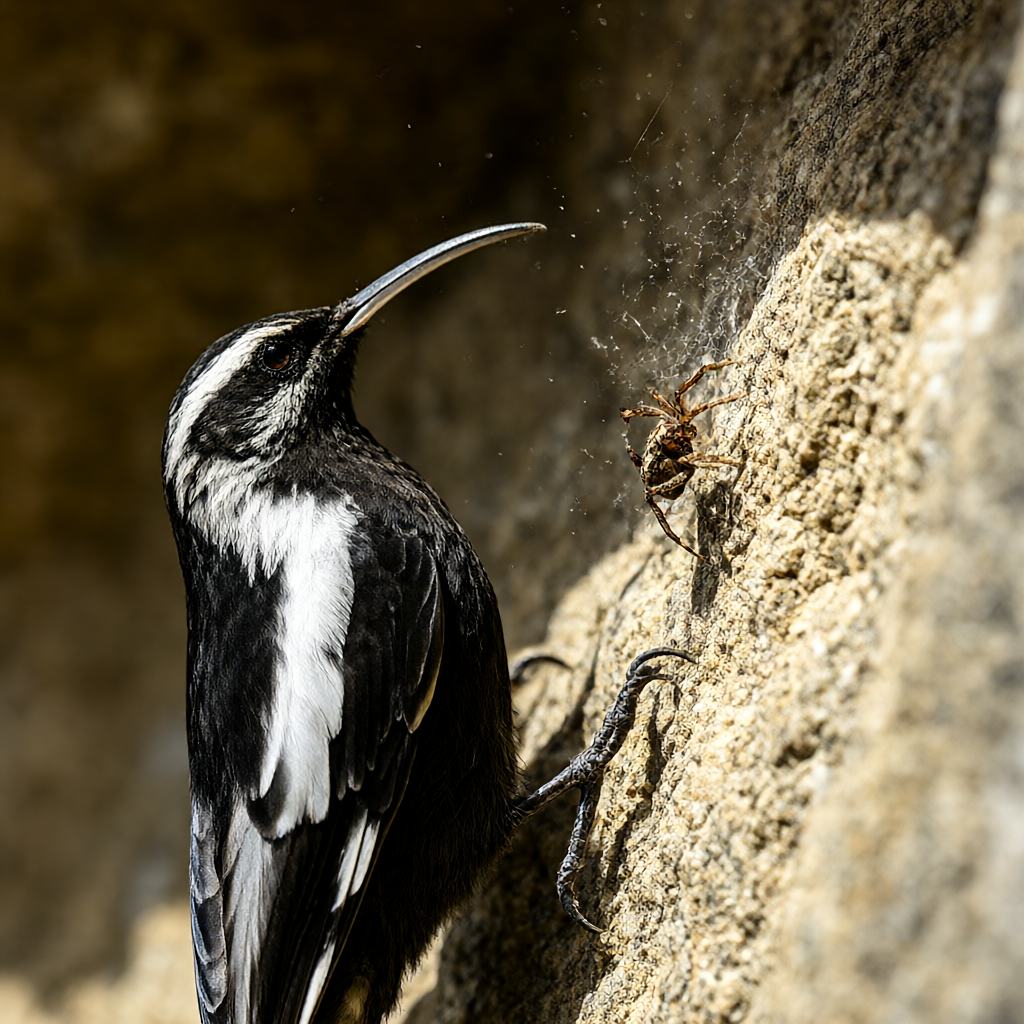
Insects and spiders make up the whole diet. Moth larvae, beetles and egg cases get taken from inside cracks. The bird probes with the bill, and it rarely leaves the rock face. Because prey hides deep inside the stone, the long bill reaches places where no other bird can feed.
Winter hunting continues in any weather, and a bird may work one wall for days. Spiders matter more than insects once the cold sets in. Chicks are fed on small larvae carried one at a time.
A nest out of reach
The breeding cycle
A pair nests in a deep crack or a small cave. The nest is a cup of grass, moss and hair, built well inside the rock. Four or five eggs are laid in late spring. Incubation lasts about 19 days, and both birds share the task.
Chicks stay in the nest for roughly three weeks. Fledging takes about 29 days, and the young bird then follows its parents. Because the sites are so hard to reach, only a handful of nests get found each year.
Quarrying and climbing
Conservation
The Red List calls the species Least Concern. Mountain populations look stable, though numbers are hard to count. Because the bird lives on unclimbable rock, human disturbance at the nest matters very little. Quarrying removes some winter sites outright.
Warming winters may push birds higher, since lower walls stay too warm. Pesticides cut the insect supply on farmed valley walls. No coordinated survey exists, so the real trend remains unclear.
Side by side
How It Compares
| Trait | Wallcreeper | Eurasian Nuthatch |
|---|---|---|
| Family | Tichodromidae | Sittidae |
| Length | 15.5-17 cm | 12-13 cm |
| Climbing | creeps up bare rock faces | moves head first down trunks |
| Wing | crimson with white spots | plain blue grey |
| Nest | deep inside a rock crack | hole in a tree, mud sealed |
| Rating | Least Concern | Least Concern |
Common misreadings
What People Get Wrong
- Not a nuthatch. Both climb vertical surfaces, and both look busy doing it. It sits in a family of its own, and nothing else carries crimson panels marked with white spots.
- Not a warning. Crimson flashes while the bird climbs a bare face. That flicker may startle insects out of cracks, and it also breaks the outline of a bird against flat stone.
- Hard to find. The cup sits deep inside a crack in the rock. Observers locate only a few nests each year, and most of what is known comes from birds watched at the entrance.
Going further
Sources and Further Reading
Quick hits
Five things to remember
- Its wings flash crimson in flight.
- It climbs rock like a nuthatch.
- It has a family all to itself.
- It winters on cathedral walls.
- It probes cracks with a curved bill.