 By st20113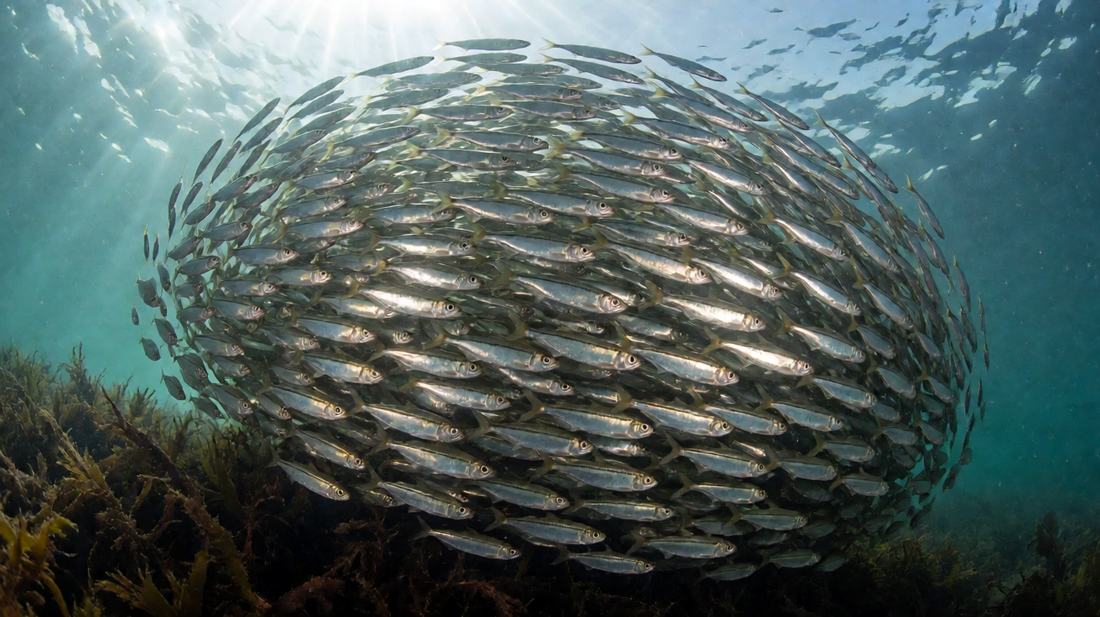
Sprattus sprattus | European Sprat
Species Profile · Clupeidae
European Sprat
A fish no longer than your finger that supports fleets, feeds cod and seabirds, and holds the North Sea food chain together.
IUCN: Least Concern
Range
Length
Shoals
Depth
Salt
The little fish that feeds the sea
Small, silver and enormously important
The European sprat is a small silver fish of enormous importance. It grows to no more than about 16 cm. Most are between 8 and 12 cm. Yet it forms shoals of millions. It supports major fisheries in the North Sea and the Baltic. It also feeds a large share of the predatory fish, seabirds and sea mammals of northern Europe. It belongs to the herring family.
It looks much like a small herring. Two features separate the two. One is the sharp, saw-toothed ridge of scales along the sprat’s belly. The other is the smooth, rounded edge of its gill cover. It lives in coastal waters, bays, estuaries and the open sea. Its range runs from the Lofoten islands in Norway south to Morocco. It also lives in the northern Mediterranean, the Adriatic and the Black Sea.
Sprats spawn eggs in enormous numbers. These eggs float rather than sticking to the seabed. The fish is caught by the tonne. It is turned into fish meal, canned as brisling, or smoked and sold whole. It is also a fine example of a forage fish. Its own value is modest. But a whole chain of larger animals depends on how many there are.
Family tree
Sprattus, five schooling fish
The sprat belongs to the family Clupeidae, the herrings and sardines. Its genus is Sprattus, and it is the type species. Linnaeus described it in 1758 as Clupea sprattus. It was later moved to Sprattus. The old name still appears in older fishery books. The genus holds about 5 species. All are small, schooling fish that feed on plankton. They live in cool temperate and subantarctic waters. The sprat is the northern member.
Three subspecies are recognised. Sprattus sprattus sprattus lives in the eastern Atlantic. Sprattus sprattus balticus lives in the Baltic Sea and is known as the Baltic herring. Sprattus sprattus phalericus lives in the Mediterranean, the Adriatic and the Black Sea. Several other small clupeids are called sprats in English. They include the Black Sea sprat and a number of tropical genera. In Britain the word sprat is also used loosely for any small fish. The sprat is closely related to the Atlantic herring, the larger and better known member of the same family. The two share their range, their schooling habit and much of their biology.
Fishers often catch them together and confuse them. The belly tells them apart. A herring has a round belly with no sharp keel. A sprat carries a clear ridge of keeled scales that feels like a saw blade under a finger. The family is ancient and varied. The herrings and sprats are one of the most successful fish shapes in the sea. They are small, silvery and fast-growing, and built for life in vast schools.
Saw-toothed belly, smooth gill cover
How to identify one
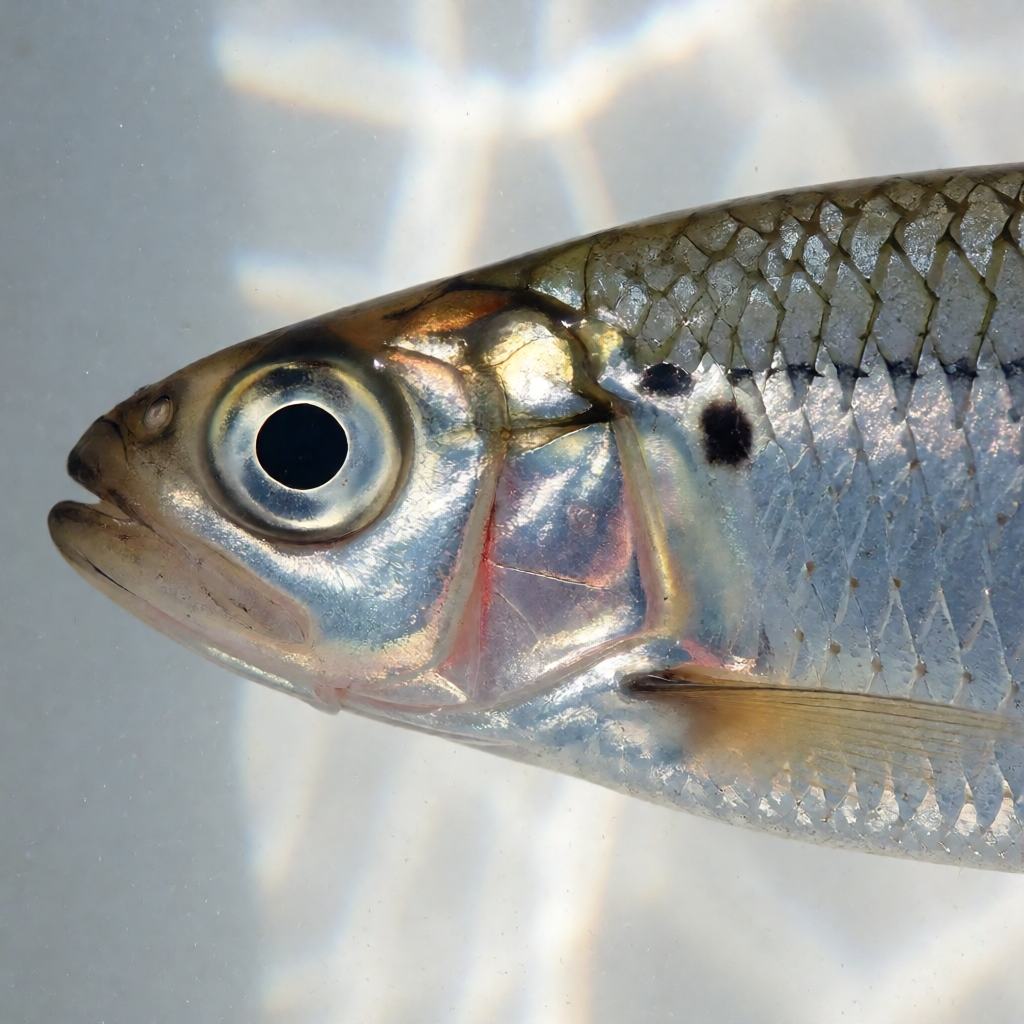
The sprat is small, long and flattened from side to side. Its top length is about 16 cm. Most adults are 8 to 12 cm. The oldest recorded fish reached 6 years, though 3 or 4 is more usual. The body is deepest just behind the head. It tapers to a slim tail with a deeply forked fin. Its colour is typical of the family. The back is bluish or greenish and shades through silver on the flanks to a pale belly. There are no dark spots. The belly is the most useful feature for naming the fish.
It carries a keel of sharp scales, or scutes, from the throat to the vent. These scutes form a hard, saw-toothed ridge. It is easy to feel and easy to see in a fish held against the light. The lower jaw sticks out slightly beyond the upper. The gill cover has a smooth rounded rear edge. It has no fleshy bumps and no bony ridges. There are rarely any teeth on the roof of the mouth. The dorsal fin has no spines and 13 to 21 soft rays. The anal fin is also unarmed and has 12 to 23 soft rays. The last 2 anal rays are not enlarged.
The pelvic fins carry 7 rays, sometimes 8. Their base sits just below or slightly in front of the base of the dorsal fin. Fishers rely on these counts. They are the standard way to tell a sprat from a young herring. They also separate it from the other small clupeids in Mediterranean and Black Sea catches. The eye is large. The body is covered in thin scales that fall off easily. That suits a fish of open water. A mirrored silver surface hides it from hunters above and below.
1
2
3
Coast, bay and brackish Baltic
Where it lives
The sprat is a fish of coastal and shelf waters. It lives in the northeastern Atlantic, the North Sea and the Baltic. In the south it lives in the Mediterranean and the Black Sea. In the Atlantic its range runs from the Lofoten area of Norway and the waters west of the British Isles south to Morocco. It also lives in the northern Mediterranean, above all the Gulf of Lion and the Adriatic. It is found from the surface down to about 150 m. It is most common in the upper 10 to 100 m. It is strongly tied to coastal waters, bays, fjords and estuaries, where its food gathers. It copes well with low salt.
The species can live in water of only about 4 parts per thousand. That is roughly a tenth of normal seawater. This is why it thrives in the Baltic. It is also why young fish turn up in estuaries and up tidal rivers. The fish makes two kinds of move. It travels between winter feeding grounds and summer spawning grounds. These journeys can carry shoals a long way along the coast. It rises towards the surface at night to feed on plankton. It descends during the day.
Many small open-water fish share that rhythm. It follows the movement of their copepod prey. Shoals are the central fact of sprat life. A school cuts the risk of being eaten. It makes patchy plankton easier to find. It also lets the fish swim more cheaply than it could alone. The size of the shoals is also what makes the fish worth catching. A purse seine or a trawl needs a dense mass of fish to be worth hauling.
A filter feeder of plankton
What it eats
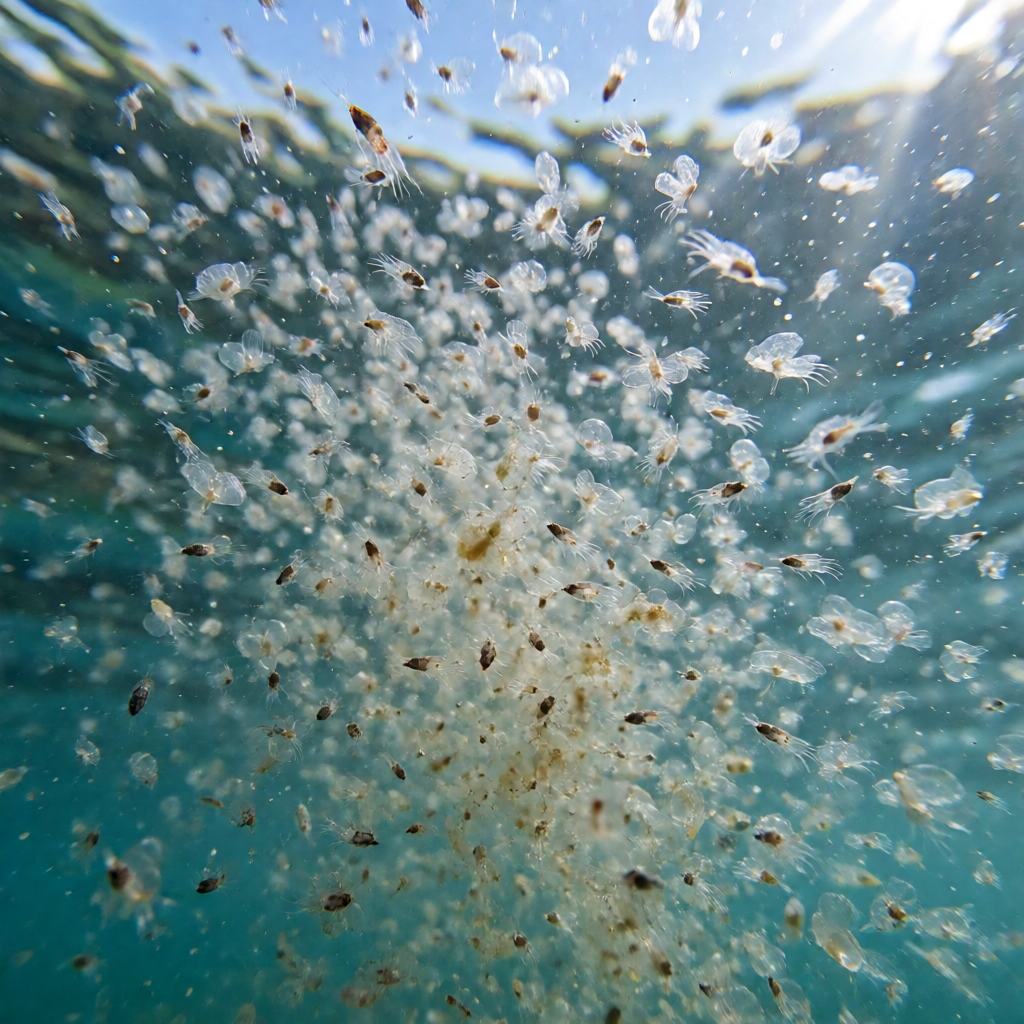
The sprat eats plankton. It filters its food and sits near the base of the food chain in the seas it lives in. Adults feed mainly on small drifting animals, above all copepods of the genera Calanus, Pseudocalanus and Temora. They also take other small drifting animals, fish eggs and larvae, and diatoms. The fish opens its mouth and swims steadily through a patch of plankton. It strains the water through its gill rakers. Those are fine and numerous, just the gear needed to sieve tiny animals out of the sea. Young fish take smaller prey.
They eat the eggs and larvae of copepods, and diatoms. The smallest larvae feed on drifting plants and tiny single-celled animals. Feeding is concentrated at night, when the fish rises to the surface after the plankton. Digestion is quick, so a sprat must feed almost without pause to meet its energy needs. The species burns energy fast for its size, and it grows fast. It matures in its first or second year. Put together, these traits matter. A small fish that eats plankton, grows fast and forms vast shoals is a key link in the North Sea and the Baltic.
It joins the smallest drifting plants to the largest hunters. Cod, whiting, mackerel, hake and many other predatory fish eat it. So do gannets, auks, gulls and terns, and porpoises and seals. Where sprat numbers fall, the effects are felt several levels up the food chain. Sprats in turn suffer from a parasite, the sprat eye-maggot. It is a copepod that burrows into the eye. It causes loss of sight and sometimes blindness, and a heavy attack can kill the fish.
Floating eggs in vast numbers
The breeding cycle
The sprat spawns eggs that float in the water. They are not attached to the seabed, and they are produced in large numbers. A female spawns between about 6000 and 14,000 eggs in a season. She releases them in batches over a long period rather than all at once. Spawning takes place at depths of 10 to 20 m. It happens in inshore waters or as far as 100 km offshore. The timing varies sharply across the range. In the Mediterranean the peak runs from December to April. In the Baltic and the northeastern Atlantic it runs from April to August.
In some areas fish spawn almost all year. The eggs hatch after about 15 days on average. Temperature and other conditions have a large effect on how fast the larvae grow and how many survive. The young drift inshore as larvae and juveniles. They are especially common in estuaries and shallow coastal waters, where food is plentiful and hunters are fewer. Growth is rapid and maturity comes early, in the first or second year of life. Few fish live beyond 3 or 4 years, even though the oldest recorded reached 6. The number of young that survive varies enormously from year to year. The reasons are well studied because the species matters to fishers.
The survival of eggs and larvae depends heavily on how much drifting animal food is available. In the Baltic, unusually cold winters have a marked effect on eggs and larvae. That shapes the size of the next year’s group. Sprat numbers in the Baltic moved about a lot in recent decades. They fell in the late 1980s and early 1990s and then rose again. Those changes follow the amount of drifting animal food and the wider state of the herring family in the region. No single cause explains them.
Least Concern, but watched as forage
Conservation
The sprat is classed as Least Concern on the global Red List, following an assessment in 2018. It is also Least Concern in European waters. In the Mediterranean, though, it is assessed as Data Deficient. That reflects thinner data for that sea rather than any known problem. The reasons for the global verdict are clear. The species has a very large range across the northeastern Atlantic, the Baltic, the Mediterranean and the Black Sea. It is extremely common where it occurs.
It is also a fast-growing fish that matures early and produces large numbers of young. All of that makes it resilient to fishing. Stock checks suggest that numbers are broadly healthy across most of the range, though they swing markedly from year to year. The main worry is not the status of the sprat itself but its role in the ecosystem. Sprat is a forage fish. It eats plankton and is eaten by almost everything larger. Heavy fishing on a forage species can cut the food available to cod, seabirds and sea mammals.
This is why sprat in the Baltic is now managed with the needs of predators in mind as well as the fishery. It is also why the management of forage fish worldwide has moved towards leaving a larger share of the stock in the water. The species is caught by trawlers and purse seiners. It is landed in large quantities and turned into fish meal and oil, canned as brisling, smoked, or sold fresh. Its bones are soft, so the whole fish, head and all, can be eaten.
Quick hits
Five things to remember
- It carries a keel of sharp, saw-toothed scales along its belly.
- It can live in water of only about 4 parts per thousand salt.
- A single female can release between about 6000 and 14,000 eggs in a season.
- It is canned and sold as brisling, sometimes passed off as anchovy.
- It is a key food fish for cod, gannets, porpoises and seals.