 By st20113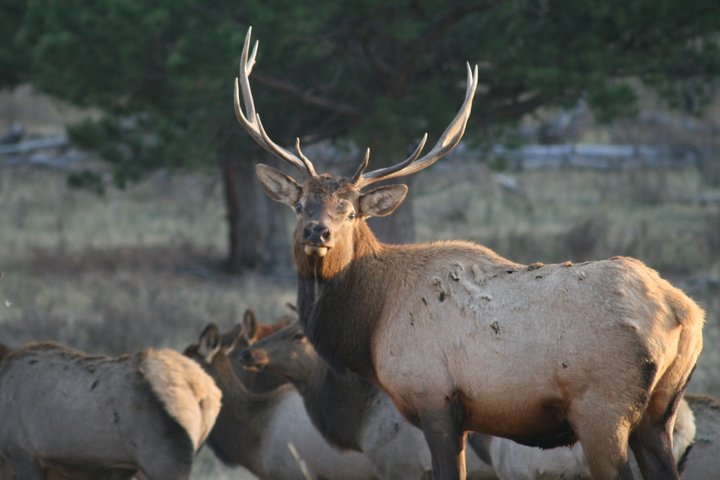
Introduction
The elk, also called wapiti, is one of the largest species of deer in the world and a member of the genus Cervus. Native to North America and eastern Asia, it once ranged across much of the temperate Northern Hemisphere. Today healthy populations thrive in the mountains and forests of western North America, where the elk remains a keystone herbivore and a prized symbol of wild landscapes. Males are renowned for their impressive antlers and resonant bugling calls during the autumn rut.
Taxonomy
Elk belong to the family Cervidae and the genus Cervus, which also includes the red deer of Eurasia. For many years scientists treated the elk as a subspecies of red deer, but genetic and morphological evidence now supports its status as a distinct species, Cervus canadensis. Six recognized subspecies inhabit North America, including the Roosevelt, Rocky Mountain, and tule elk. The red deer remains its closest Old World relative, while the moose and the American bison share its North American forest and grassland habitat.
Physical Characteristics
Bull elk are powerful animals standing up to 1.5 meters at the shoulder and weighing between 300 and 500 kilograms, while cows are noticeably smaller. Their coat is reddish brown in summer and grayish brown in winter, with a pale rump patch that flashes as a warning signal. The most striking feature is the bull’s antlers, which are shed and regrown each year and may reach 1.2 meters in length with six or more points. A thick neck mane develops in males during the rut. Elk have long legs adapted for moving through deep snow and a keen sense of smell and hearing that help them detect predators.
Habitat
Elk occupy a remarkable variety of habitats, from mountain meadows and coniferous forests to grasslands and desert shrublands. They favor ecotones where open feeding areas meet protective cover, allowing them to graze and retreat quickly. In summer they move to high elevations to escape heat and insects, descending to lower valleys in winter. Populations have been successfully reintroduced to regions such as the eastern woodlands where they had been eliminated by the nineteenth century, restoring a once-lost component of those ecosystems.
Diet
Elk are primarily grazers but switch readily to browsing depending on season and availability. In spring and summer they consume grasses, forbs, and the tender shoots of shrubs, while in autumn they favor acorns, nuts, and tree bark. Their four-chambered stomach ferments cellulose with the help of gut microbes, and they must often migrate between seasonal ranges to meet nutritional needs. During winter, when nutritious forage is scarce, elk rely on coarse woody plants and stored body fat to survive harsh conditions.
Reproduction
The breeding season, or rut, occurs in late summer and early autumn. Bulls establish harems of cows and advertise with loud bugling calls and physical displays, often clashing antlers in dramatic contests for dominance. After a gestation of about 240 to 260 days, a single calf is born in late spring, though twins occasionally occur. Newborns hide motionless in vegetation for their first weeks, relying on camouflage and minimal scent. Calves are weaned by autumn and join the migratory herds that define elk social life.
Conservation
Once driven to the brink of extinction in many parts of their range, elk have recovered dramatically through protection and reintroduction. Managed hunting helps control population size in areas where predators such as the gray wolf and bears are absent. Some subspecies, like the tule and Manitoban elk, remain locally rare and carefully monitored. Chronic wasting disease poses a growing concern for wildlife managers, who balance hunting, habitat preservation, and disease control to keep herds healthy across the continent.
Fun Facts
A bull elk’s bugle can carry for more than a kilometer through mountain air, serving both to attract mates and warn rivals. Elk antlers are among the fastest-growing tissues in the animal kingdom, adding as much as two and a half centimeters per day during peak growth. Unlike cattle, elk can leap fences over two meters high from a standstill. Native American peoples relied on elk for food, clothing, and tools for thousands of years. Perhaps most charmingly, elk calves are born without scent, an adaptation that helps them avoid detection by predators during their vulnerable first weeks.