 By st20113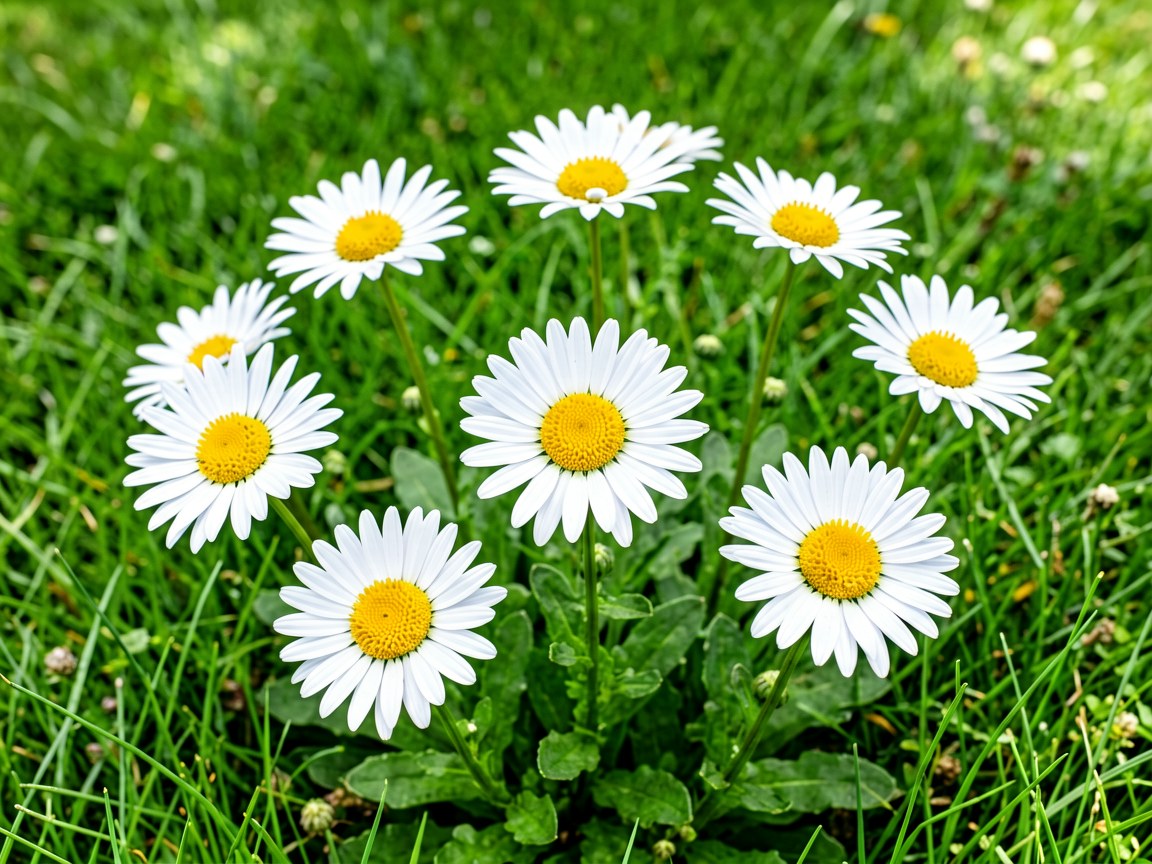
Bellis perennis | Daisy
Introduction
The daisy (Bellis perennis) is one of the most familiar wildflowers of Europe, a low-growing perennial of lawns, meadows, and roadsides whose white-petaled flower heads open in daylight and close at night. Though it is often dismissed as a common lawn weed, it flowers almost year-round in mild climates and provides an early, dependable source of nectar for small insects. Its tidy rosette of spoon-shaped leaves makes it instantly recognizable even when not in bloom.
Taxonomy
Bellis perennis belongs to the family Asteraceae, the daisy or composite family, within the order Asterales. What looks like a single flower is actually a composite head: a central disc of tiny yellow florets surrounded by white ray florets, each capable of producing seed. As with all green plants, its growth is powered by Photosynthesis, carried out in the chlorophyll-rich tissues of its leaves and stems.
Physical Characteristics
The daisy grows from a short, creeping rhizome, forming a flat rosette of blunt, spoon-shaped leaves that lie close to the ground. From this rosette rise leafless stalks 3–15 cm tall, each bearing a single flower head 1.5–3 cm across. The outer ray florets are white, often flushed pink or red on the underside, while the center is a dense golden disc. The flower head follows the sun during the day and folds shut in the evening and in wet weather.
Habitat
This species favors open, short, disturbed grassland—garden lawns, pastures, playing fields, and roadside verges—on a wide range of soils from sand to clay. It tolerates close mowing and trampling because its growing point sits at ground level, which is why it thrives in lawns where taller wildflowers cannot survive. It is native to Europe but has been introduced worldwide in temperate regions.
Diet
The daisy is a photosynthetic plant, manufacturing its own sugars from sunlight, water, and carbon dioxide while taking up minerals from the soil. It needs no other organism for nourishment. Its value to wildlife lies in the reverse direction: the flower heads offer nectar and pollen to bees, hoverflies, and small beetles, particularly valuable in early spring when few other flowers are open.
Reproduction
Daisies flower from early spring well into autumn, and in mild winters almost continuously. The outer ray florets are female and the central disc florets are bisexual; insects carry pollen between heads, though self-pollination is possible. Each fertilized floret produces a tiny seed, and a single plant can set hundreds. The plant also spreads vegetatively by short rhizomes, forming spreading clonal patches that persist for years.
Conservation
The daisy is abundant and not threatened; if anything it benefits from the widespread mowing and grazing that keep grass short. Its conservation interest lies in the insect community it supports and in the value of species-rich turf, which is itself a declining habitat across Europe. Gardeners increasingly tolerate or encourage daisies in “wildflower lawns” to support pollinators.
Fun Facts
- Its flower head tracks the sun across the sky, a behavior known as heliotropism.
- The name “daisy” comes from “day’s eye,” because the flower opens at dawn and closes at dusk.
- Young daisy leaves are edible and were once used in salads and herbal remedies.
- It can flower throughout the year in mild winters, making it a rare winter nectar source for insects.
- Because mowing cannot reach its ground-level growing point, it survives lawns that defeat almost every other wildflower.
[…] Common Knapweed shares its family with the Daisy. That plant grows in lawns and short grass. It keeps its leaves flat to the ground. It grows only a […]