 By Iris
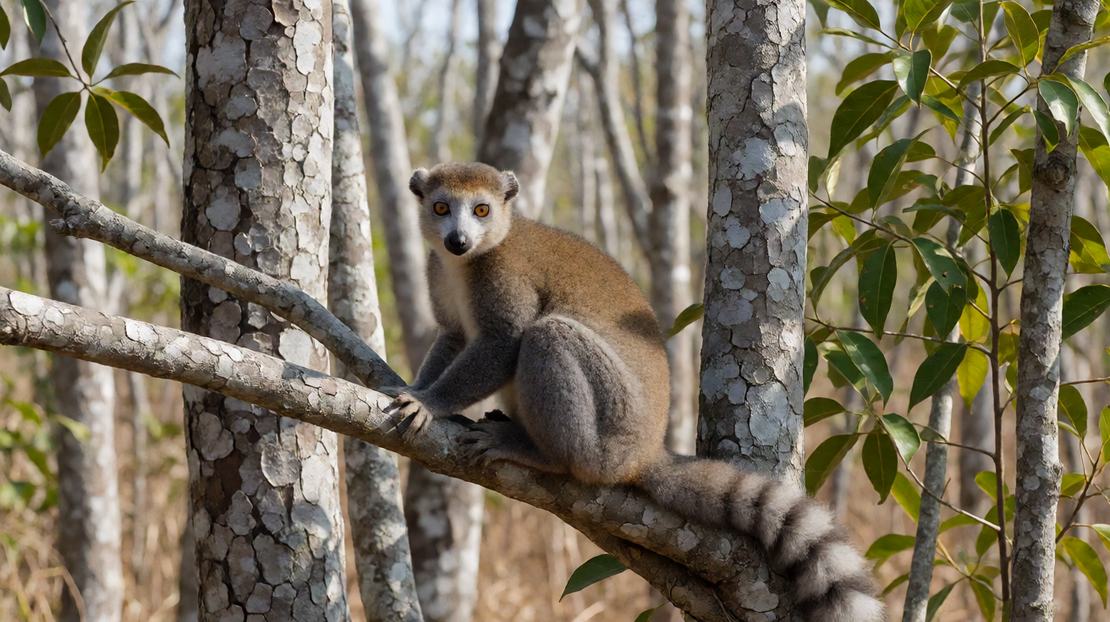
Eulemur fulvus | Brown Lemur
Species Profile · Lemuridae
Brown Lemur
A grey brown lemur that feeds by day and by night.
Near Threatened
Body
Tail
Weight
Group
Range
Rating
Two and a half kilos in dry forest
A lemur that ignores the clock
Grey brown fur and a paler face mark this medium sized lemur. Body length runs 40 to 48 cm, and the tail adds another 60 cm. Weight sits near 2.5 kg. Western Madagascar holds the main population.
Dry forest and gallery woodland along rivers suit the animal. Groups of three to twelve animals move through the trees together. Feeding happens by day and by night, which is unusual among lemurs. Fruit forms most of the diet throughout the year, and the animal spreads viable seeds as it travels, although many seeds drop beside the parent tree.
Loud calls keep a group in contact through dense leaves. Scent marks on branches tell neighbours where the group has been.
Family tree
Lemuridae, the true lemurs
Eulemur fulvus sits in Lemuridae, the family of true lemurs. Geoffroy Saint Hilaire named the species in 1796. Five brown lemurs were once lumped under this name. Genetic work split them, although the exact number still moves.
The Ring-tailed Lemur lives in southern spiny forest, while this animal keeps to western dry forest, yet the two never meet in the wild. Both live in groups, and both use scent to mark a home range. Their tails differ, though, since one carries black and white rings and the other stays plain. Introduced animals now live on Mayotte and the Comoros.
No subspecies is recognised today. The genus split from other lemurs several million years ago, and Madagascar still holds every wild form, although people carried the animal to Mayotte.
Five lemurs under one name
How to tell one
Body length runs 40 to 48 cm. Tail length adds another 50 to 62 cm. Weight sits between 2 and 2.9 kg. Fur is grey brown on the back and paler on the belly.
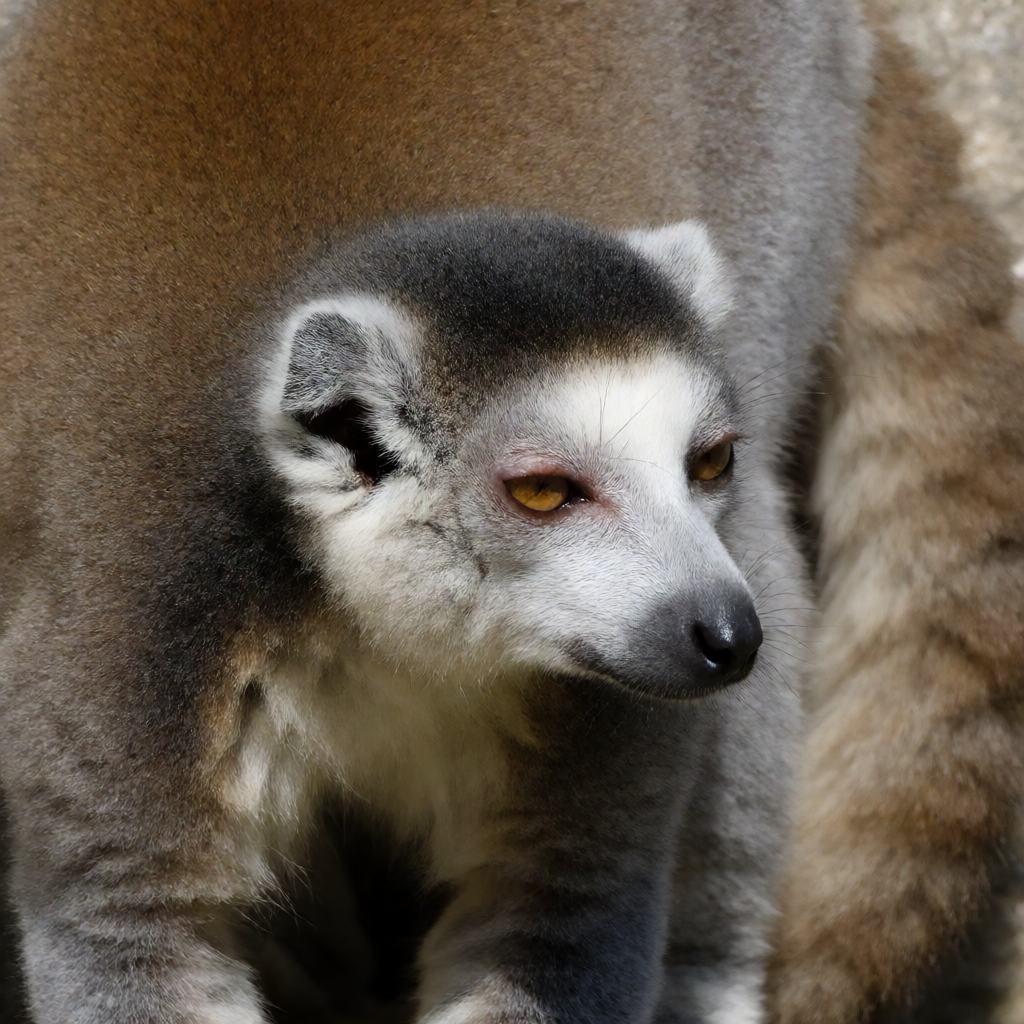
The face is lighter than the crown, and the eyes are amber. Males and females look much alike, unlike several close relatives. Hands carry long fingers and a short thumb. The tail is long and thin, and it balances the body on thin branches.
Teeth include a toothcomb at the front of the lower jaw. A lemur of this size leaps several metres between trunks, and the tail steers the landing, yet a missed branch rarely ends in a fall.
1
2
3
A toothcomb and a long tail
Where it lives
Dry deciduous forest holds the main groups. Gallery forest along rivers stays green in the long dry season. Range covers western and north western Madagascar. Introduced groups live on Mayotte and in the Comoros.
Canopy height matters less than the number of fruiting trees. Trees must stand close, since the animal crosses gaps by leaping. River strips matter in the dry months, because water and fruit last longer there, yet a group can cross without touching open ground. Fire and charcoal cutting remove the understorey.
Cattle graze the regrowth, and the forest then thins. A group needs about a square kilometre, so small patches hold few animals, and a cleared strip can cut a range in two.
Dry forest and river strips
What it eats
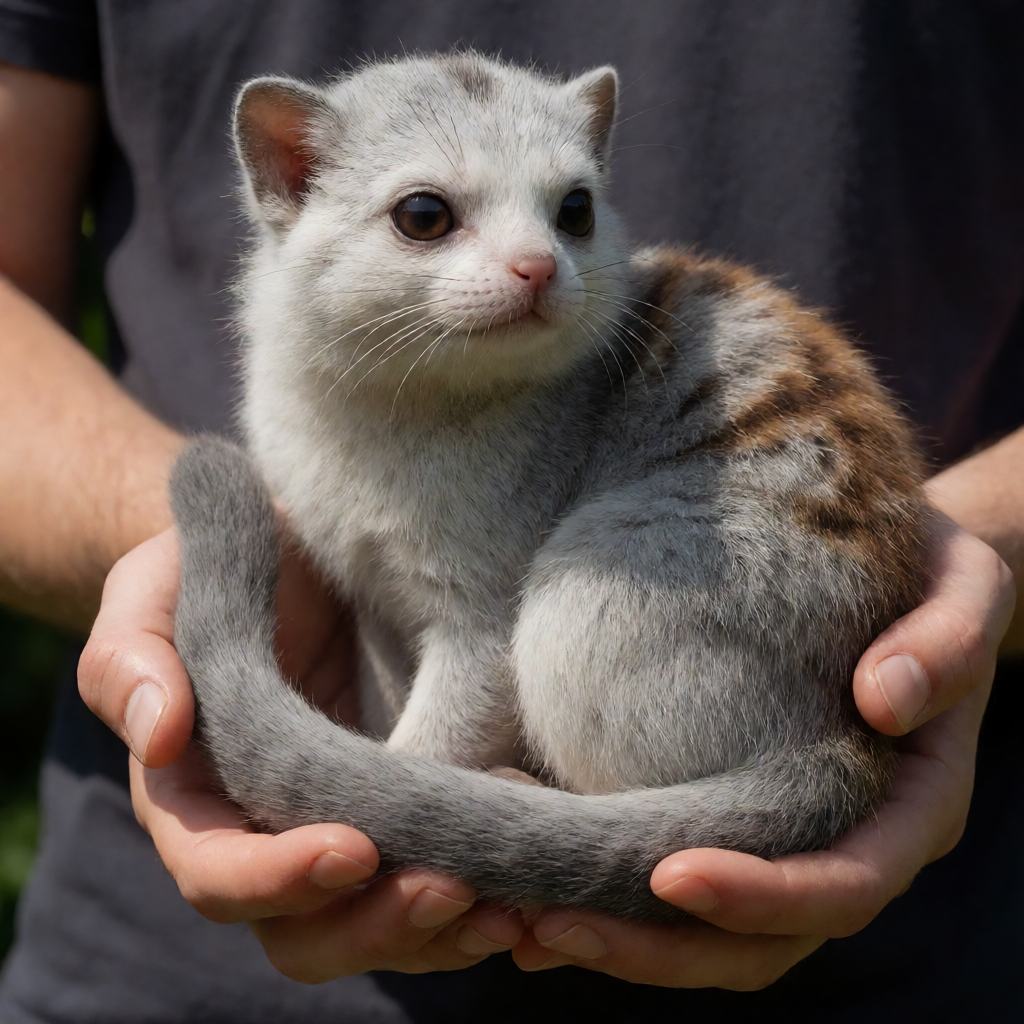
Fruit forms the base of the diet. Leaves, flowers and buds fill the gaps. Some fruit is eaten unripe, which few animals can manage. Seeds pass through the gut and come out ready to grow.
That habit makes the lemur a planter of dry forest trees. Feeding shifts between trees and the ground. Groups spread out across a fruiting tree, and each animal picks its own branch. Insects add protein, mostly in the wet season.
Water comes from fruit and from dew in most months. Feeding happens in short bouts through the day and the night.
Fruit first, leaves after
The breeding cycle
Mating happens in June and July. Gestation takes about 120 days. A single young is born in September or October. The infant clings to the mother’s belly at first.
It moves to her back after a few weeks. Weaning comes at around five months. Young stay in the group after weaning. Females breed once a year at most.
Males take no part in carrying the young, although they stay close. A group raises few young each year, so a population grows slowly even where forest stays whole, and a hunted group recovers slower still.
Near Threatened, and hunted
Conservation
IUCN lists the species as Near Threatened. Hunting is the main threat across the range. Forest clearance for charcoal and pasture removes habitat. Fire sets back the regrowth for decades.
Introduced groups on Mayotte face a different set of risks. Protected areas cover part of the western range. Sacred forest patches hold animals outside the parks. Cattle grazing inside reserves compacts the soil, and seedlings then fail.
Numbers fall steadily, although no full count exists. Keeping river strips whole matters most, since a group crosses dry ground only with difficulty, and the young tire first.
Side by side
How It Compares
| Trait | Brown Lemur | Ring-tailed Lemur |
|---|---|---|
| Length | 40 to 48 cm body, and a 60 cm tail | 39 to 46 cm body, and a 60 cm tail |
| Weight | 2 to 2.9 kg, and the sexes look alike | 2.2 to 3.5 kg, and the male stays smaller |
| Home | dry forest in western Madagascar | spiny forest in southern Madagascar |
| Tail | plain and grey brown, with no rings | black and white rings, held high in a troop |
| Food | fruit, leaves and flowers, by day and by night | fruit, leaves and flowers, mostly by day |
| Group | three to twelve, with no strict female rank | up to thirty, and females lead the troop |
Common misreadings
What People Get Wrong
- Many people assume the lemur feeds only by day, yet it also feeds after dark.
- Some texts call the animal a monkey, although it is a lemur with a toothcomb.
- A common tale says the tail carries rings, yet this species keeps a plain one.
Going further
Sources and Further Reading
Quick hits
Five things to remember
- Adults weigh about 2.5 kg.
- The tail is longer than the body.
- Groups hold three to twelve animals.
- One young is born each year.
- The species feeds by day and by night.