 By Iris
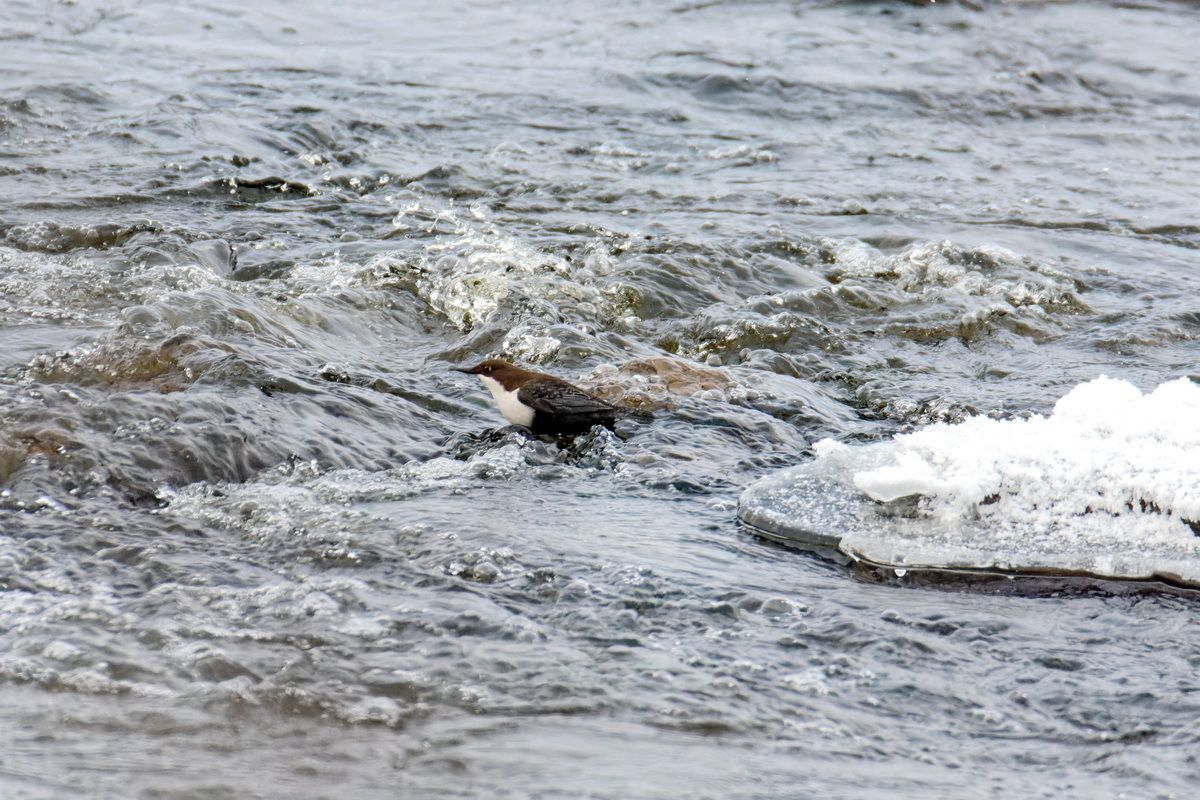
Cinclus cinclus | White-throated Dipper
Species Profile · Cinclidae
White-throated Dipper
It walks into a mountain torrent and stays under, hunting on the stream bed while the water closes over its head.
Least Concern
Length
Weight
Dive
Clutch
Range
Rating
A bird that goes under
The songbird that swims
A small dark bird walks straight into a mountain torrent and does not come up, because the water is where it feeds. Underwater, it keeps walking. Yet it holds a straight line against the current.
This is a dipper, and it hunts where few birds can follow. Fast water carries food that no other songbird can reach. So the bird went under, and its body changed to match, with dense feathers and strong feet that hold it down.
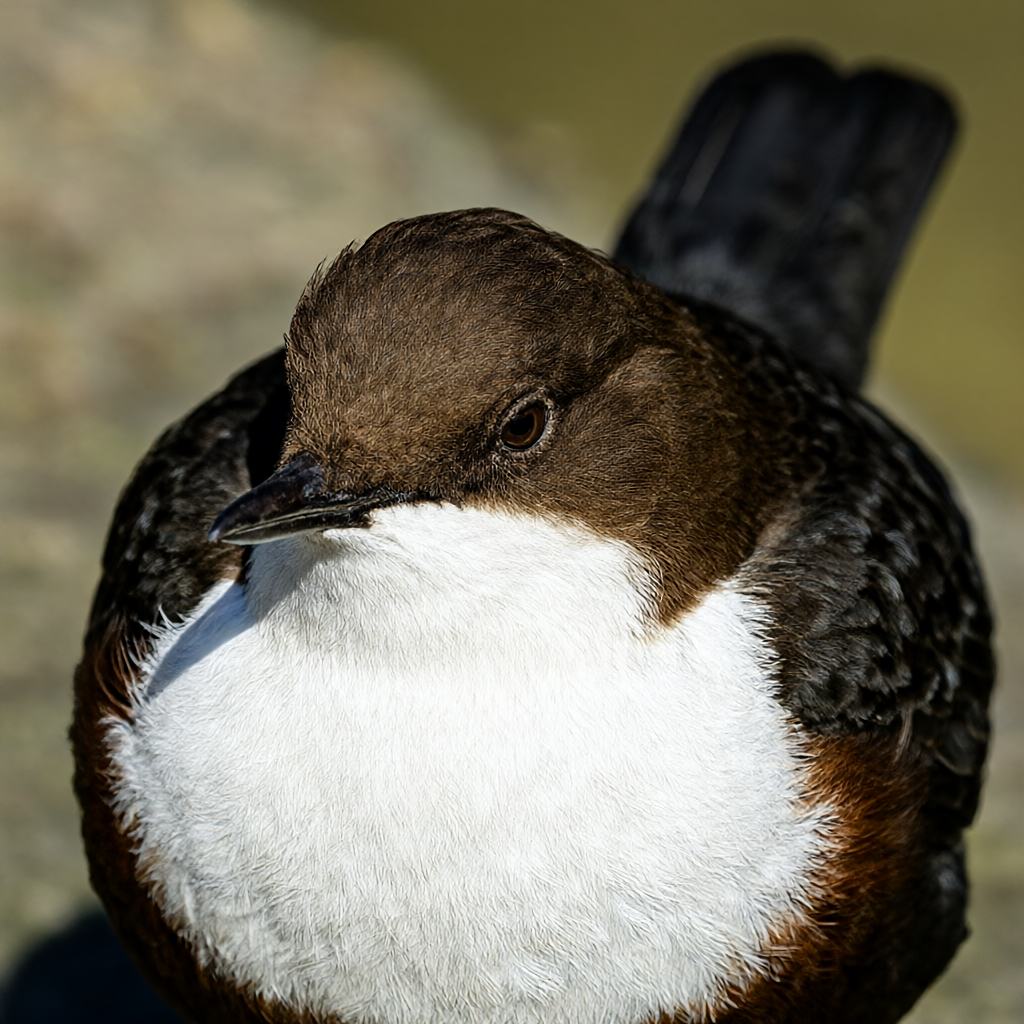
Every adult wears a white bib. Birders use that white patch to name a single bird again.
One genus, five divers
Where it sits among songbirds
Its proper name is Cinclus cinclus, one of five in the family. Cinclidae holds a single genus, and all five dip for food. Only this one reaches Europe, while the other four live in Asia and the Americas, far from any cold torrent.
Small outposts also hold on in northwest Africa and the Middle East. Three races differ in shade. British birds run darker, with a narrow chestnut band under the bib.
Central European birds show a wider band and a browner back. The far northern race named the species, and it looks much the same.
Bib, plumage and grip
How the body copes with current
Adults measure 17 to 20 cm from bill to tail. Weight falls between 55 and 75 g, and males sit at the top of that range. Plumage reads as black at distance, though it is really dark brown. Snow white covers throat and chest, and a chestnut band closes the bib below. No two bibs are shaped alike.
A patient watcher can log individuals from that patch alone. Feathers pack tight, far denser than a blackbird’s, and shed water fast, so the skin underneath stays dry. One huge preen gland supplies the oil, because a wet coat would cost the bird heat. Flaps of skin close the nostrils, so that no water enters while the head is under. A clear third lid sweeps across the eye, and the bird still sees.
Short legs, strong toes and curved claws grip wet rock without a slip. Males run a little bigger than females, though the gap is small. Nothing in the build is spare, because the stream punishes any weakness and rewards a tight, low body.
1
2
3
Fast cold water
The stream it cannot do without
Clean water is the single need. Upland streams, mill races and rocky burns all qualify. Stone, not mud, is what this bird wants, and it wants the water moving. Slow lowland rivers hold few birds, since silt hides the food.
Pairs hold a stretch of stream and defend it the year round. Winter pushes birds downstream, where the current never freezes solid. Frost can lock a whole reach, and the birds then drop to the valley, where the water keeps moving. Height matters less than gradient, so a low weir can hold a pair.
A paired bird sings in December, though no rival is likely to answer. Acid water kills the shelled larvae, and the birds leave that reach.
Larvae and small fish
What it eats
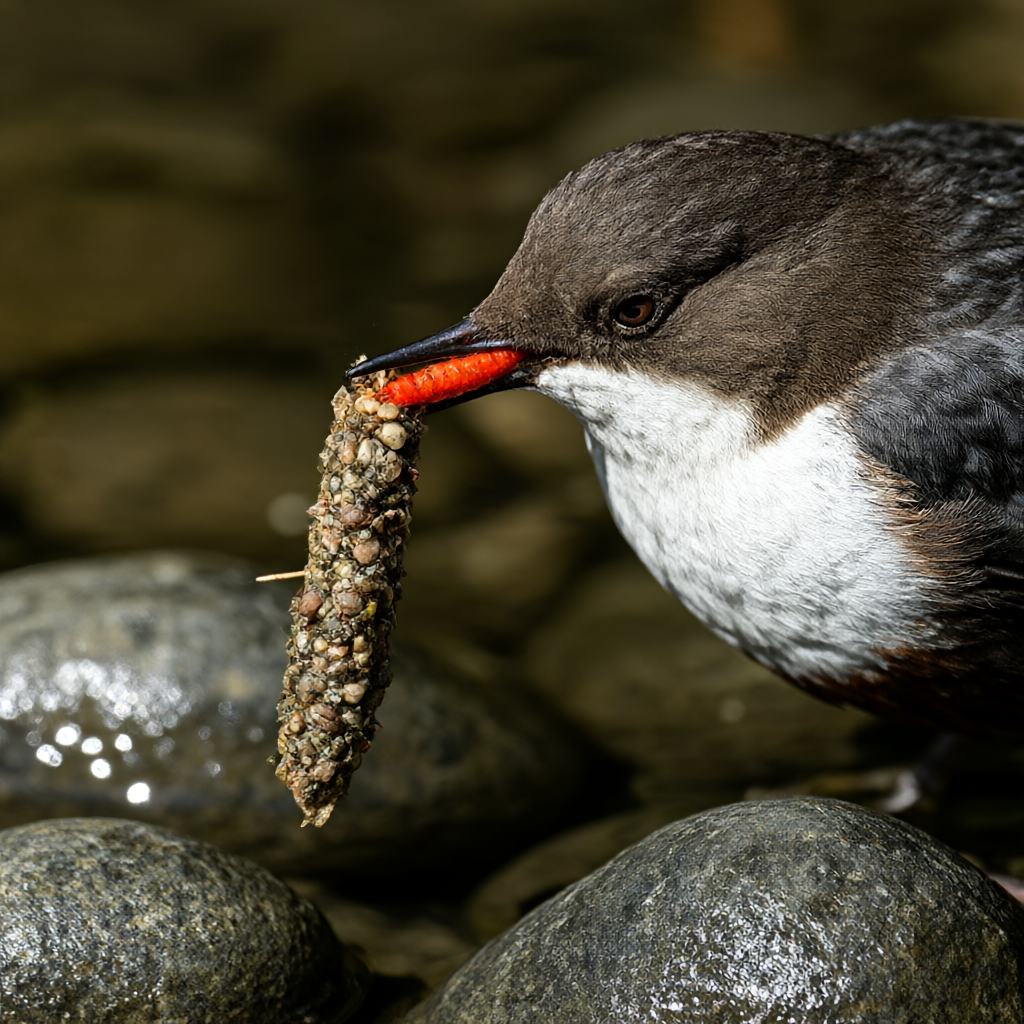
Larvae of caddis, mayfly and stonefly make up most of the diet. Birds pick them from the tops of stones, then turn the stones over. Small fish and fish eggs get taken too, since the chance comes often. A dive lasts 15 to 30 s, and the bird can walk upstream the whole time.
Wings open underwater, and the bird rows through the current like a small penguin, with the same stiff, quick beat. Buoyancy works against it. Every stroke costs real effort. Back on the rock, it shakes, preens and bows its whole body.
That bowing habit gave the family its name in several languages. In the same pool, a brown trout takes what the bird misses, and the two share one larder. Trout eat the same larvae, so bird and fish compete for one crop.
A moss dome by the spray
The breeding cycle
A dome of moss hides the nest, and the site is chosen with care. Most nests sit within splash of moving water, behind a fall or under a bridge. Damp air keeps the moss green, because the spray stops the eggs from drying. Females lay 4 or 5 white eggs and sit for 16 or 17 days.
Only she incubates. Males stay close and sing. Chicks leave the nest at 20 to 24 days, still unable to fly well. Fledged young beg from both parents for another two weeks or more.
Second broods follow once the first one clears the nest. Still, pairs keep one stretch of stream for several years.
Acid, metals and silt
Conservation
The Red List calls the species Least Concern across its whole range. Numbers in Europe run high, though the trend is not flat everywhere. Along the same stones, a grey wagtail feeds, and both birds vanish when a stream turns foul for good. Acid rain stripped the calcium from whole catchments, and the birds went with it.
Old mine sites still leak zinc and lead into streams that look clean. Because a dipper eats larvae all year, metals build up in its body. Britain lists the bird as amber, since the recent trend has dipped. Clean gravel matters too, because silt smothers the larvae the bird needs.
Water law beats any reserve. Norway made the bird a national symbol, and one valley can hear it sing.
Side by side
How It Compares
| Trait | White-throated Dipper | Grey Wagtail |
|---|---|---|
| Family | Cinclidae | Motacillidae |
| Length | 17-20 cm | 18-20 cm |
| Feeding | dives and walks on the bed | picks insects from stones and edges |
| Plumage | dark brown, white bib | grey back, yellow under the tail |
| Nest | moss dome behind the spray | cup in a bank or a wall |
| Rating | Least Concern | Least Concern |
Common misreadings
What People Get Wrong
- Field guides often call the bird a moorland species, yet it needs moving water. A slow ditch will not hold a pair, however clean the water looks.
- Popular accounts say the bird hibernates through the cold months, which is false. It stays on the stream all winter and sings from a stone in December.
- Many texts describe a burrow dug into the bank, though the nest is a dome. Moss and grass are packed into a ball behind a fall or a bridge.
Going further
Sources and Further Reading
Five things to remember
Quick hits
- Norway chose it as the national bird.
- Its Norwegian name means waterfall watcher.
- It walks upstream along the stream bed.
- Its white bib works as a name tag.
- It sings through snow and the shortest days.