 By st20113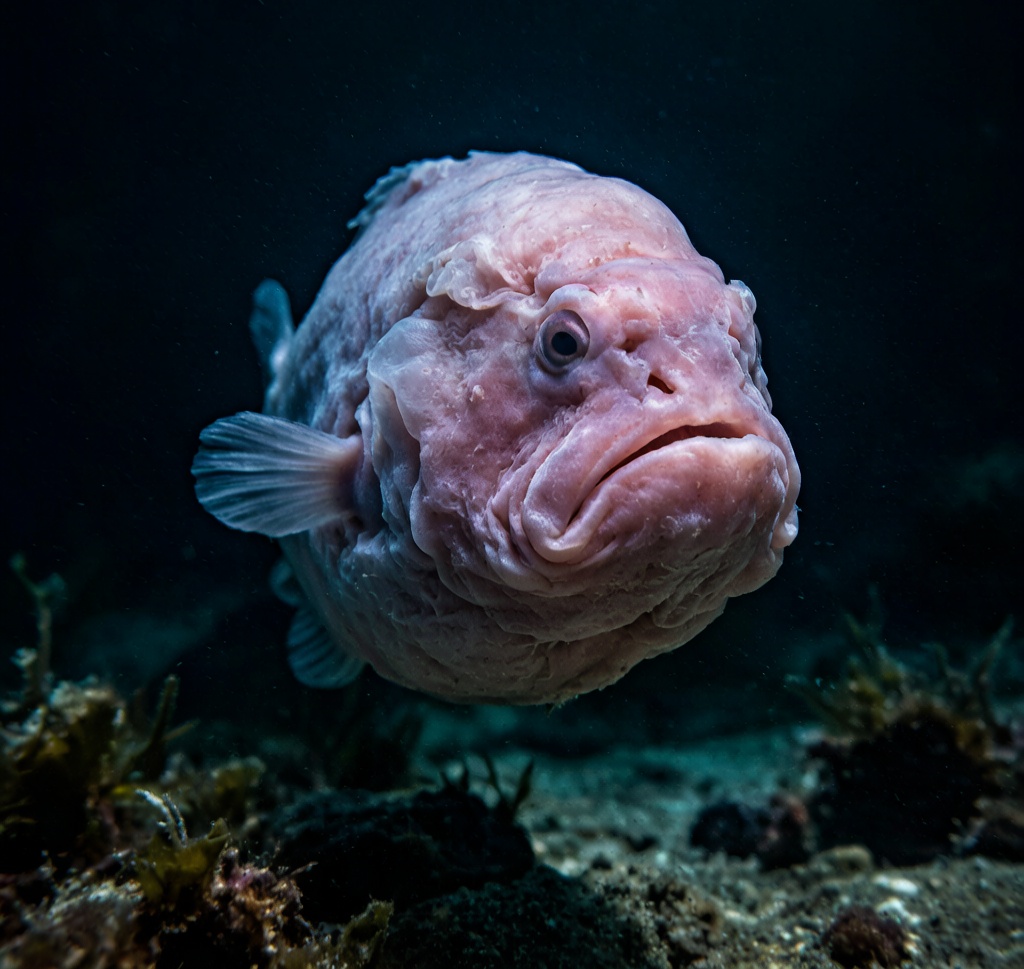
The blobfish (Psychrolutes marcidus) is a deep-sea fish native to the deep waters off the coasts of Australia, New Zealand, and Tasmania. It inhabits depths of 600 to 1,200 meters (2,000 to 3,900 feet), where water pressure is up to 120 times greater than at the surface. The blobfish has become one of the most recognizable deep-sea animals due to its unusual appearance.
At depth, the blobfish’s body is composed almost entirely of gelatinous flesh with a density slightly less than water, which allows it to float above the seafloor without expending energy on swimming. Its shape is relatively normal in its natural habitat. However, when brought to the surface, the dramatic pressure change causes its body to lose its structure, resulting in the droopy, “blobby” appearance that has made it an internet sensation.
The blobfish has a large head with a downward-facing mouth, small eyes, and a gelatinous body that tapers to a small tail fin. Adults typically reach about 30 centimeters (12 inches) in length.
As a demersal feeder, the blobfish eats whatever drifts down from above, including crustaceans, sea worms, mollusks, and other small benthic organisms. It consumes food by opening its mouth to create suction, drawing in prey along with surrounding water.
The blobfish is classified as Vulnerable, facing significant threats from deep-sea trawling. Because it inhabits the same depth range as valuable fish stocks, it is frequently caught as bycatch. Conservation efforts focus on reducing deep-sea trawl fishing in its range and establishing marine protected areas.