 By Iris
Atelopus zeteki | Panamanian Golden Frog
Species Profile · Bufonidae
Panamanian Golden Frog
A golden frog that may already be gone from the wild.
Critically Endangered
Length
Weight
Eggs
Range
Wild status
Rating
Sixty five millimetres of toxin
Gold skin and a wave
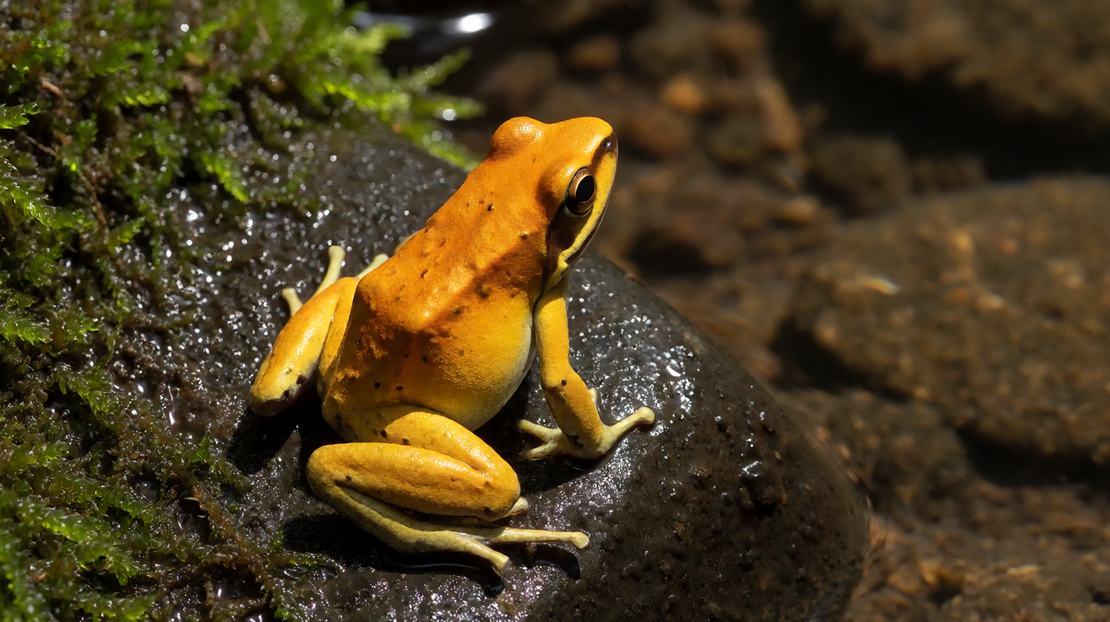
Bright yellow skin and a small body make this frog hard to miss. Adults measure 35 to 65 mm. Females grow larger than males. Streams in the cloud forest of central Panama hold the species.
Skin carries a strong toxin, and the colour warns birds away. The frog sits on rocks beside fast water. Males wave a foreleg to claim a perch. Such a wave replaces the call, since rushing water drowns most sound.
No wild animal has been seen since 2009, and the whole species may now survive only in a handful of captive tanks. Keepers in Panama breed it for a return one day, although no site looks safe yet.
Family tree
Bufonidae, the true toads
Atelopus zeteki sits in Bufonidae, the family of true toads. Stejneger named the species in 1913. The Golden Poison Frog lives in Colombian forest, while this animal stays in Panama. Both carry poison in the skin, and both show bright colour.
Their families differ, though, since one counts as a toad and the other as a dart frog. Harlequin frogs form the genus Atelopus, and most of them live in mountain streams. Several close relatives have vanished since the 1990s. The name honours Zetek, a biologist who worked in the Canal Zone.
No subspecies is recognised today. Genetic work places the species among the Central American harlequins, although the group keeps changing as new tests appear.
A harlequin, not a dart frog
How to tell one
Length runs 35 to 65 mm. Females pass 60 mm, and males stop near 45 mm. Skin looks bright yellow, with a few dark flecks. A slender body and long legs suit a life on wet rock.
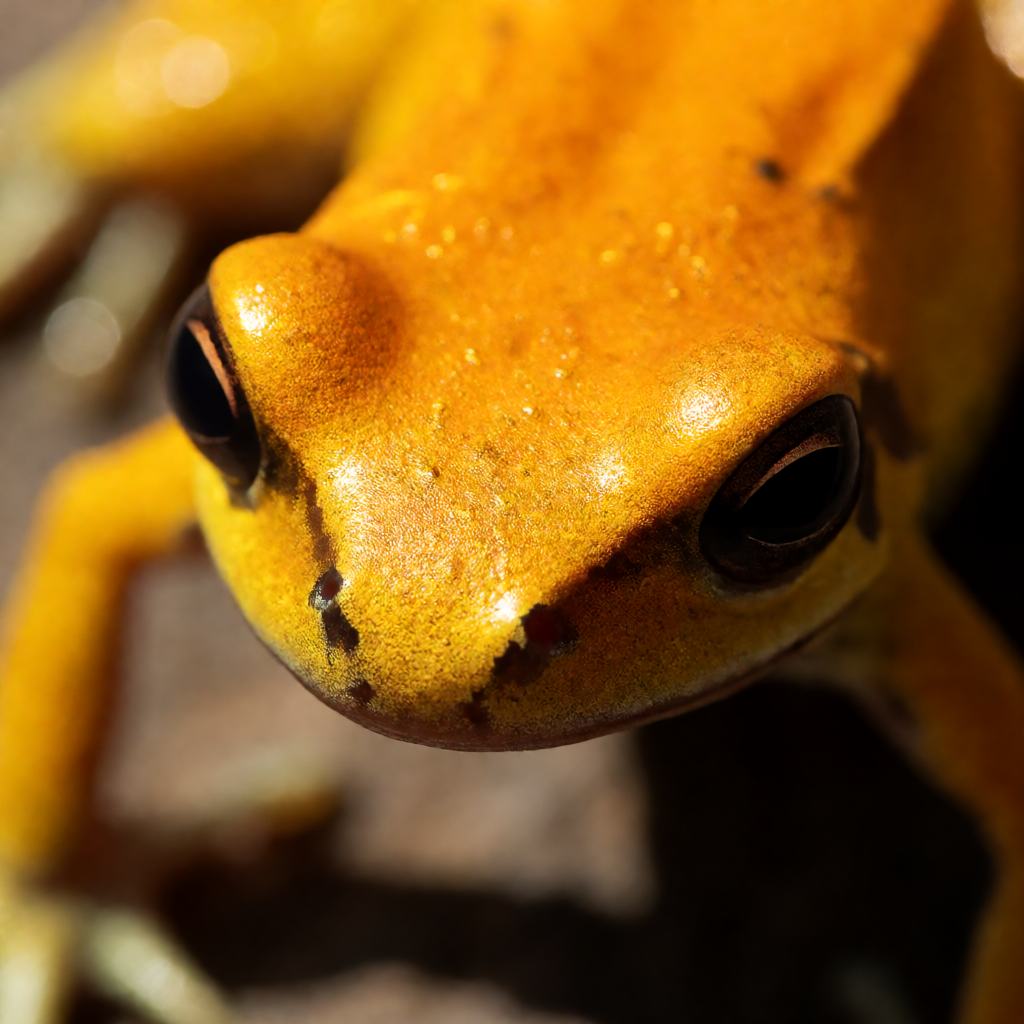
Toes end in small pads, and the tips grip smooth stone. No webs link the toes, since the animal walks rather than swims. Poison sits in glands on the back and the sides. One frog carries enough toxin in its skin to kill several small mammals, and a bird that tries one learns fast.
Bright colour warns a predator before the taste does, and that saves both animals. A long dry spell shrinks the body of the frog, and the animal then waits for rain inside a damp rock crack.
1
2
3
Toxin in the skin
Where it lives
Cloud forest above 400 m holds the historic range. Streams cut through steep ground, and the water runs fast and cool. Rocks beside a cascade give the animal a perch. Moss and ferns keep the air damp through the dry season.
Range size covered a few valleys in central Panama. Forest clearance removed part of that ground. A fungal disease reached the area in the 2000s, and it emptied the streams. Cool damp air once helped the frog, although the same air now helps the fungus.
Wild frogs now hold no confirmed site in Panama. A single valley may have lost its whole group within two years, and no survey has found the animals again.
Cloud forest streams
What it eats
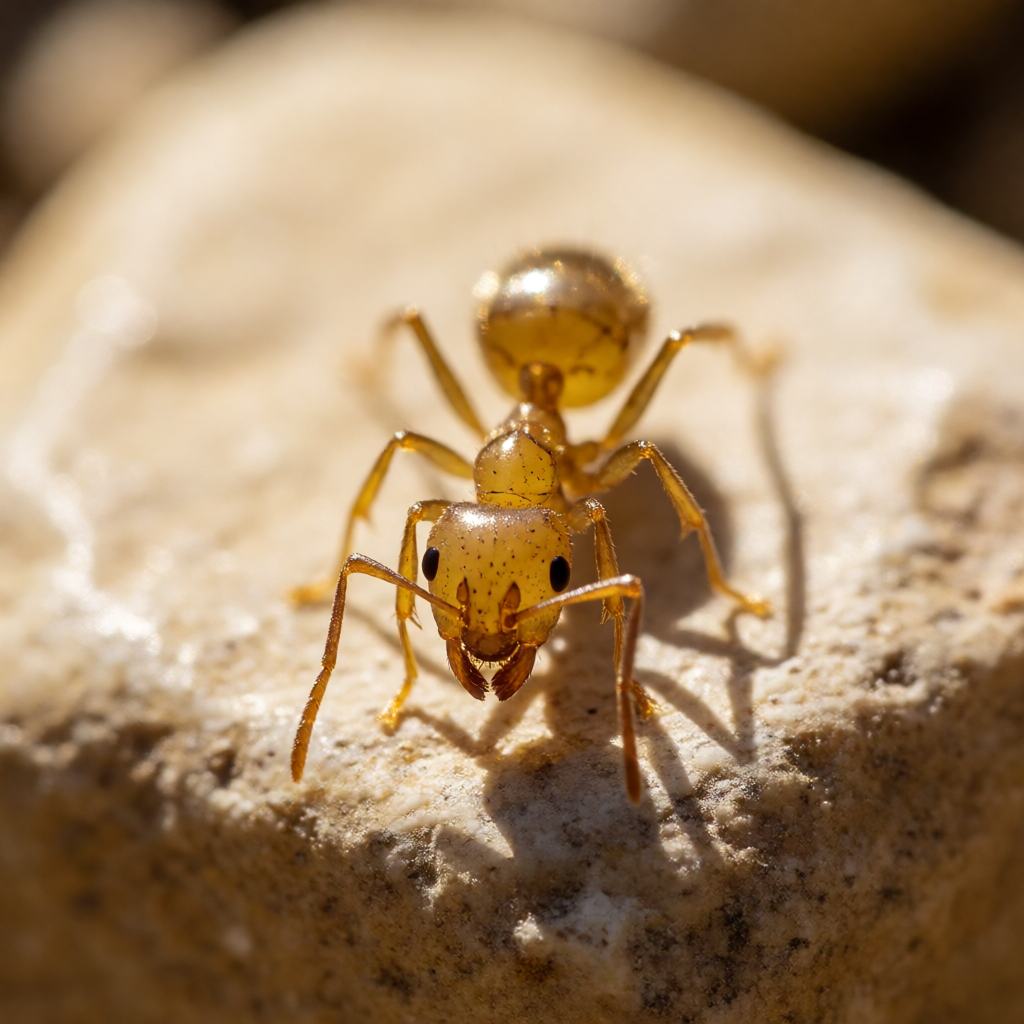
Small insects form the diet. Ants, beetles and flies turn up most often. Feeding happens by day, when the insects move. Prey is taken from rock and from wet leaf.
Tongue and jaw snap out and back in a fraction of a second. Small prey suits a small mouth, so the animal ignores anything large. Feeding stops in heavy rain, since the frog then hides. A captive diet of crickets keeps animals healthy, although it lacks some wild nutrients.
Keepers dust the food with vitamins to make up the gap. Wild frogs likely took a wide mix of small insects, and a captive colony can only guess at that mix.
Ants and small flies
The breeding cycle
Males claim a rock beside a stream. A rival is met with a raised foreleg, and the wave works as a signal. Females arrive at the stream in the wet season. Eggs go in strings under a rock or a log.
Clutches hold 200 to 600 eggs, and each one sits inside a clear string of jelly. Tadpoles hatch and cling to stones in fast water. They rasp algae from the rock surface. Metamorphosis takes several months, and the young frog then leaves the stream for the damp floor of the surrounding forest.
Few tadpoles survive a flood, so a single storm can erase a whole season of breeding in one night. Captive pairs breed on a wet rock, and keepers then move the eggs to a rearing tank behind glass.
Critically Endangered, and captive
Conservation
IUCN lists the species as Critically Endangered. The last confirmed wild frog was seen in 2009. Chytrid fungus kills frogs by blocking the skin. The disease reached Panama in the 1990s and spread east.
Breeding centres in Panama hold a captive colony. Keepers keep the tanks cold and clean, since the fungus thrives in damp warmth. Any return to the wild needs a site free of the fungus, and no valley yet meets that test. Some streams may clear over time, although the wait could run for decades.
Panama treats the frog as a national symbol, and the country marks a day for it. Captive breeding buys time, yet time alone will never save a species that has nowhere left to go.
Side by side
How It Compares
| Trait | Panamanian Golden Frog | Golden Poison Frog |
|---|---|---|
| Length | 35 to 65 mm, and the female grows larger | 45 to 55 mm, and the female grows larger |
| Weight | under 10 grams | about 28 grams |
| Home | cloud forest streams in central Panama | rain forest in western Colombia |
| Toxin | a nerve poison in the skin, and it kills a small mammal | one of the strongest poisons known to science |
| Food | ants, beetles and flies taken by day | termites, ants and small beetles |
| Family | Bufonidae, the true toads | Dendrobatidae, the poison dart frogs |
Common misreadings
What People Get Wrong
- Many people assume the frog lives in the trees, yet it stays on rock by a stream.
- Some guides call it a dart frog, although it belongs to the true toads.
- A common tale says wild frogs still survive, yet none has been seen since 2009.
Going further
Sources and Further Reading
Quick hits
Five things to remember
- Adults reach only 65 mm.
- Skin carries enough toxin to kill a small mammal.
- Males wave a leg instead of calling.
- Clutches hold up to 600 eggs.
- The last wild frog was seen in 2009.