 By Iris
Histrionicus histrionicus | Harlequin Duck
Species Profile · Anatidae
Harlequin Duck
A small sea duck that feeds in white water.
Least Concern
Length
Weight
Clutch
Incubation
Range
Rating
Six hundred grams of river duck
A duck in the rapids
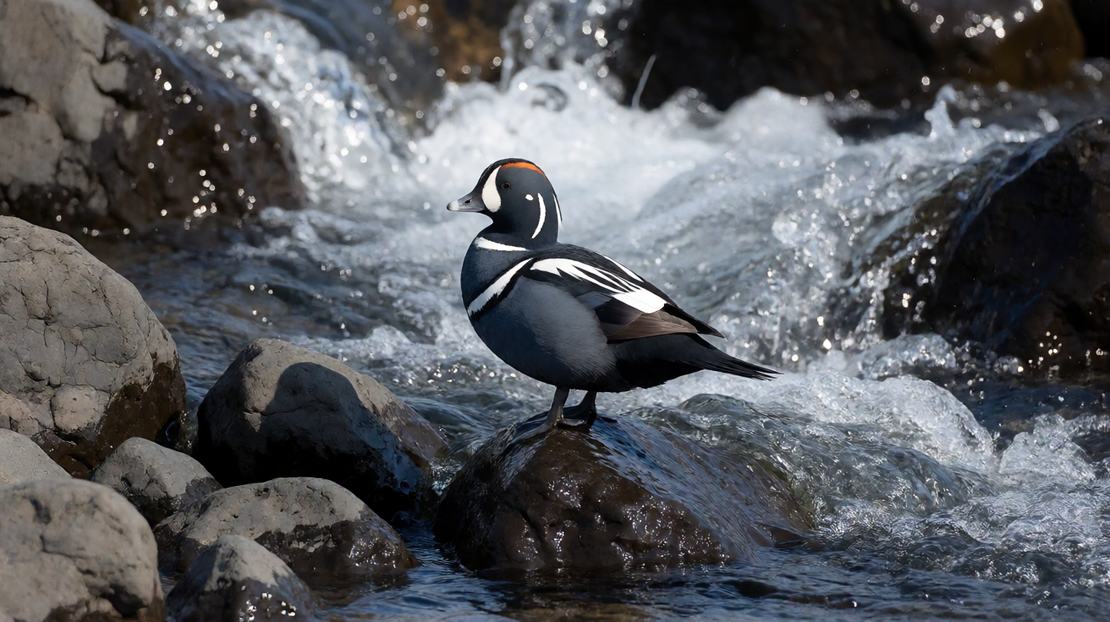
Slate blue plumage and bold white crescents give this small sea duck its name. Length runs 38 to 45 cm, and weight stays near 600 g. Males wear chestnut flanks and a white spot behind the eye, whereas females stay plain brown. Fast cold rivers hold the breeding pairs, since the bird needs rushing water with stones.
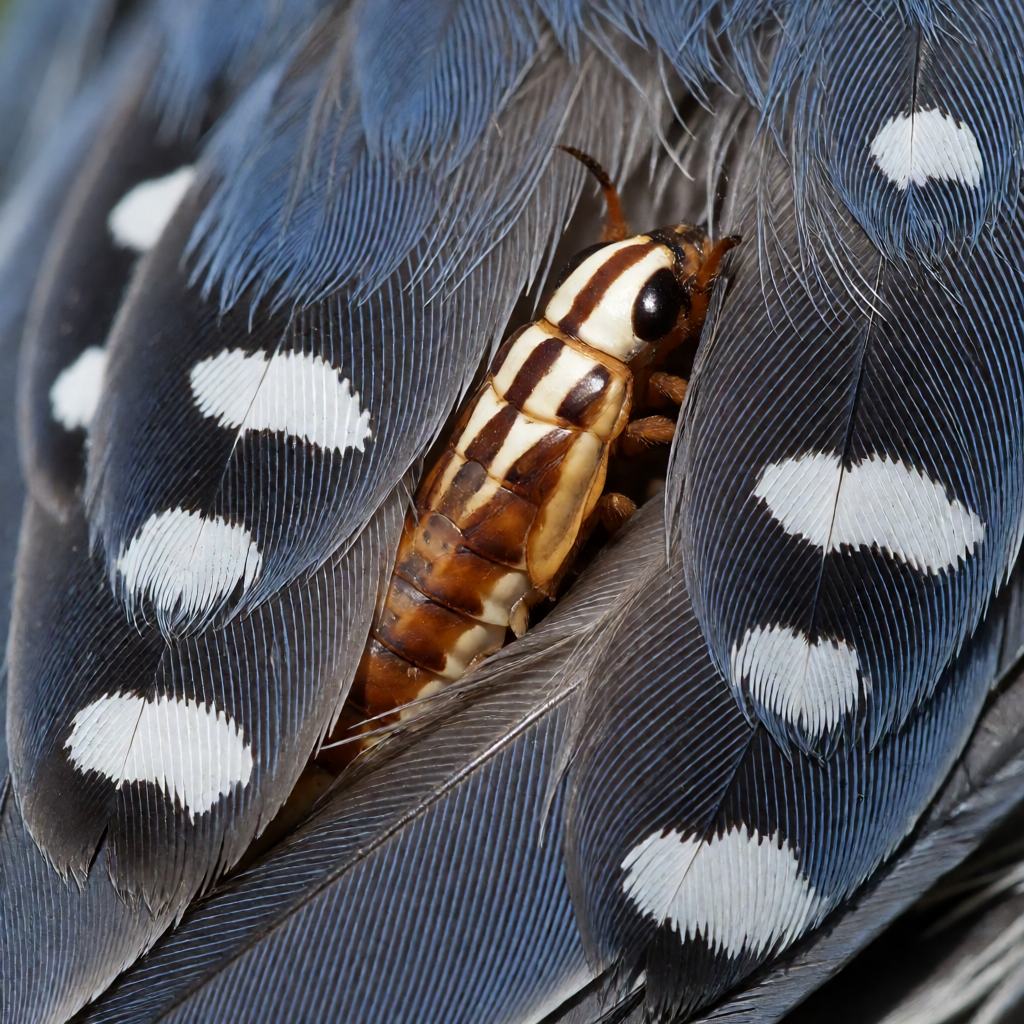
Iceland, Greenland and the north Pacific coast all hold nesting groups. Winter moves the flocks to rocky shores and to tidal channels. Caddis larvae and stonefly nymphs form the summer catch. Dives happen in white water, and the bird walks upstream along the bottom.
Few ducks live in such fast water, yet the species manages it with short legs and strong feet. Numbers fall where rivers are dammed, although the global rating stays low.
Family tree
Anatidae, the ducks and swans
Histrionicus histrionicus sits in Anatidae, the family of ducks and geese. Lesson named the species in 1828. It forms a genus of its own, since no other duck shares its shape. The Long-Tailed Duck winters along the same cold coasts, while this bird nests on rivers far inland.
Both dive in cold water, and both fly low over the swell. Their bodies differ, though, because one carries a long pointed tail and the other a short stiff one. Genetic work puts the species near the eiders and the scoters. Two forms are sometimes named, one in the Atlantic and one in the Pacific.
Old guides called the bird the lords and ladies, and the name comes from its painted look. One species now spans the northern ocean, although the ocean forms rarely meet.
A genus of its own
How to tell one
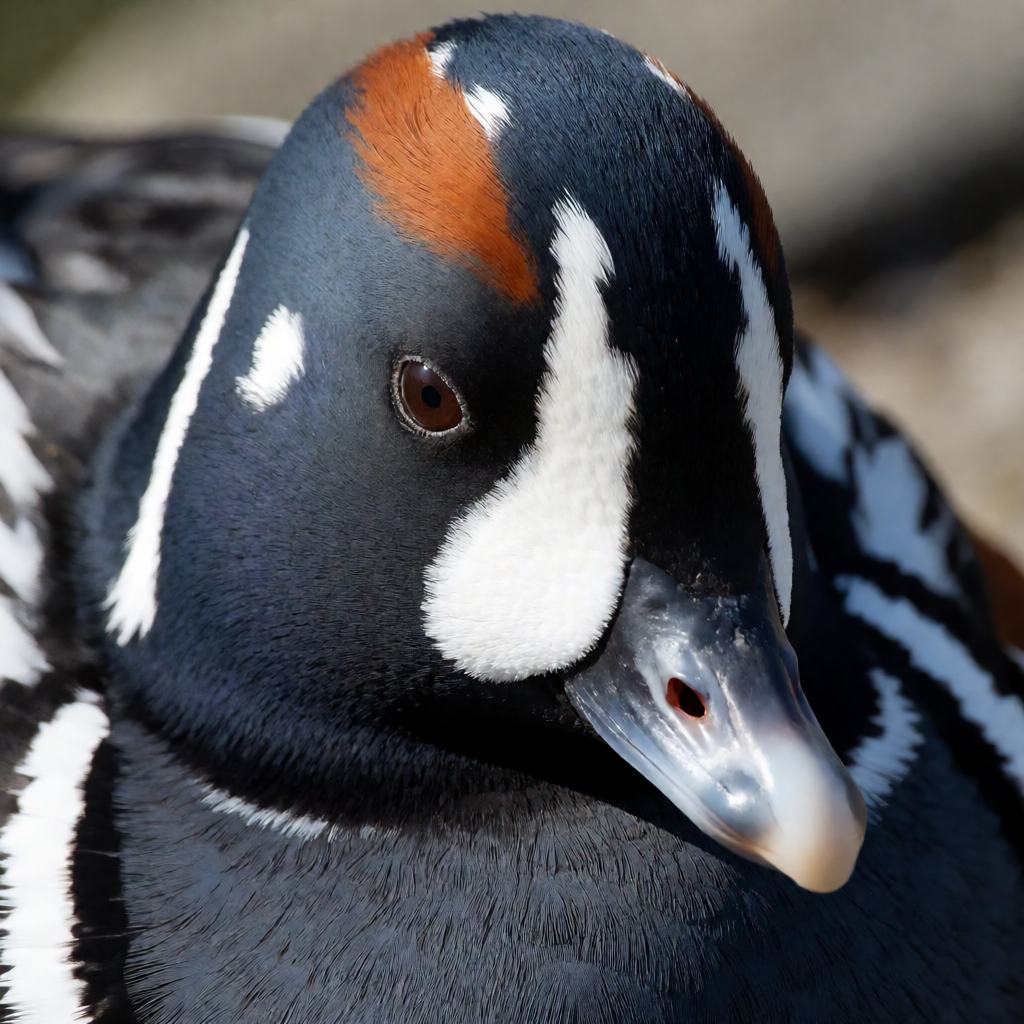
Length reaches 45 cm in the largest male. Weight runs 500 to 700 g. Plumage shows slate blue over the body, with white stripes on the head and neck. Chestnut patches cover the flanks, and white crescents cross the breast.
Females wear mottled brown all year, and they show a pale patch behind the eye. The bill looks short and stubby, which suits a bird that picks food from between wet stones. Legs sit far back, so the duck walks badly on land. Feet carry strong claws.
The bird grips bare rock in fast water. Feathers pack tight, and they shed water before the cold reaches the skin. A diving bird paddles against the current, and the strong feet do most of the work.
1
2
3
Short bill, strong feet
Where it lives
Clear rivers with gravel beds hold the breeding sites. Cold water and fast runs matter more than the size of the stream. Lakes and quiet pools are avoided, since a duck needs moving water. Coastal wintering grounds lie on rocky shores and inside tidal channels.
Surf zones with kelp give cover and food at the same time. Range circles the north, with gaps across the middle of the continents. Dams slow the current, so the river then suits other species better. Logging removes shade, and warm water follows.
Oil spills in wintering channels kill birds in a single tide. Rivers that keep gravel and flood cycles hold more pairs, yet few now do.
Cold rivers with gravel
What it eats
Range circles the north. Wide gaps split the middle of the continents. Stonefly nymphs, small snails and crabs fill the rest. Feeding happens by diving.
The bird turns stones with the bill. Prey sits under gravel, so the duck must work against the current. A bird may feed in water moving faster than a person can walk, and it works upstream against the flow. Mussels appear in the winter diet, since cold seas hold few insects.
Feeding groups spread along a channel, and each bird keeps its own patch. Chicks take insects from the surface at first. The mother leads her brood to slower water, where the young can feed without working against the flow. Winter feeding happens at low tide, because the kelp then lies within reach.
Larvae under the stones
The breeding cycle
Pairs form on the wintering grounds. A nest sits on the ground, hidden among rocks, roots or low shrubs. Five to seven eggs are usual. Incubation lasts about 28 days.
The male leaves once incubation starts, and he then flies to the coast. Chicks jump from the nest within a day of hatching. She keeps the brood close, and she shields them from gulls. Rivers rise in spring, so a flood can wash a nest away.
Predators take eggs where cover is thin, although the nest itself stays hard to find, and a sitting female holds her ground. Few chicks reach flight, so a pair may raise one brood in several years.
Least Concern, and losing ground
Conservation
IUCN lists the species as Least Concern. Numbers fall in Iceland and in parts of North America, and the cause is not always clear. Hydro dams change the flow that the bird depends on. Silt from logging settles in gravel and smothers the insects.
Oil spills along winter coasts kill birds in groups. Hunting is banned in most countries, yet some birds are still shot. Protected rivers cover part of the range, although the coast holds most of the wintering flocks. Counts happen on winter coasts, since the breeding streams stay hard to reach.
A river with natural floods keeps clean gravel, and clean gravel keeps the insects. Protecting a whole watershed helps more than guarding one stretch. A bird moves between the two.
Side by side
How It Compares
| Trait | Harlequin Duck | Long-Tailed Duck |
|---|---|---|
| Length | 38 to 45 cm, with a short stiff tail | 40 to 50 cm, with a long pointed tail |
| Weight | 500 to 700 g | 600 to 900 g |
| Home | fast cold rivers in Iceland and the north Pacific | Arctic tundra pools and cold coasts |
| Colour | slate blue with white stripes and chestnut flanks | brown, white and grey, with a pink bill band |
| Food | caddis larvae and stonefly nymphs under stones | mussels, clams and small fish in deep water |
| Dive | short dives in shallow white water | dives to 60 m in the open sea |
Common misreadings
What People Get Wrong
- Many people think the duck nests beside the sea, yet it needs fast rivers inland.
- Some guides call the species a dabbler, although it dives and grips rock in white water.
- A common claim says the male helps to raise the brood, yet he leaves before the eggs hatch.
Going further
Sources and Further Reading
Quick hits
Five things to remember
- Males carry chestnut flanks.
- The bird feeds in rushing water.
- Chicks jump from the nest on day one.
- Winter flocks gather on rocky coasts.
- Old guides called it the lords and ladies.