 By Iris
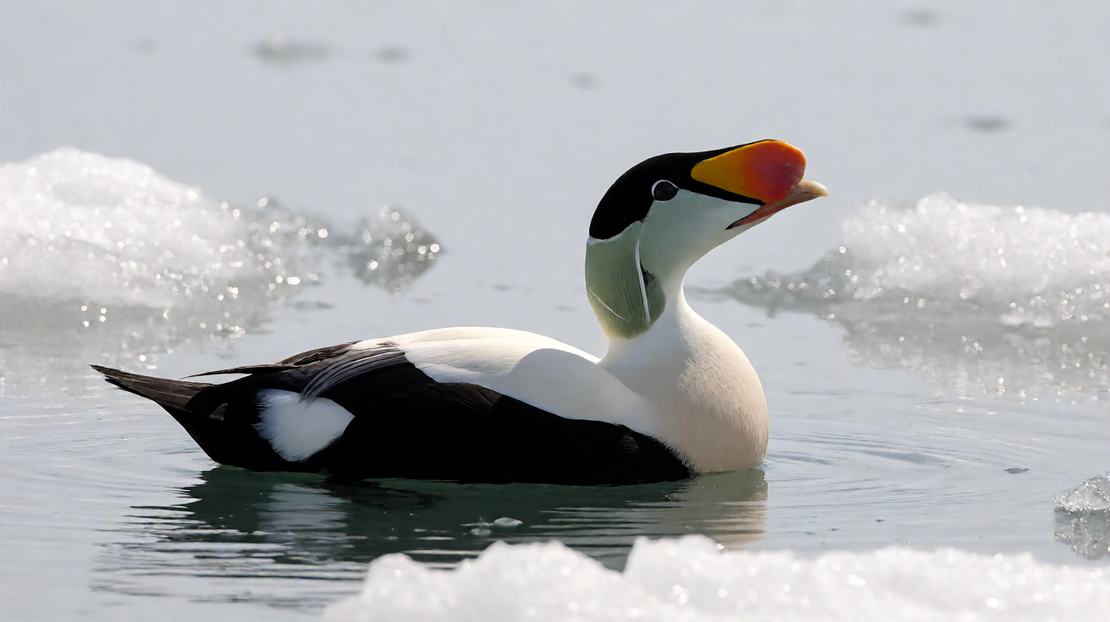
Somateria spectabilis | King Eider
Species Profile · Anatidae
King Eider
A sea duck of the high Arctic, with an orange shield on the bill.
Least Concern
Length
Weight
Bill shield
Range
Clutch
Rating
Two kilos beside the floes
A duck built for pack ice
Orange bill shield and a pale blue crown mark the drake, and no other eider carries such a bright face. Length runs 47 to 63 cm. Weight reaches 2 kg before the winter ice arrives. Females wear brown mottling all year, unlike the gaudy male.
Cold Arctic coasts hold the breeding grounds. Open water beside flat tundra decides where a pair settles, since the duck cannot walk far. Winter pushes the flocks south to ice free bays. Mussels and sea urchins form the summer catch.
Dives reach 20 m in search of shellfish, and a bird may stay under for a minute. Sea ice retreats earlier now, yet the flocks still return to the same coast each June.
Family tree
Anatidae, the ducks and swans
Somateria spectabilis sits in Anatidae, the family of ducks and swans. Linnaeus named the species in 1758. Four eiders are recognised today, and this one breeds furthest north. The Common Eider nests on temperate coasts, while this bird keeps to the high Arctic.
Both carry dense down, and both dive for shellfish. Their bills differ, though, since one shows a long orange shield and the other a plain wedge. Genetic work puts the species close to Steller’s eider. No subspecies is named today.
Inuit hunters once named the bird for its bright face, and the old name still travels in every field guide. One species now spans the whole circumpolar Arctic, although the flocks rarely mix.
Four eiders, this one furthest north
How to tell one
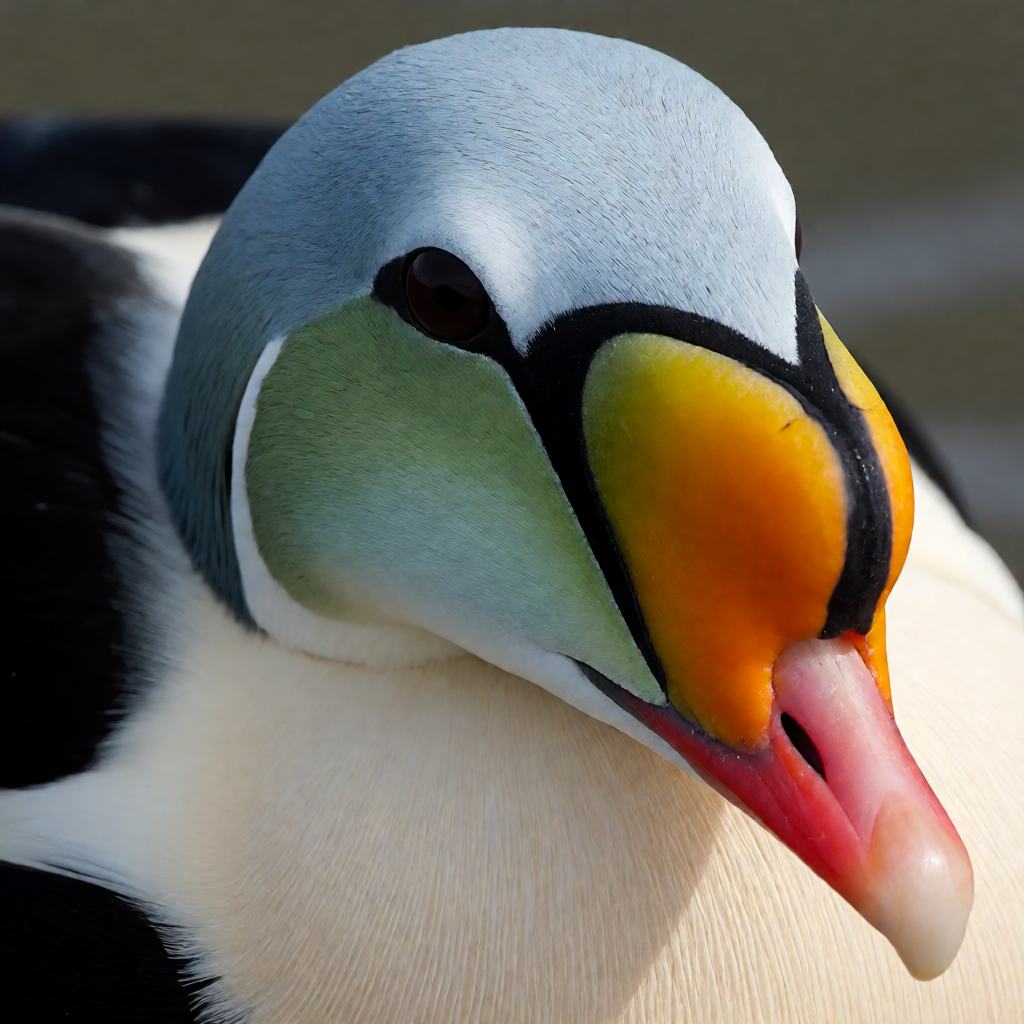
Length reaches 63 cm in the largest drake. Weight runs 1.2 to 2.1 kg. Plumage looks black below and white above, with a pale green nape behind the crown. The bill carries a rounded orange shield, and the plate swells in spring, although it fades by July.
Females show brown barring over the whole body, and their bill stays dark. Feet sit far back, which suits a bird that swims more than it walks. Down lies under the outer feathers, so it traps a layer of air against cold water. A diving duck squeezes that air out, and the body then sinks with little effort.
Young birds look like females for two years, and only then does the drake colour up. Wings beat fast in flight, and the flock rises straight from the water without a run.
1
2
3
Shield, down and strong feet
Where it lives
Tundra ponds and coastal lagoons hold the nests. Flat ground within a few hundred metres of water suits the bird best. Range circles the Arctic, and the birds winter at sea. Pack ice shapes the northern limit, since a duck needs a lead of open water.
Bays that stay ice free through winter draw thousands of birds. Kelp beds in shallow water give both food and cover, while the fronds hide a bird from above. Storms drive flocks inshore, and some birds then reach rivers far inland. Oil spills in wintering bays kill birds that gather in one place.
Shifting shellfish beds force the ducks to follow the food, since the sea warms. Shoreline development removes the quiet bays that flocks need, and each lost bay concentrates the survivors.
Tundra beside open water
What it eats
Mussels form the base of the diet. Sea urchins, crabs and small snails fill the rest. Breeding birds switch to freshwater insects, since the tundra ponds hold larvae in numbers. A dive lasts under a minute in shallow water.
The bird swallows shellfish whole, and the gizzard grinds the shells. Grit in the stomach helps break hard food, although a bird must find the right stones. Feeding happens in groups, yet each bird dives alone, and the flock then moves along a bed together. Chicks take insects from the water surface.
A female may lead her brood to a deeper pond, where food lasts longer. Winter food sits deeper, so the ducks dive further and stay under longer than they do in summer.
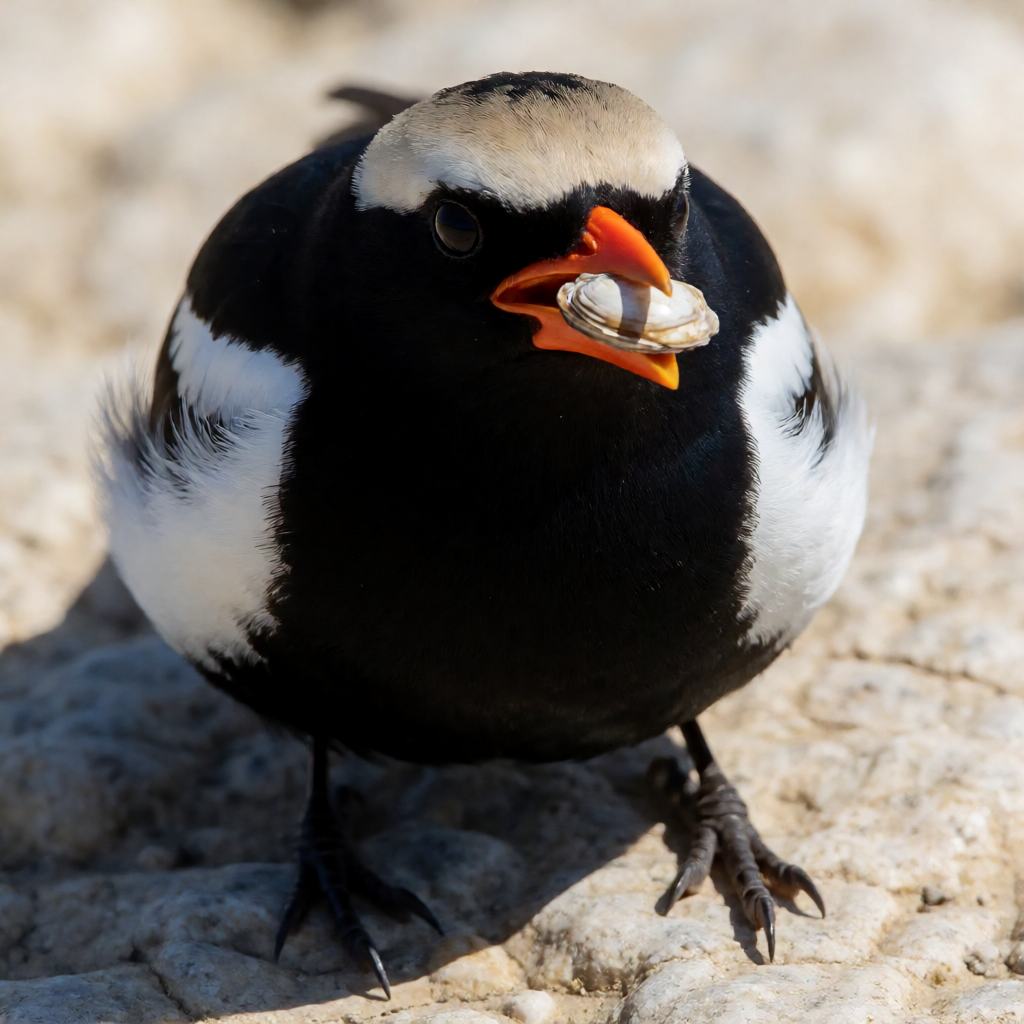
Shellfish from a cold sea
The breeding cycle
Pairs form on the wintering grounds or on the way north. A nest scrapes into tundra moss, and the female lines it with down from her breast. Four to five eggs are usual. Incubation takes about 23 days.
The male leaves soon after laying begins, and he joins a flock of other drakes. Chicks leave the nest within a day of hatching, because the down dries fast on open ground. Several broods may gather, and one female then guards the whole group. Foxes and gulls take eggs, so a colony loses many nests each season.
Cold rain kills small chicks, so a wet June can wipe out a year. Few young survive to fly, so a long lived female may raise only a handful in her life.
Least Concern, and slowly falling
Conservation
IUCN lists the species as Least Concern. Numbers fall slowly across the Arctic, and no single cause explains the drop. Hunting remains legal in some countries, although quotas now limit the take. Oil pollution kills birds in wintering bays.
Foxes follow human camps, and the extra predators reach nest sites. Warmer air brings rain where snow once fell. Early rain freezes, and the ice then locks the birds out of their food. Protected areas cover part of the tundra range.
Monitoring happens through counts at wintering bays, since the breeding grounds stay too remote. Cutting the winter oil risk matters most, because a spill in a crowded bay kills thousands at once.
Side by side
How It Compares
| Trait | King Eider | Common Eider |
|---|---|---|
| Length | 47 to 63 cm, with an orange shield | 60 to 70 cm, with a pale green nape |
| Weight | about 2 kg before winter | up to 3 kg before winter |
| Home | circumpolar Arctic tundra beside open water | temperate and Arctic coasts of the north Atlantic |
| Bill | short, with a rounded orange shield | long, with a wedge shaped orange bill |
| Food | mussels and sea urchins from shallow water | mussels, crabs and starfish from tidal beds |
| Nest | a tundra scrape with four or five eggs | a down lined scrape with four to six eggs |
Common misreadings
What People Get Wrong
- Many people think the drake keeps the orange shield all year, yet it fades by July.
- Some guides say the species nests on cliffs, although every nest sits on flat tundra.
- A common claim puts the winter flocks in the tropics, yet they stay near the ice.
Going further
Sources and Further Reading
Quick hits
Five things to remember
- The drake carries an orange bill shield.
- Males leave the nest before the eggs hatch.
- Chicks swim within a day of hatching.
- Down from the breast lines the nest.
- Some flocks winter inside the Arctic Circle.