 By Iris
Dinomys branickii | Pacarana
Species Profile · Dinomyidae
Pacarana
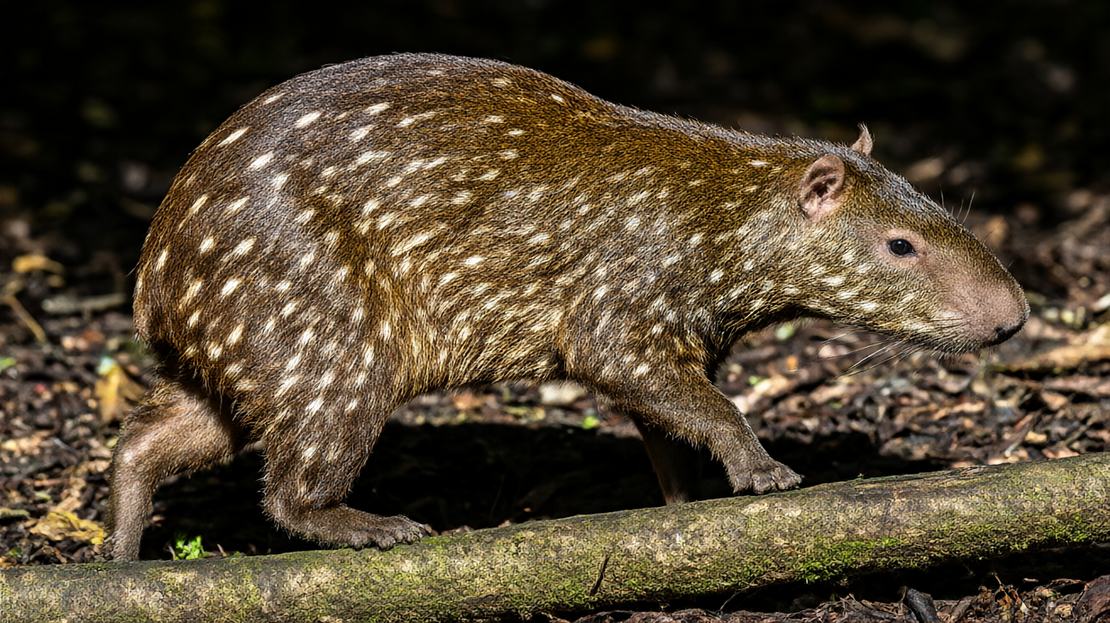
A heavy rodent walks along a fallen log and stops to sniff the bark.
Vulnerable
Length
Tail
Weight
Litter
Coat
Rating
The Pacarana
A giant’s cousin, cat sized
A heavy rodent walks along a fallen log and stops to sniff the bark. It moves slowly. Speed is not the point.
Nothing about the animal suggests speed. The pacarana is the last of a family that once held giants, and it weighs no more than a large cat. Its spotted coat blends into the leaf litter until the animal moves.
Most sightings come from camera traps set at night, since the species avoids open ground. Few people see one. Even its name carries a warning, because it means false paca to the people who named it.
Family tree
Dinomyidae, one survivor of a giant line
Its proper name is Dinomys branickii, and it is the only living member of the family Dinomyidae. That family once included animals the size of a small car. A Capybara carries the title of largest living rodent, though the extinct relatives of this one dwarfed it several times over. Fossils from South America show a long line of heavy plant eaters, and only this quiet survivor remains.
A Lesser Egyptian Jerboa shows how far rodents can diverge, since that animal runs on two legs across desert sand. Its closest living relatives sit among the smaller cavies. Only this genus survived.
Spots in rows
How to tell one
Adults run 73 to 79 cm from nose to rump. The tail adds about 20 cm, and it stays stiff and coarse. Weight falls between 10 and 15 kg. It stays heavy.
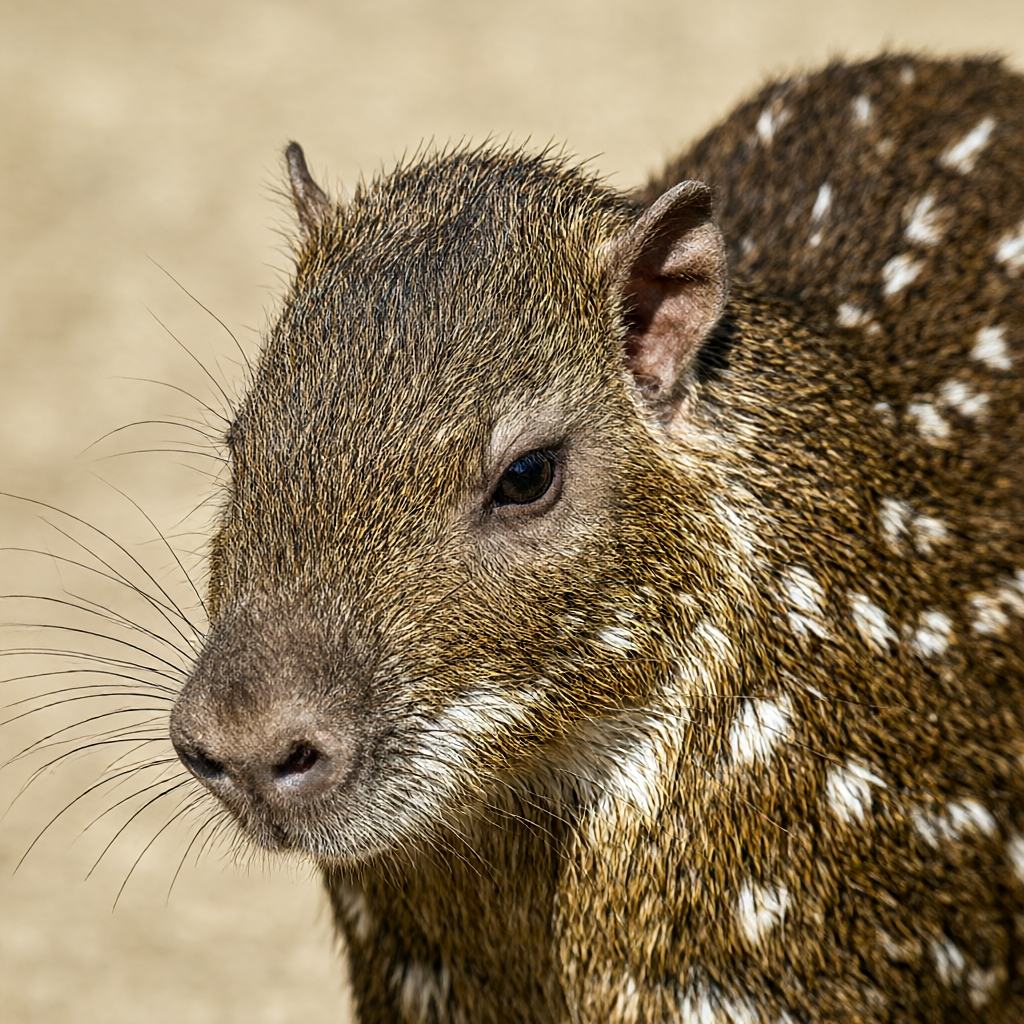
Rows of white spots run along each flank, and the pattern breaks up the outline against wet leaves. A blunt head carries small ears and long stiff whiskers. Its grip is strong. Because the feet grip well, the animal can climb a leaning trunk without much effort.
Front claws stay short but strong, and each foot works independently of the others. The animal stamps a hind foot when alarmed, and that drumming carries through the forest floor.
1
2
3
Steep and mossy
Where it lives
Montane and foothill forest along the Andes holds the species, from Colombia down to Bolivia. Steep ground with mossy rock and deep litter suits it. Valleys below 3200 m stay warm enough, and the animal rarely climbs higher. Because the terrain is broken, the species lives in scattered pockets rather than one continuous range.
Streams cut the slopes into small blocks, and each block may hold a few animals. Records stay thin. Old records came from skins brought to markets, and those skins told scientists little about the living animal.
Fruit and shoots
What it eats
Fruit makes up most of the food. Plants supply nearly all of it. Leaves, shoots and soft stems fill out the rest.
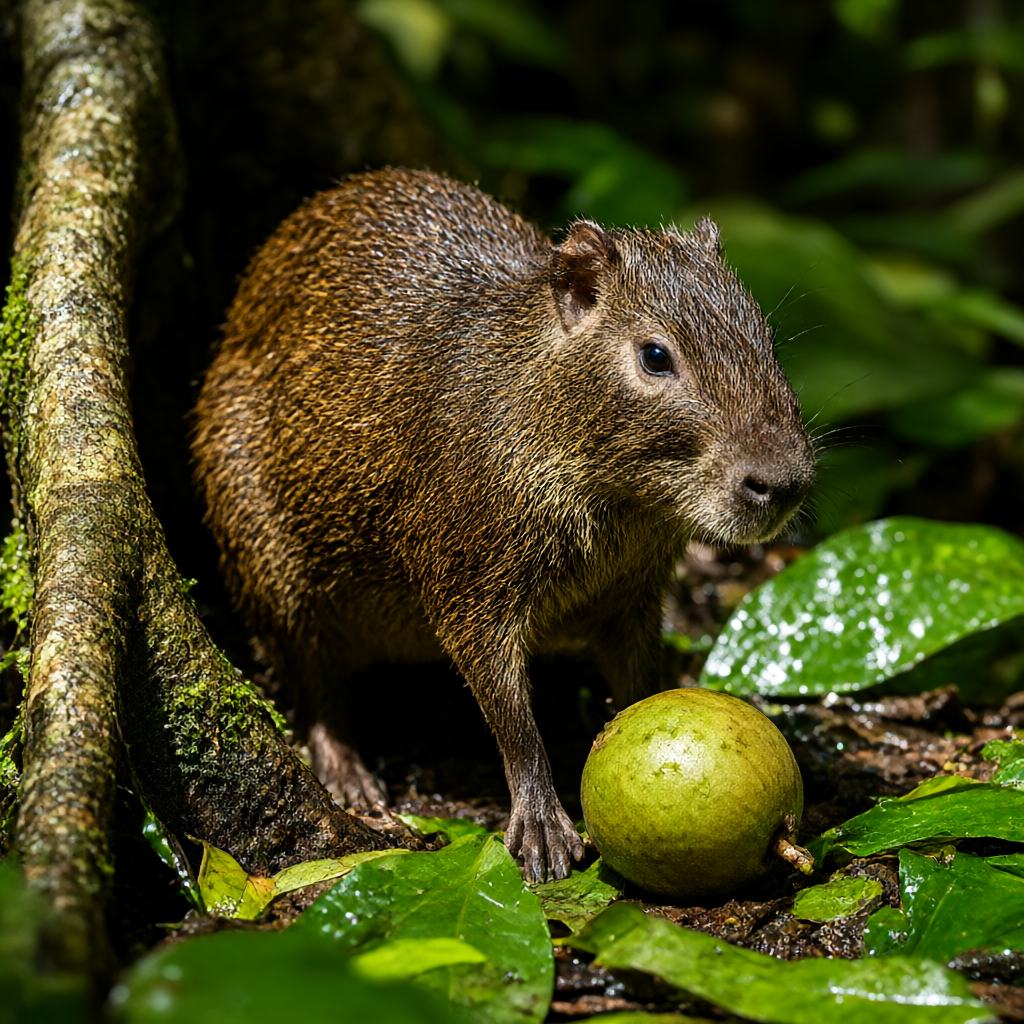
Because the animal feeds on the ground and in low branches, it takes fallen fruit as well as hanging fruit. Its slow pace suits a diet of plants, since there is no chase involved. One feeding site may hold several discarded fruits, and the animal returns to the same tree over many nights.
Seeds pass through the gut intact, and the animal spreads them across the slope. Nothing goes to waste.
Long pregnancy, few young
The breeding cycle
A female bears one or two young after a long pregnancy. Births come at any time of year, and no clear season has been found. Newborns arrive covered and with eyes open, which few rodents manage. Because the young stay with the mother for months, the interval between litters runs long.
Males take no part in rearing. That is unusual. Most of what is known comes from animals held in captivity, and the wild record stays thin.
Forest loss
Conservation
The Red List treats the species as Vulnerable. Forest clearance drives the decline. Slopes lose their cover fast.
Cattle pasture and coca fields replace the slopes, and the animal cannot cross open ground to reach new forest. Because populations sit in small pockets, a single cleared ridge can isolate a group for good. Hunting happens, though the meat is not much prized.
Protection is partial. Protected areas cover part of the range, and camera surveys keep finding the species in places where nobody expected it.
Side by side
How It Compares
| Trait | Pacarana | Capybara |
|---|---|---|
| Family | Dinomyidae | Caviidae |
| Weight | 10-15 kg | 35-66 kg |
| Coat | rows of white spots | plain brown |
| Tail | about 20 cm | absent |
| Habit | slow climber | grazer of wet grass |
| Rating | Vulnerable | Least Concern |
Common misreadings
What People Get Wrong
- Not a small animal by rodent standards. Weight runs to 15 kg. That body sits at the top of a family which once carried animals the size of a car, and this survivor is the only member left.
- Not a fast runner at any pace. Speed was never the plan. Leaves and fruit do not run away, so the animal spends its energy on grip and balance rather than on a burst of speed.
- Not a social rodent in any season. Most records show one animal. Camera traps rarely catch pairs together, and the species seems to move alone through the wet forest almost all year round.
Going further
Sources and Further Reading
Quick hits
Five things to remember
- Its name comes from Tupi and means false paca, since the animal resembles a smaller relative.
- The family once held rodents far heavier than a man.
- A pacarana grips a branch with its forefeet and feeds while hanging almost upside down.
- Its spotted coat breaks the outline so well that a still animal looks like a patch of light.
- When alarmed, the animal drums a hind foot against the ground before it runs.
[…] They practice coprophagy, re-ingesting certain feces to extract more nutrients. Polar Bear and Arctic Wolf hunting grounds often overlap with hare feeding areas. They must remain vigilant while […]