 By st20113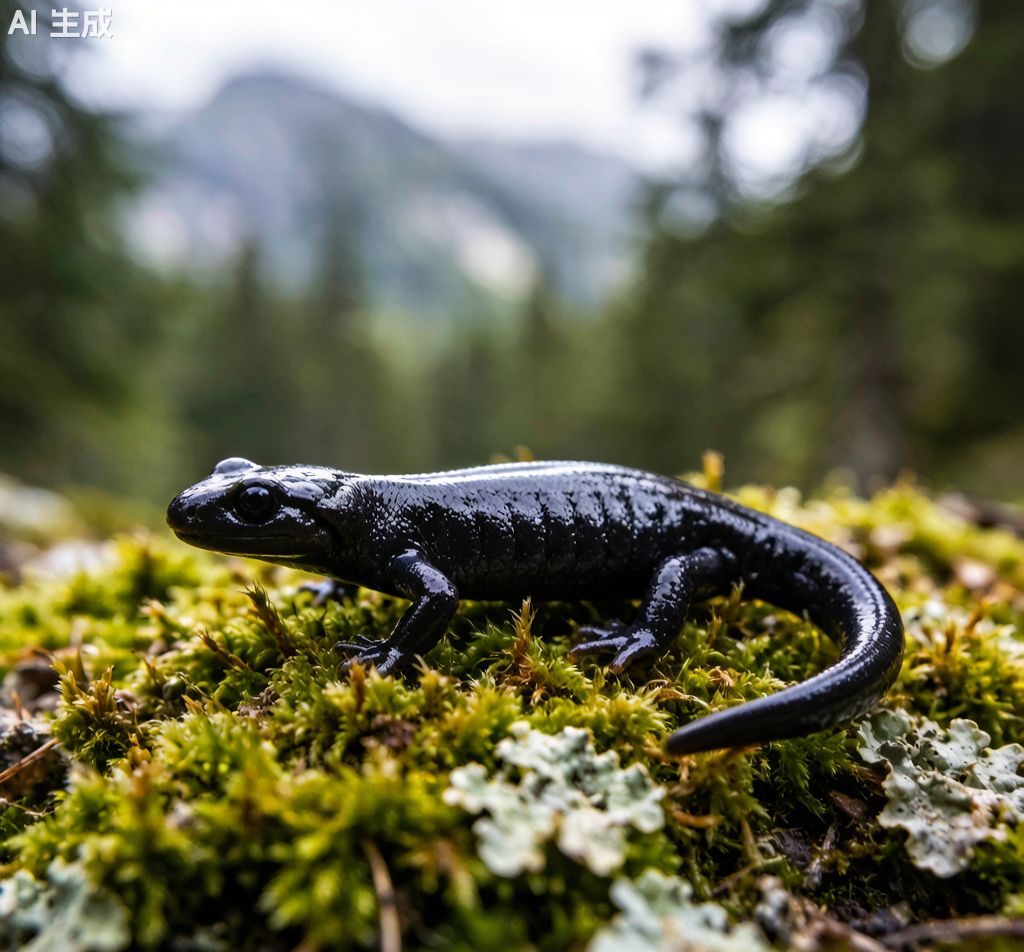
Introduction
The Alpine Salamander (Salamandra atra) is a distinctive black amphibian endemic to the mountainous regions of central and southern Europe. Unlike many salamanders, this species gives birth to live young rather than laying eggs, an adaptation to cold, high-altitude environments. The alpine salamander inhabits moist forests and alpine meadows where it emerges during damp conditions. Its striking uniform black coloration makes it one of the most recognizable mountain amphibians.
The alpine salamander’s restriction to mountain regions makes it especially vulnerable to climate change as suitable habitat shifts upward. Studies of its populations provide early signals of alpine ecosystem responses to warming. The species’ slow life history means populations recover poorly from disturbance.
Taxonomy
Salamandra atra belongs to the family Salamandridae. The species is closely related to the fire salamander (Salamandra salamandra) but is adapted to colder, higher elevations. Several subspecies are recognized across its Alpine and Balkan ranges, some with yellow markings. Genetic studies have revealed isolation patterns corresponding to mountain ranges.
Physical Characteristics
Alpine salamanders are robust, with a glossy black body reaching 9 to 15 centimeters in length. Some subspecies display yellow spots or stripes, but the nominate form is entirely black. The skin is smooth and moist, and the head is broad with small eyes. The species has four limbs and a long tail. The common toad shares moist forest habitats but is very different in appearance.
Habitat
This species inhabits deciduous and coniferous mountain forests, alpine meadows, and rocky areas from 700 to 2,500 meters elevation. It requires cool, humid microclimates with abundant cover such as logs, stones, and leaf litter. The alpine salamander is active mainly at night or during rainy days. The grass snake may occur in the same moist habitats at lower elevations.
Diet
Alpine salamanders feed on small invertebrates including insects, spiders, worms, and slugs. Foraging occurs on the forest floor during damp conditions. The species uses a projectile tongue to capture prey. In high mountains, the short active season limits feeding opportunities, so individuals may go months without food. The salamander’s slow metabolism helps it survive long periods of inactivity.
The species’ slow development means individuals invest heavily in each reproductive event, making population recovery after decline particularly slow. This life history underscores the need for strict protection. Long-term monitoring is essential to detect subtle population trends.
Reproduction
Unique among European amphibians, the alpine salamander is ovoviviparous, giving birth to fully developed live young in mountain streams or wet moss. Females typically produce two larvae after a gestation of two to four years, one of the longest of any amphibian. The larvae are deposited in water where they quickly metamorphose. The red fox occasionally preys on adult salamanders.
Protecting montane forests from excessive logging and road construction helps maintain the cool, moist microclimates the species requires. Climate adaptation strategies include preserving elevation gradients that allow uphill movement. Long-term studies of this salamander provide insight into alpine species’ resilience.
Conservation
The alpine salamander is not globally threatened but is sensitive to habitat disturbance and climate change. Its specialized high-altitude niche makes it vulnerable to warming temperatures that shift suitable habitat upward. Conservation focuses on protecting mountain forests and minimizing road impacts. The species is protected under national and European legislation.
Fun Facts
The alpine salamander’s live birth after multi-year gestation is among the most extreme reproductive strategies in amphibians. The species can secrete toxic alkaloids from its skin to deter predators. Alpine salamanders have been recorded at elevations above 3,000 meters, among the highest of any amphibian. Their black coloration aids heat absorption in cold mountain environments. The species can survive being frozen in ice for short periods by producing cryoprotectants.
Alpine salamanders are unusually tolerant of cold and have been found active under snow in mild spells. Their black coloration maximizes heat absorption during brief activity windows. The species’ long gestation and live birth make it one of the most biologically fascinating amphibians of the European mountains.