 By st20113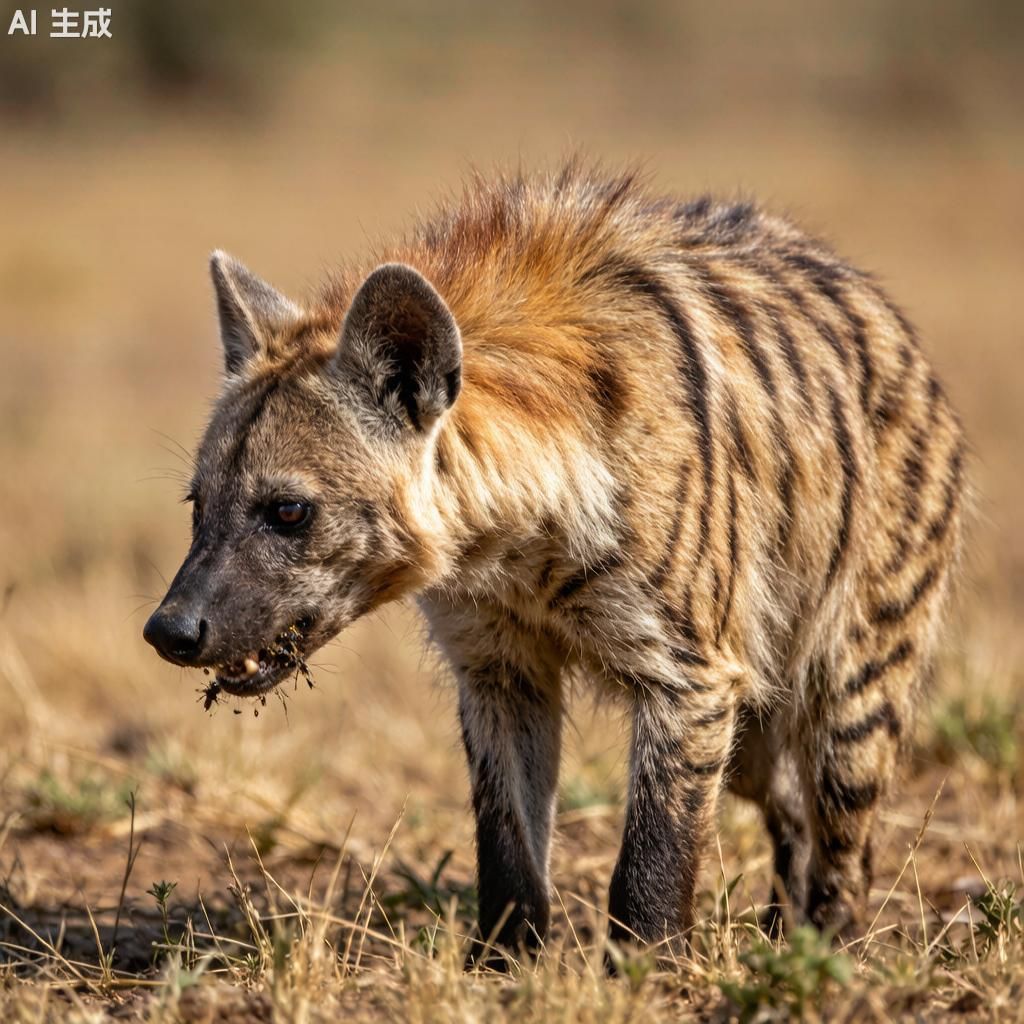
Introduction
The Aardwolf (Proteles cristata) is a fascinating and often overlooked member of the hyena family, distinguished by its highly specialized diet of termites. Unlike its larger and more famous relatives, this small carnivore feeds almost exclusively on insects, making it one of the most specialized mammalian insectivores. The name “aardwolf” derives from Afrikaans and Dutch, meaning “earth wolf,” a reference to its burrowing habits and canid-like appearance. Despite being a hyena, the Aardwolf poses no threat to livestock and plays a beneficial role in controlling termite populations across the savannas and shrublands of eastern and southern Africa.
Taxonomy
The Aardwolf is the sole extant member of the genus Proteles within the family Hyaenidae. It represents one of four surviving hyena species, though it differs dramatically from its relatives in both morphology and behavior. The family Hyaenidae evolved from viverrid-like ancestors during the Miocene epoch. The Aardwolf diverged early from the lineage that produced the African Wild Dog and other large carnivores. Two subspecies are recognized: P. c. cristata in southern Africa and P. c. septentrionalis in eastern Africa. This unique species demonstrates the remarkable evolutionary diversity within the hyena family.
Physical Characteristics
The Aardwolf is the smallest member of the hyena family, measuring 55-80 cm in body length with a tail of 20-30 cm and weighing 8-14 kg. Its coat consists of long, coarse guard hairs over a soft undercoat, colored buff to yellowish-brown with distinctive black vertical stripes along the body. A prominent mane of erectile hairs runs along the back, which can be raised when the animal feels threatened. The muzzle is narrower and more pointed than in other hyenas, and the teeth are significantly reduced and peg-like, reflecting the specialized insect diet. Large, pointed ears provide excellent hearing for detecting predators and locating termite activity.
Habitat
Aardwolves inhabit open, dry savannas, grasslands, and shrublands where termite populations are abundant. They avoid forested areas, deserts, and rocky terrain. The species occurs across two distinct regions: eastern Africa (Ethiopia, Somalia, Kenya, Tanzania, Uganda) and southern Africa (Namibia, Botswana, Zimbabwe, South Africa). Population densities vary with termite availability, ranging from one individual per square kilometer in suboptimal habitat to several per square kilometer in prime areas. The Aardwolf often shares habitat with the Aardvark, another specialized insectivore, though the two species exploit different food resources.
Diet
The Aardwolf is one of the most specialized mammalian insectivores on Earth, with termites comprising over 90% of its diet. Unlike the Giant Anteater of South America, the Aardwolf does not break open termite mounds. Instead, it laps up foraging termites using a broad, sticky tongue that can extend up to 30 cm. A single Aardwolf can consume 200,000-300,000 termites in one night. The species shows remarkable tolerance to the defensive chemicals produced by soldier termites. During the rainy season when termites are less active, Aardwolves may supplement their diet with other insects, small mammals, and occasionally carrion.
Reproduction
Aardwolves are monogamous and form long-term pair bonds, though extra-pair copulations do occur. The breeding season varies regionally, with births typically coinciding with peak termite activity. After a gestation period of 90-110 days, females give birth to 1-4 cubs in an underground den, often an abandoned burrow of another species such as an aardvark. Cubs are born with eyes closed and remain in the den for 6-8 weeks. Both parents participate in rearing the young, with males guarding the den while females forage. Cubs begin accompanying adults on foraging trips at approximately three months and reach sexual maturity at 1-2 years.
Conservation
The Aardwolf is classified as Least Concern by the IUCN due to its relatively wide distribution and stable population. However, the species faces localized threats from habitat loss due to agricultural expansion, pesticide use that reduces termite populations, and persecution by farmers who mistakenly believe Aardwolves threaten livestock. Road mortality also poses a significant threat in some areas. The species occurs in numerous protected areas throughout its range, including major national parks and reserves in Kenya, Tanzania, Namibia, and South Africa. Unlike the African Wild Dog, the Aardwolf rarely comes into conflict with humans.
Fun Facts
Despite being a hyena, the Aardwolf has such reduced teeth that it cannot effectively eat meat. Its tongue is covered in sticky saliva that traps termites instantly. The species can detect termite activity from several meters away using its acute hearing and sense of smell. Aardwolves are primarily nocturnal but may be active during daylight in areas with minimal human disturbance. They communicate through scent marking using secretions from their anal gland, which has a distinctly different odor from other hyenas. The mane can be raised to make the animal appear 50% larger when threatened, an effective deterrent against many predators.