 By st20113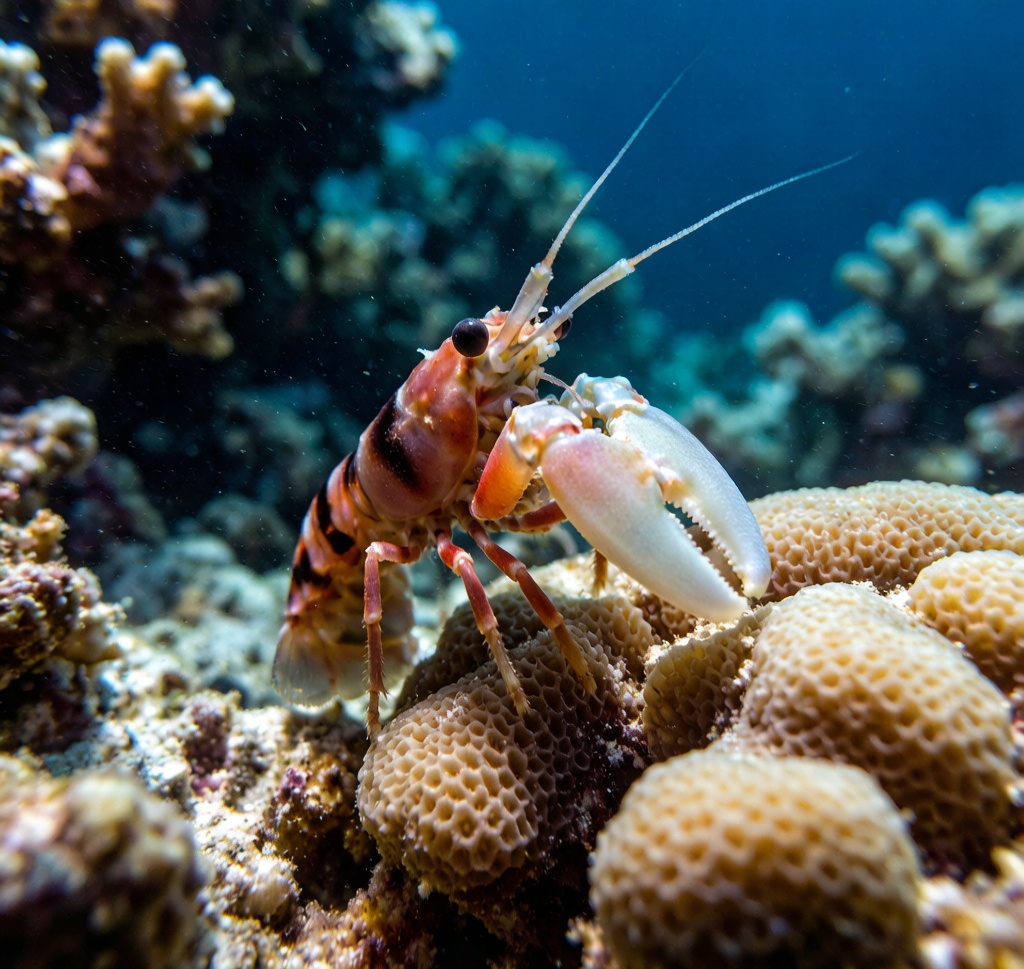
The pistol shrimp, comprising the family Alpheidae of approximately 1,000 species, is one of the most remarkable and aggressive small invertebrates in the marine world. Found in tropical and temperate oceans worldwide, from shallow coral reefs to depths of over 1,000 meters, the pistol shrimp is instantly recognizable by its most extraordinary feature: one greatly enlarged claw — the snapper or trigger claw — that can be cocked like a pistol and fired with explosive force. When the shrimp snaps its claw shut, the resulting cavitation bubble collapses with such violence that it generates a sound reaching 210 decibels and a momentary flash of light in a phenomenon known as sonoluminescence. This incredible mechanism produces a pressure wave powerful enough to stun or kill small fish and other invertebrates, making the pistol shrimp one of the most formidable predators of the reef for its size — typically no more than 3 to 5 centimeters long.
## Physical Characteristics
The pistol shrimp’s anatomy is uniquely specialized. The enlarged snapper claw — which can be on either the left or right side — is dramatically oversized compared to the other claw, which remains relatively small and claw-like for manipulation and feeding. The snapper claw is divided into two parts: a fixed lower portion and a movable upper portion that cocks backward and snaps shut when released, creating the characteristic loud snap. The snap produces a collapsing cavitation bubble that generates temperatures approaching those on the surface of the sun for a fraction of a microsecond. The shrimp’s body is typically translucent with reddish, orange, or greenish coloration and dark bands, though colors vary widely by species. Compound eyes are typically large and stalked, providing wide-angle vision to detect approaching threats or prey.
## Habitat and Distribution
Alpheidae species are found in virtually every marine habitat, from shallow intertidal zones to abyssal depths. The majority of species inhabit tropical and subtropical waters, particularly coral reef environments where they occupy burrows, empty gastropod shells, crevices in coral, or tubes of other invertebrates. Several species are symbionts with gobies, sharing a burrow in a mutualistic relationship: the shrimp provides the burrow and maintenance while the goby provides vigilance against predators through its superior eyesight. Temperate species are found in rocky intertidal areas, kelp forests, and muddy substrates.
## Behavior and Hunting
The pistol shrimp’s snapping mechanism serves multiple functions: stunning prey, defending territory, and communicating with conspecifics. When hunting, the shrimp typically waits in ambush near the entrance of its burrow, antennae extended to detect passing prey. Upon detecting a small fish or shrimp within range, it fires its snapper claw with remarkable speed — the snap closure occurs in less than a millisecond. The resulting pressure wave is sufficient to kill or permanently stun prey items up to several centimeters away, allowing the shrimp to approach and consume its victim at leisure. In territorial disputes, pistol shrimp use their snapper claws in ritualized combat, with the resulting snaps serving as a territorial warning.
## Symbiosis
One of the most fascinating aspects of pistol shrimp biology is their frequent involvement in symbiotic relationships. The partnership with gobies is particularly well-documented: species such as Alpheus armillatus and Amblyeleotris species live together in shared burrows, with the goby standing guard at the entrance while the shrimp excavates and maintains the tunnel. The shrimp maintains physical contact with the goby using its antennae, fleeing underground at the first sign of danger communicated by the goby’s body language. This partnership allows the shrimp to engage in the energetically costly burrow maintenance while the goby compensates through its vigilance contribution.
## Ecological Significance
Pistol shrimp are important components of benthic marine communities, both as predators that control small invertebrate and fish populations and as prey for larger reef fish and octopus. Their burrowing activity contributes to sediment mixing and nutrient cycling in marine substrates, and their snapping sounds — individually quiet but collectively creating a significant soundscape — contribute to the acoustic environment of coral reefs and other marine habitats.