 By Iris
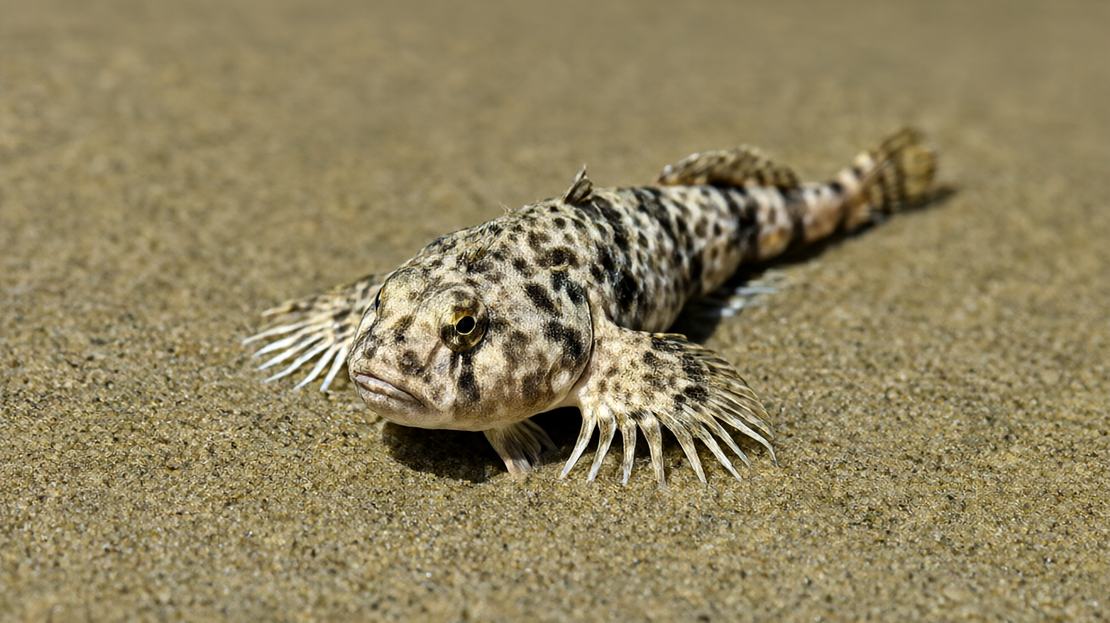
Brachionichthys hirsutus | Spotted Handfish
Species Profile · Brachionichthyidae
Spotted Handfish
A small fish rests on the seabed and does not swim away.
Critically Endangered
Length
Fins
Swim bladder
Eggs
Range
Rating
The Spotted Handfish
A fish that walks
A small fish rests on the seabed and does not swim away. Instead it walks, using fins that look like hands. The spotted handfish lives in one estuary in Tasmania, and nowhere else.
It has no swim bladder, so it sinks the moment it stops moving. Because it cannot travel far, a single pollution event can remove a whole group. Fewer than three thousand adults remain.
Family tree
Brachionichthyidae, a family that walks
Its proper name is Brachionichthys hirsutus, one of several handfish. Brachionichthyidae is the family, and every member of it walks rather than swims. An Anglerfish also lives on the bottom and waits for prey, though it lies still instead of walking.
Both rely on camouflage and a sudden strike. A Short-snouted Seahorse holds position with a tail rather than fins, which solves the same problem differently.
Fins that walk
How to tell one
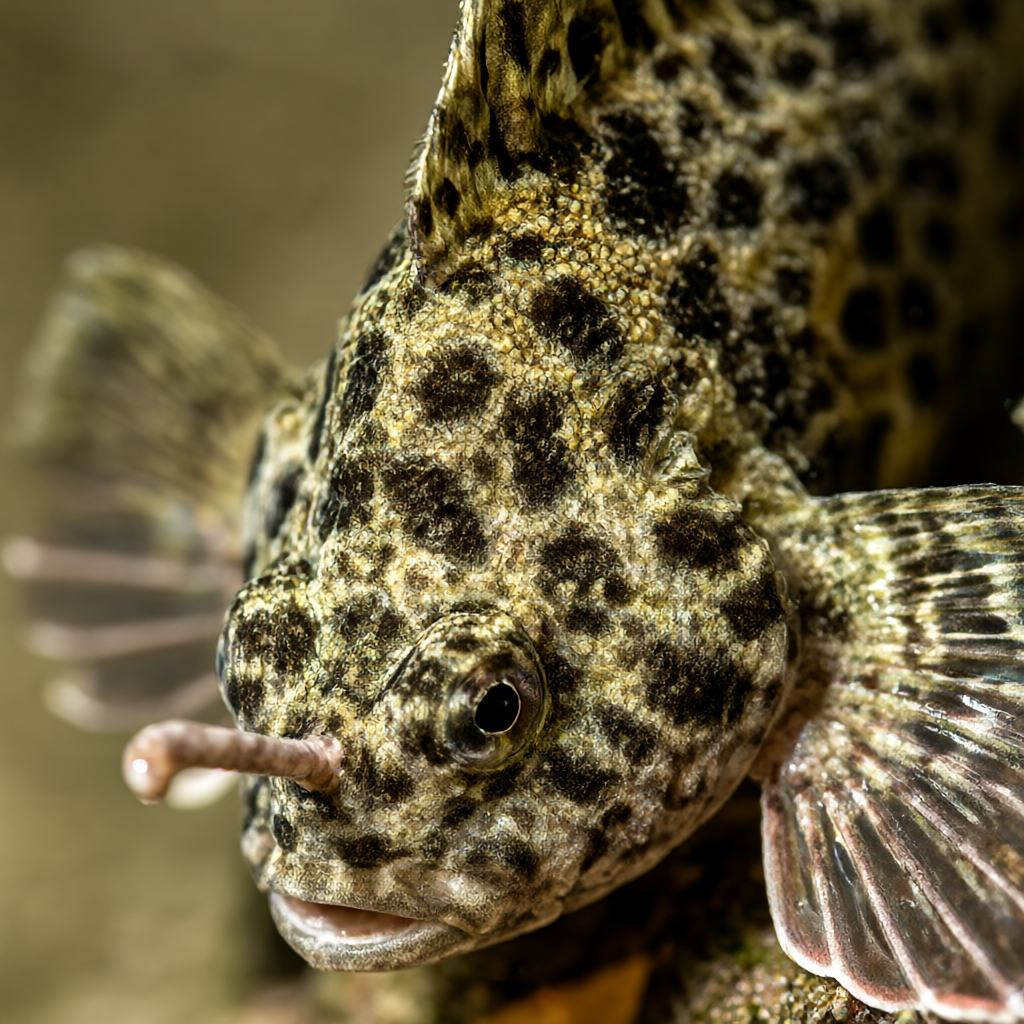
The fish runs 10 to 15 cm from snout to tail. Its pectoral fins look like small hands, with webbed skin between the rays. The body carries a pattern of spots and small wart-like bumps.
Because the fish has no swim bladder, it stays heavier than water and rests on the bottom. Its skin carries small spinules and a pattern of spots, and both help it disappear against shell grit. The mouth sits at the front, and the gills open behind the fins.
1
2
3
One estuary
Where it lives
The Derwent estuary in Tasmania holds the last wild population. Sandy and silty bottom with scattered shells and weed suits it. Because it needs stable sediment, dredging and runoff damage the ground it lives on, and recovery takes years.
It also uses rocky patches and old shell beds. It rarely moves. Water temperature matters, since the species stays in a narrow band.
Small shrimp and worms
What it eats
Small prey on the seabed supply the food. Shrimp, worms and tiny fish come first. Because the fish cannot chase anything, it waits until prey moves within a short distance.
Then it opens the mouth and draws the prey in with a sudden suck. Its hunting happens mostly at dusk and dawn. Solitary fish feed alone, and two rarely share a patch.
Eggs on a stalk
The breeding cycle
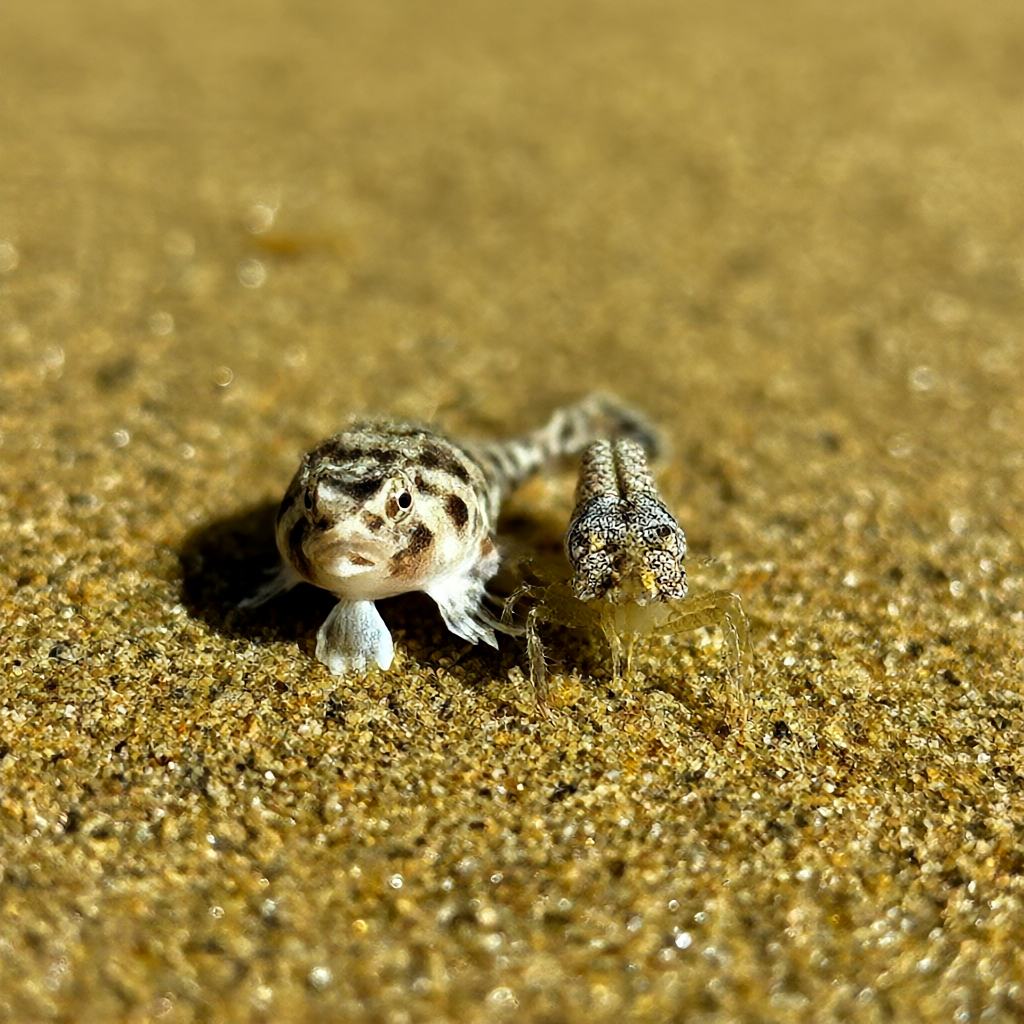
A female lays a cluster of eggs on a stalk or a weed frond. She wraps the mass around the base and stays close to it. Because the eggs sit exposed on a stalk, the mother guards them for weeks against anything that comes near.
Each egg holds a single embryo, and no larval stage drifts away. Hatchlings look like small adults, and they settle near the nest. Nothing drifts away.
That habit keeps the population in one place, which helps and hurts at once. Few survive.
A seastar and silt
Conservation
Red List status is Critically Endangered. The northern Pacific seastar arrived in the estuary and eats handfish eggs. Because the eggs sit uncovered, the seastar takes whole clutches. Silt from upstream land clearing smothers the bottom.
Silt settles fast. The species was down to a few hundred adults at one point. Captive breeding has produced young fish, and some have been released into sites where the species had vanished.
Side by side
How It Compares
| Trait | Spotted Handfish | Anglerfish |
|---|---|---|
| Family | Brachionichthyidae | Lophiidae |
| Movement | walks on fins | waits, buried |
| Swim bladder | none | none |
| Eggs | on a stalk, guarded | floating raft |
| Range | one estuary | wide, Atlantic |
| Rating | Critically Endangered | Least Concern |
Common misreadings
What People Get Wrong
- Not a frogfish with a new name. The family differs. Brachionichthyidae holds species that walk on modified fins, and no frogfish carries the same jointed rays.
- Not a swimmer at all. Fins carry the weight. Without a swim bladder the fish sinks when it stops, so it steps across the seabed instead of hovering above it.
- Not a species that spreads. Young settle near the nest. Hatchlings look like small adults and stay close to the egg stalk, so a single damaged site can remove a whole local group.
Going further
Sources and Further Reading
Quick hits
Five things to remember
- Its fins have jointed rays that work like fingers, and it walks in short steps.
- Without a swim bladder, the fish sinks if it stops moving.
- Females wrap an egg mass around a stalk and guard it for weeks.
- The species disappeared from several sites before anyone noticed the decline.
- A handfish moves so slowly that divers can follow one for an hour.