 By st20113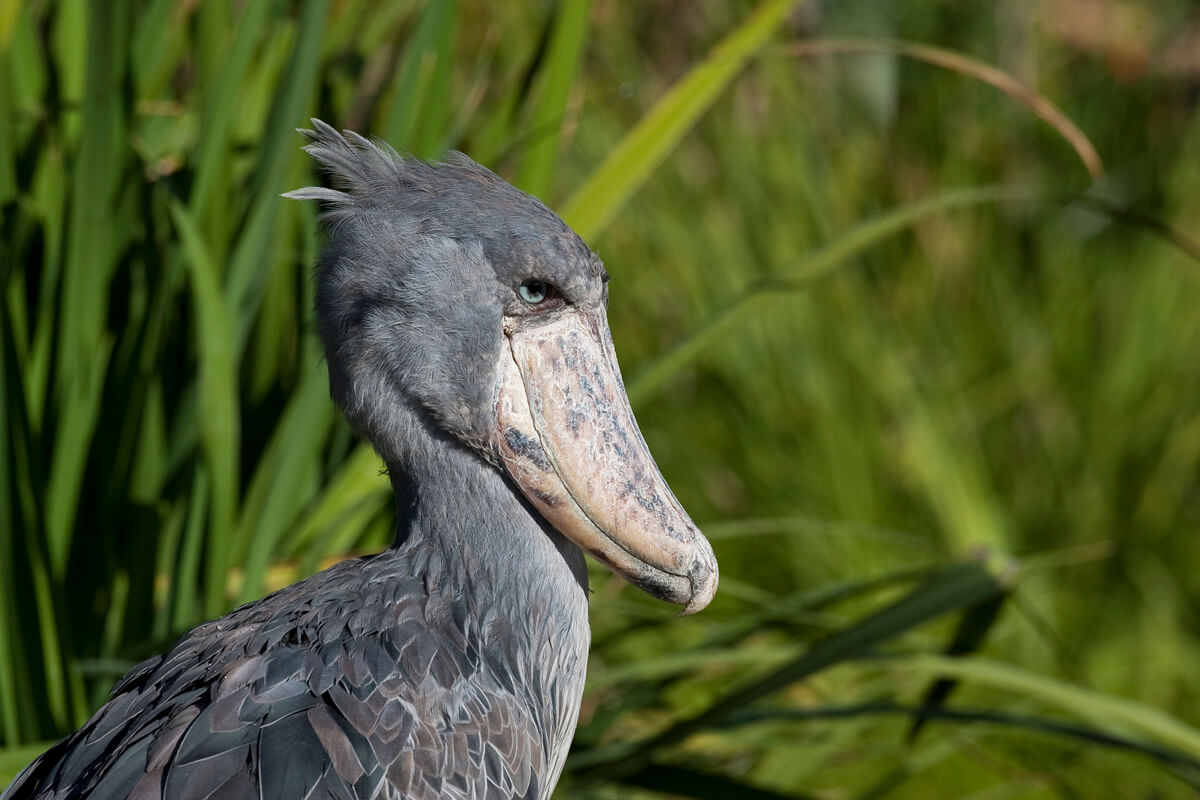
The Shoebill (Balaeniceps rex) is one of the most prehistoric-looking birds in the world – a large, grey-blue wading bird of the freshwater swamps of tropical central Africa whose extraordinary shoe-shaped bill, towering height (up to 1.5 meters), and singular hunting behavior have made it one of the most sought-after birds by wildlife tourists and birders worldwide.
Overview
The Shoebill (Balaeniceps rex) is one of the most prehistoric-looking birds in the world – a large, grey-blue wading bird of the freshwater swamps of tropical central Africa whose extraordinary shoe-shaped bill, towering height (up to 1.5 meters), and singular hunting behavior have made it one of the most sought-after birds by wildlife tourists and birders worldwide. The shoebill has no close living relatives and is placed in its own family (Balaenicipitidae) and order, representing a lineage that diverged from other storks and herons in the deep past and has evolved independently for tens of millions of years. The species is sometimes called the “whalehead” or “boat-billed stork” and is widely regarded as one of the most distinctive and unusual birds in Africa.
The shoebill’s most famous feature is its extraordinary bill – a massive, boot or shoe-shaped structure of yellow, grey, and pale green that can reach 24 centimeters in length and 10 centimeters in width. The bill is heavy and has sharp edges, and is equipped with a pair of distinct, hook-like structures at the tip that are used to grip slippery prey. The bill is so distinctive and so unlike that of any other living bird that the shoebill was initially classified with the storks, then with the herons, then with the pelicans, before genetic evidence eventually placed it in its own separate family. The species’ eyes are a striking pale yellow to grey, set in a disproportionately small head that gives the bird an almost alien expression of perpetual alertness.
Habitat and Hunting
The Shoebill inhabits the freshwater marshes, swamps, and slow-moving rivers of tropical central Africa, from southern Sudan and southwestern Ethiopia through Uganda, the Democratic Republic of Congo, Rwanda, Burundi, Tanzania, Zambia, and Angola. The species is most strongly associated with papyrus-dominated papyrus swamps and the seasonally flooded edges of lakes, where it hunts in shallow, vegetated water among floating vegetation and water hyacinth. The shoebill requires undisturbed, remote wetland habitats and is highly sensitive to human disturbance – it will abandon a hunting or nesting site if repeatedly disturbed by human activity.
The shoebill’s hunting strategy is one of the most dramatic and deliberate in the bird world: the species typically hunts from a stationary position, standing motionless in the water for long periods, with its bill held just below the surface of the water. When prey – most commonly the large, lungfish that inhabit African freshwater swamps – comes within range, the shoebill launches a rapid, explosive attack: it throws its head forward, snaps the bill shut on the prey with enough force to decapitate or stun it, and then performs a characteristic “habitual swallowing” behavior in which it manipulates the prey within the bill and then tosses it back into the air before catching it and swallowing it headfirst. The entire process – from the moment of attack to the moment of swallowing – can take less than a second.
Behavior and Nesting
The Shoebill is largely solitary outside the breeding season, with individuals maintaining large territories that may cover several square kilometers of swamp habitat. Within these territories, shoebills maintain a network of regular hunting sites and flight paths, and will defend the core area of the territory from other shoebills and large birds. The species communicates using a variety of sounds – including bill-clattering (a loud clattering noise produced by rapidly opening and closing the bill), a cow-like moo, and a high-pitched, wheezing hiss – and uses these vocalizations to advertise territorial boundaries and communicate with mates and chicks.
Shoebills breed during the dry season, when falling water levels concentrate prey in the remaining pools and swamps and make hunting easier. The nest is a large platform of reeds, grasses, and other vegetation built in shallow water or on floating vegetation, and is constructed and maintained by both parents over a period of several weeks. The female lays 1 to 3 eggs (most commonly 2), and both parents participate in incubation (approximately 30 days) and in feeding and caring for the chicks. Unlike many bird species, shoebill siblings do not cooperate and frequently attack and kill each other – siblicide is common in this species, and it is unusual for more than one chick to survive to fledging from a nest with multiple eggs.
Conservation
The Shoebill is listed as Vulnerable on the IUCN Red List, reflecting population declines driven primarily by habitat loss, degradation, and disturbance. The freshwater swamps that the shoebill requires are among the most threatened habitats in Africa: they are drained for agriculture, degraded by the extraction of papyrus for thatching and other purposes, polluted by agricultural runoff, and increasingly affected by the construction of dams and other water infrastructure projects. The species is also highly sensitive to human disturbance – even low levels of human activity near nesting sites can cause breeding failures.
The shoebill is also hunted in some parts of its range, particularly in the DRC and Sudan, where it is killed for food and for use in traditional medicine. The species is captured for the illegal wildlife trade – both as a pet and for sale to private collectors – and the destruction of swamp habitat by charcoal production and small-scale agriculture is a growing threat in several countries. Eco-tourism centered on the shoebill – particularly in Uganda, where several lodges specialize in shoebill watching – has become an important source of revenue that provides an economic incentive for protecting swamp habitats, and well-managed tourism operations have become a significant force for shoebill conservation.