 By st20113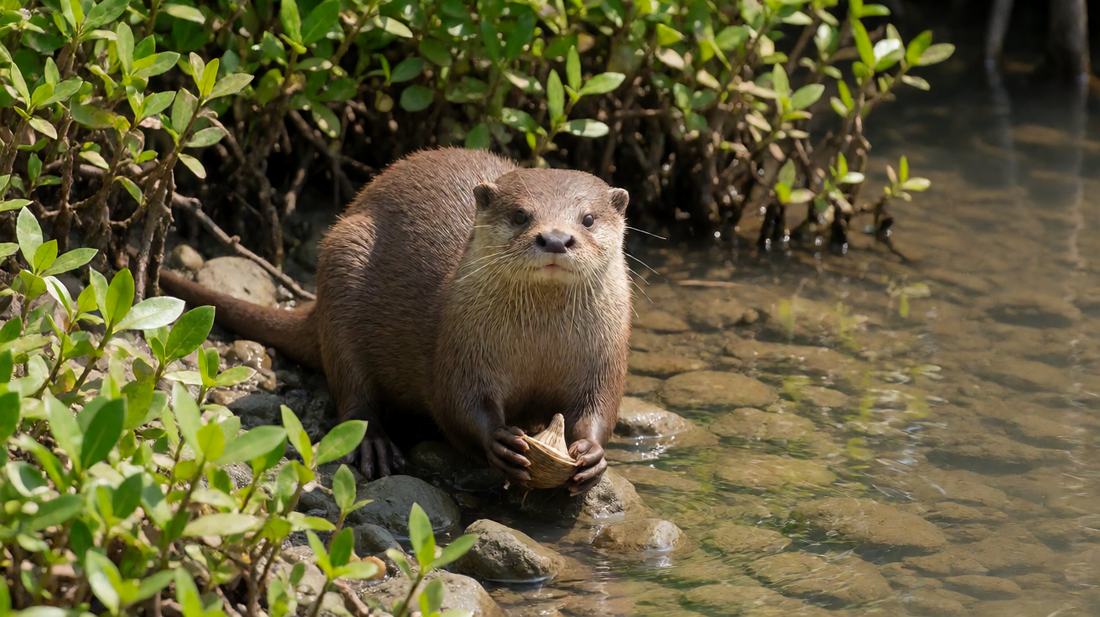
Aonyx cinereus | Asian Small-clawed Otter
Species Profile · Mustelidae
Asian Small-clawed Otter
The world’s smallest otter, working shallow Asian streams with bare sensitive paws and living in family groups that hunt crabs together.
Vulnerable
Head and body
Tail
Weight
Litters
Gestation
Rating
The Asian Small-clawed Otter
An otter that hunts with its hands
A small otter turns over stones in a shallow Asian stream. Its paws are bare and quick. Fingers grip crabs where a mouth could not.
Webbing between the toes is thin. Family groups travel together, of course. Twelve animals may share one stretch.
Crabs are the staple food. Calls keep the group in touch. Because the otter hunts with its hands rather than its teeth, it can work muddy banks that most fish-eating hunters leave alone.
Family tree
Mustelidae, the weasel family
The species belongs to the family Mustelidae. Johann Illiger described it in 1815. Three living species now sit in the genus Aonyx. Two live in Africa and one in Asia.
The platypus is a mammal of Australia, not a mustelid at all. Both animals hunt in water with sensitive forelimbs. One uses a rubbery bill, however, while the other uses bare fingers to feel for crabs in the mud.
Small paws, tiny claws
How to tell one
Head and body measure 36 to 47 cm. The tail adds 22 to 30 cm. Weight runs 2.4 to 5.4 kg.
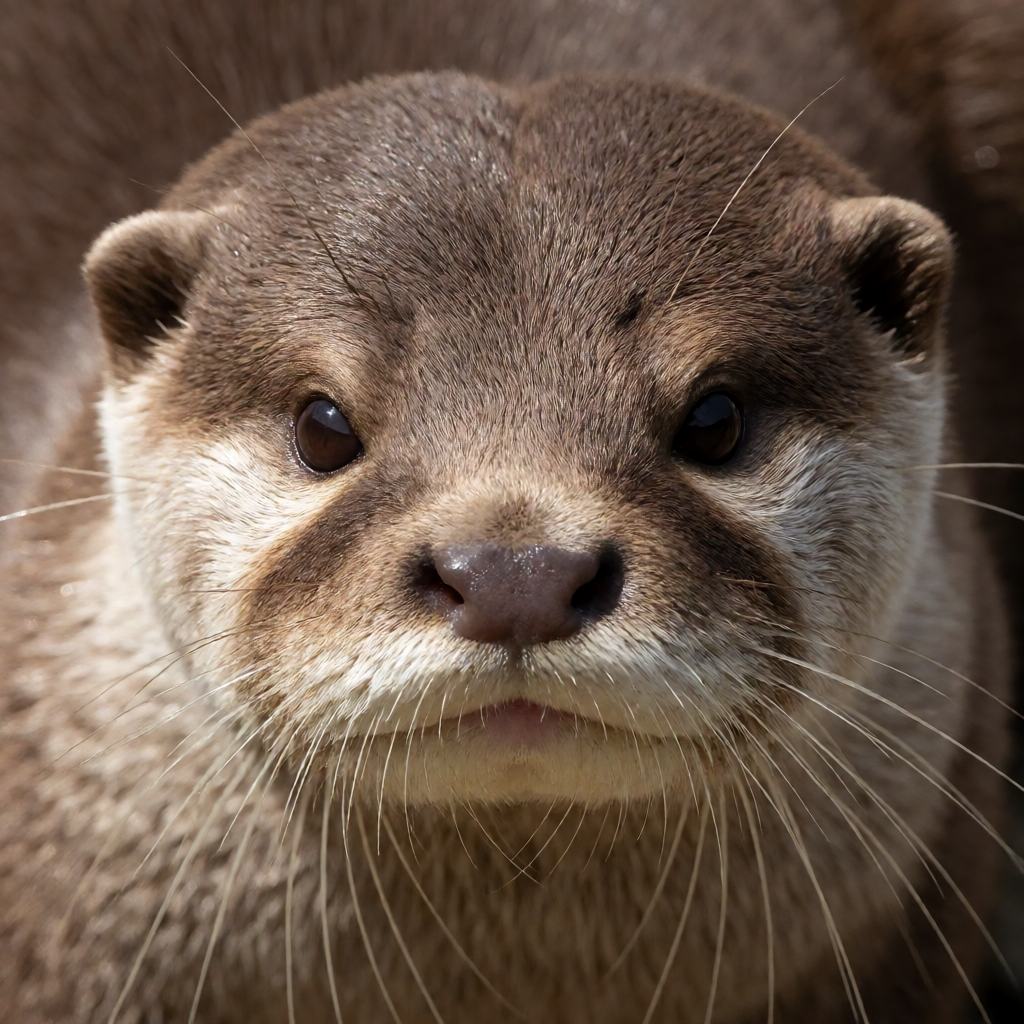
Fur is dark brown on top. The throat and cheeks are paler. Paws are small, with tiny claws.
Webbing stops well short of the toe tips. In addition, whiskers are long and stiff. Nothing about the feet is built for speed, and the whole paw works instead as a slow, very sensitive pair of hands.
1
2
3
Mangrove creeks and slow streams
Where it lives
Mangrove creeks are prime habitat. Slow rivers and streams also suit it. Wetlands, swamps and rice paddies all work, as well.
Its range covers South and South-east Asia. Southern China and parts of Indonesia hold otters. Banks with rocks and tree roots are best.
Clean, slow water with cover matters most. Because the otter needs both shallow water and soft banks, a straightened canal or a concrete drain offers it nothing at all.
Crabs above all else
What it eats
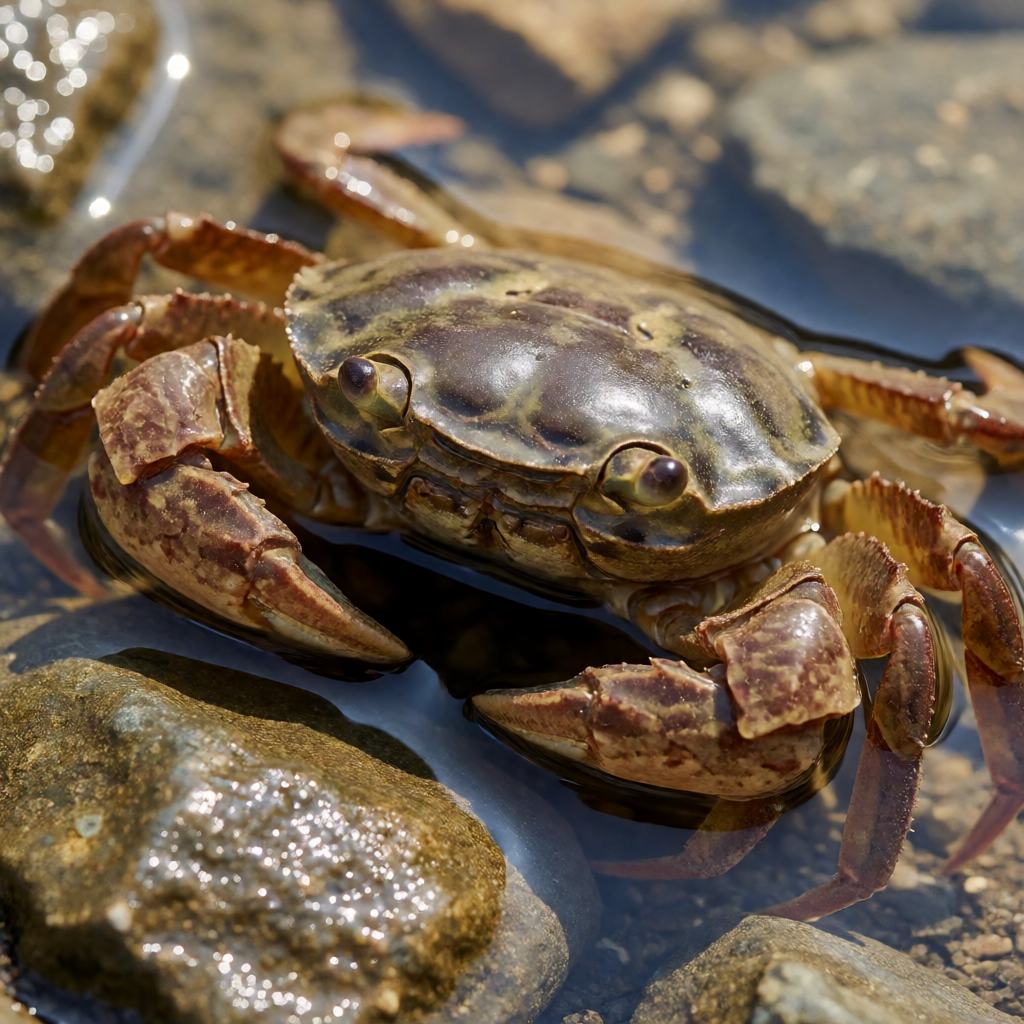
Crabs are the year-round staple. Mudflat species dominate the list. Snails and clams are crushed.
Fish and frogs are taken too. Even so, insects and worms fill gaps. Large prey is dragged onto the bank.
Paws turn over stones and roots. Because the otter can feel prey under mud, it finds food that a fish-eating bird or a bigger otter would miss entirely.
The whole group helps raise pups
The breeding cycle
Pairs stay together for life. Groups are built around one pair. Older young help raise the new litter.
Litters hold 1 to 7 pups. Two to 5 is the usual number, though. Gestation runs 60 to 86 days.
Pups are born blind and small. Eyes open at about 28 days, in fact. Because the whole group helps feed and guard the pups, a litter raised together has a far better chance than one raised by a pair alone.
Vulnerable
Conservation
The IUCN lists the species as Vulnerable. Numbers are falling across the range. Mangrove loss is the main driver.
Shrimp farms have replaced huge areas. Pollution cuts the crab supply. Trapping for the pet trade is rising, however.
Unlike the capybara, which does well beside people and farms, this otter needs clean water and quiet banks. That narrow need makes every drained marsh a real loss, since the group cannot simply move to the next valley over.
Side by side
How It Compares
| Trait | Asian Small-clawed Otter | Eurasian Otter |
|---|---|---|
| Size | smallest otter, 2.4 to 5.4 kg | larger, 7 to 12 kg |
| Paws | small with tiny claws, partial webbing | webbed with strong claws |
| Diet | crabs and shellfish | mainly fish |
| Group | family groups up to 12 | mostly solitary |
| Range | South and South-east Asia | Europe, Asia and North Africa |
| IUCN status | Vulnerable | Near Threatened |
Common misreadings
What People Get Wrong
- All otters eat fish. This one lives mainly on crabs.
- The small claws are a defect. They help the paws feel for prey in mud.
- Otters live alone. This species raises pups in family groups.
Going further
Sources and Further Reading
- Wikipedia, Asian small-clawed otter
- IUCN Red List, Aonyx cinereus. The IUCN Red List of Threatened Species.
- Animal Diversity Web, University of Michigan. Aonyx cinereus.
- Wright, L., C. de Silva, B. Chan and I. Reza Lubis. 2020. Aonyx cinereus. The IUCN Red List of Threatened Species.
Quick hits
Five things to remember
- It is the smallest otter species in the world.
- Paws have tiny claws and only partial webbing.
- Groups can hold 12 or more animals.
- Older brothers and sisters help raise new pups.
- At least 12 different calls have been recorded.