 By st20113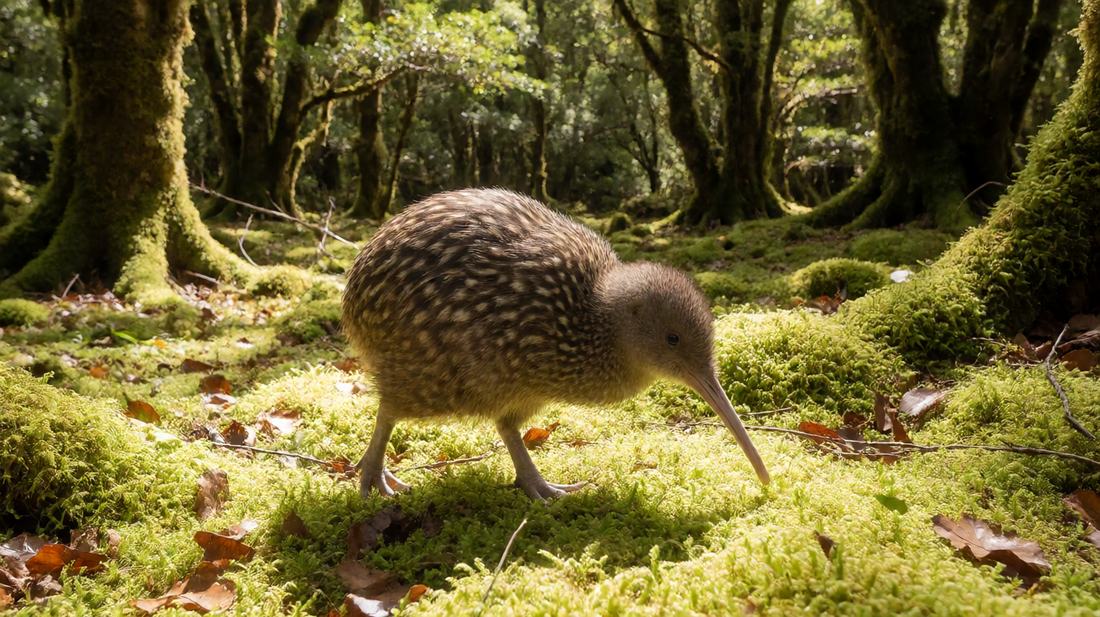
Apteryx haastii | Great Spotted Kiwi
Species Profile · Apterygidae
Great Spotted Kiwi
New Zealand’s largest kiwi, a flightless bird that sniffs out earthworms in mountain forest after dark.
Vulnerable (2022) 2022 assessment
Length
Weight
Egg
Hatch
Mature birds
Bill
The Great Spotted Kiwi
The mountain kiwi
This is the largest of the five kiwi species. A big female stands about 45 cm tall. She can weigh 3.3 kg.
Males, though, stay smaller, near 2.4 kg. Brown and grey feathers look more like coarse hair. No tail and almost no wing breaks that outline.
Because the bird cannot fly, it sleeps by day in a burrow. After dark it walks for miles along its own trails. Although the great spotted kiwi once covered much of the South Island, stoats and dogs have cut its range into three pockets, and each pocket now holds only a few thousand birds.
Family tree
Apterygidae, the kiwis
This bird belongs to the kiwi family, Apterygidae. The genus name means without wing. Julius von Haast described the species in 1871. He named it after himself, a common habit of the time.
All kiwi are ratites, a group of flightless birds. That group includes the Common Ostrich. Ratites share a flat breastbone with no keel. DNA work brought one surprise.
Kiwi, however, are closest to the extinct elephant bird of Madagascar. Because the moa lived on the same islands, early workers assumed the two were close kin, yet the genes say otherwise.
55 cm of brown feathers
How to tell one
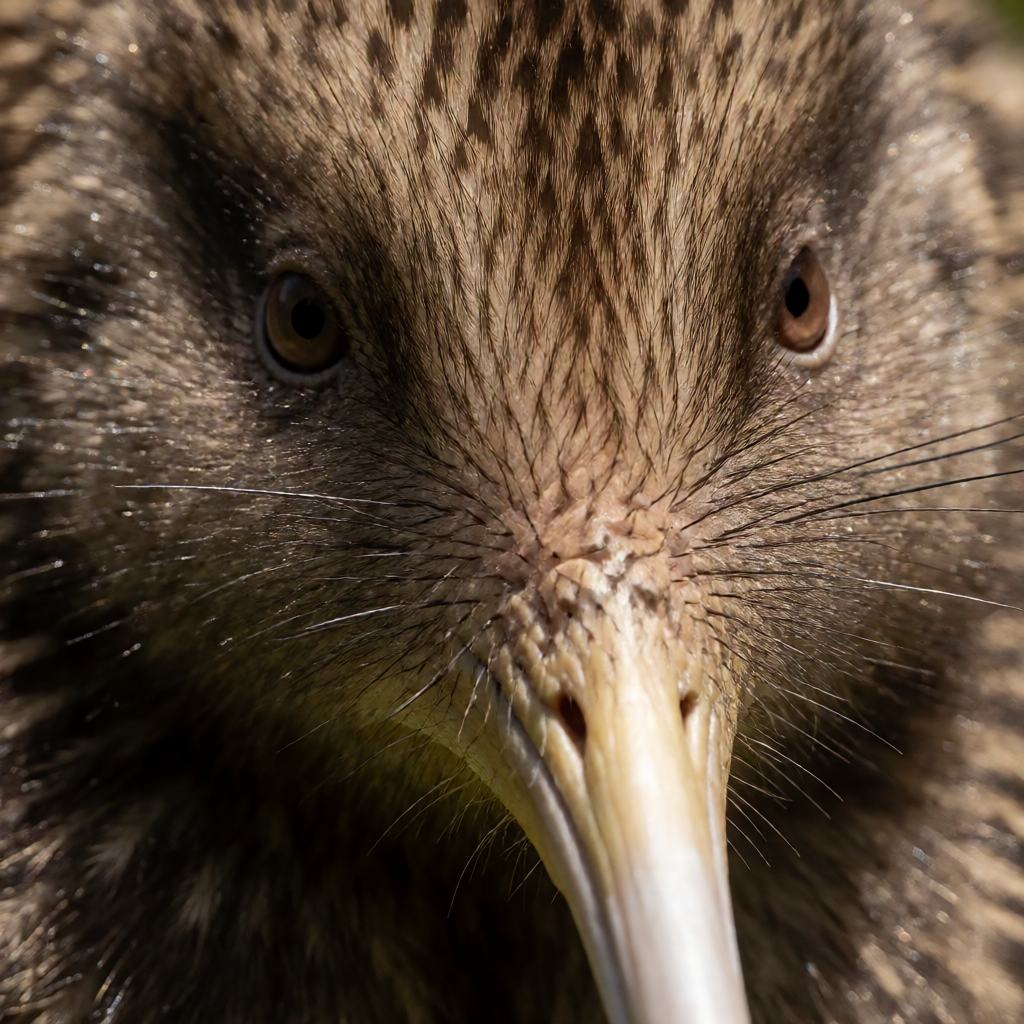
Adults carry the heaviest body of any kiwi. Feathers moult all year, and the plumage therefore never looks neat. Each feather has a split tip, which gives the hairy look. The bill is long, thin and pale.
Nostrils sit at the very tip, whereas most birds carry theirs near the base. That placement lets the bird smell worms underground. Strong legs carry three forward toes. A fourth toe points backward for balance.
Night vision helps, yet hearing and smell matter more. Because the body runs cool for a bird, around 37 C, the kiwi needs far more food per kilogram than a seabird of the same size.
1
2
3
Southern Alps beech forest
Where it lives
Dense native forest, rather than open country, is the stronghold. Tussock grassland above the tree line also holds birds. Three areas remain on the South Island. They lie in northwest Nelson, Westland and Canterbury.
Burrows sit under logs, roots and rock piles, though the birds dig new ones often. Each bird keeps a network of trails. Trails cross several hectares of bush, since the bird returns to the same spots. Snow falls on the highest sites each winter.
Birds feed straight through it. Although the kiwi can live in scrub and farmland, it does best where old forest, deep litter and few ground predators overlap, and such places are now rare.
Earthworms and grubs
What it eats
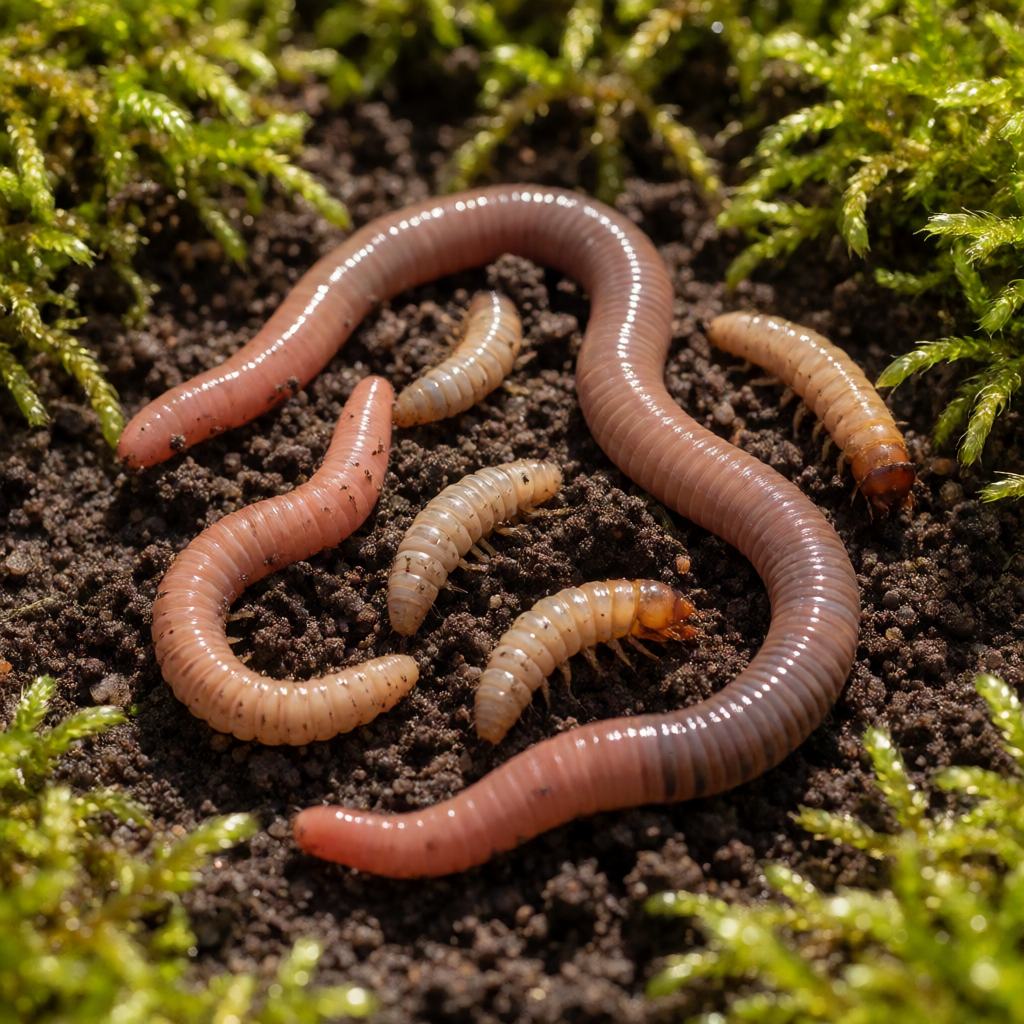
Earthworms make up most of the food. The bill probes deep into soft soil. Beetle larvae and weta come next. Cicadas, moths and spiders are taken too.
Fruit and leaves appear in small amounts. Because it cannot see well in soil, the bird relies on smell instead of sight. It taps the ground, then drives the bill straight down. Prey is swallowed whole, though hard shells are broken first.
Grit in the gizzard grinds the tough parts. Since worms rise near the surface after rain, wet nights give the best hunting, and one bird may eat hundreds of them.
One enormous egg
The breeding cycle
Pairs may stay together for years. A single huge white egg is the rule. Rarely she lays two. That egg can weigh a fifth of her body.
Laying takes days of effort. Males sit on it for weeks. Incubation runs 75 to 85 days. The chick hatches fully feathered.
It leaves the burrow at about 6 weeks, though the parents still guard it. Birds start breeding near 5 years old.
Vulnerable and falling
Conservation
The IUCN lists this kiwi as Vulnerable. The 2022 assessment records 9,300 mature birds. Numbers, however, are still falling. Introduced stoats kill many chicks.
Ferrets, cats and dogs take adults. Possums and deer strip the undergrowth. Trapping has helped in some valleys, although the work never stops. Predator free zones fence out the worst hunters.
Eggs are sometimes hatched in safety and released later. Because the bird breeds so slowly, with one chick every year or two, a single wave of predators can undo a decade of careful work.
Side by side
How It Compares
| Trait | Great Spotted Kiwi | Little Spotted Kiwi |
|---|---|---|
| Height | 45 cm | 25 cm |
| Weight | 3.3 kg | 1.3 kg |
| Range | three areas of the South Island | offshore islands and fenced reserves |
| Mature birds | 9,300 | about 2,000 |
| Egg | one, 75 to 85 days | one, 70 to 80 days |
| IUCN status | Vulnerable | Near Threatened |
Common misreadings
What People Get Wrong
- Kiwi are close relatives of the moa. The genes point to the elephant bird.
- A kiwi chick needs months of feeding. It feeds itself within days.
- Kiwis lay big clutches. Most pairs raise one chick a year.
Going further
Sources and Further Reading
- IUCN Red List entry for Apteryx haastii
- Wikipedia, Great spotted kiwi
- Department of Conservation, New Zealand. Kiwi species accounts.
- Mitchell, K. J. et al. 2014. Ancient DNA reveals elephant birds and kiwi are sister taxa. Science.
Quick hits
Five things to remember
- Kiwi nostrils sit at the tip of the bill.
- The egg is among the biggest of any bird for its size.
- The bird walks miles each night on set trails.
- Kiwi are closer to the elephant bird than to the moa.
- Chicks hatch ready to feed themselves.